
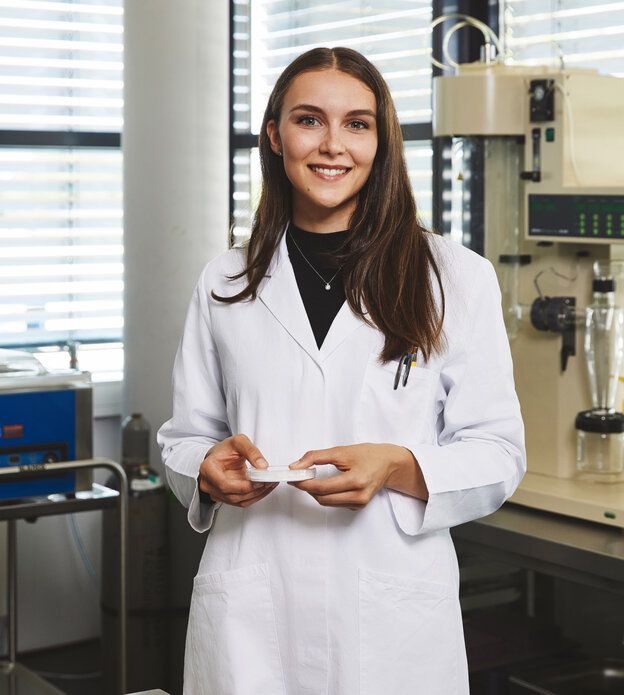
Hardly any other product group plays such a significant role in our daily lives as food and drink. Those wishing to study food science take a close look at this complex value chain – ‘from farm to fork’. In addition to the production of raw materials in agriculture and their processing in the food industry, this also encompasses logistics, sensory analysis and ensuring food safety for consumers.
In our German-taught Master’s programme in Food Science (M.Sc.) at the Kleve campus, you will approach the product ‘food’ from a strongly scientific and technological perspective. If you decide to study Food Science at Rhine-Waal University of Applied Sciences, you will benefit from a highly interdisciplinary mix of biology, chemistry and agricultural sciences, combined with quality management, product development and nutritional physiology.
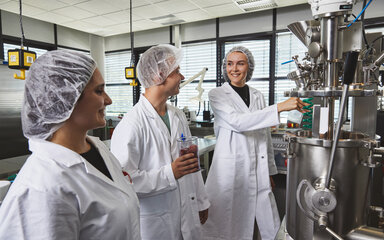
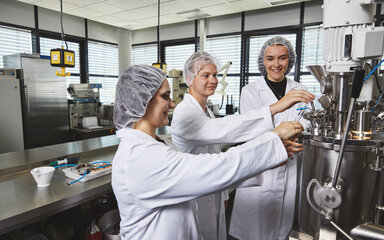
Through application-oriented research projects in small groups and your Master's thesis – which is very often carried out in direct collaboration with companies in the food industry – you will be optimally prepared for your future career from the very first semester.
At a glance
Master of Science
Full-time / Part-time / Work integrated
3 semesters
Unrestricted admission (no Numerus Clausus)
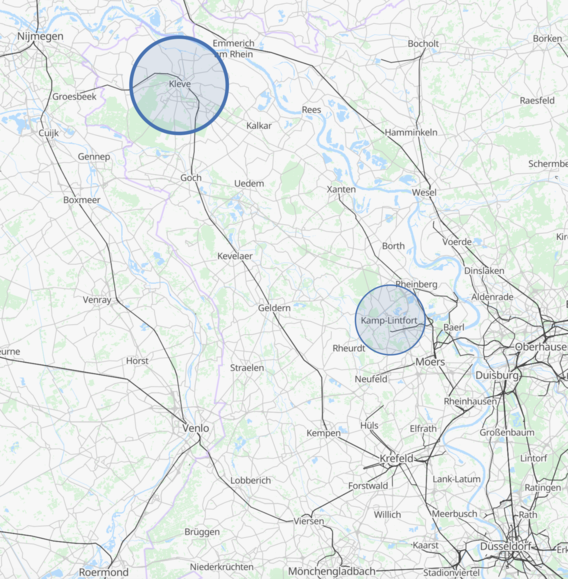
Kleve
German
1 September
1 March
Why study Food Science, MSc at Rhine-Waal?
Career opportunities and prospects: Alumni share their stories



Programme structure and content
As a graduate, you will be in high demand wherever generalists with a broad range of knowledge about food are sought after. Excellent career opportunities are available in companies within the food and drink industry, as well as with suppliers (e.g. of flavourings, natural colourings or vitamins). Typical areas of work include quality management, quality assurance and control, product development, research, sensory analysis, and the science-based marketing of products that require explanation.
- 1st semester: Focus on scientific and technological processes. You will take modules such as food biology, food chemistry and analysis, packaging technology and food processing technology. You will also learn specific scientific methods.
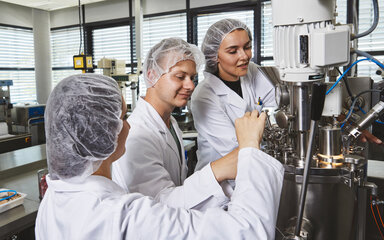
- 2nd semester: Specialisation in fermentation and biotechnology, quality management and food safety, food microbiology, nutrition, and product development and sensory analysis. At the same time, you will work on a major applied research project in the laboratory or pilot plant.
- 3rd semester (final): The final semester is reserved for writing the Master's thesis (very often in direct collaboration with industry) and the final Colloquium.
As the Master’s programme is designed to be a compact three-semester course, there is no dedicated integrated Internship semester as there is in the Bachelor’s programme. However, the practical application of your knowledge is deeply embedded in the curriculum, for example through the ‘Applied Research Project’ and the opportunity to write your final thesis whilst working in a company. Important: To be admitted to the Master's thesis, you must provide evidence of relevant practical experience (at least 20 weeks) or a semester of study abroad. If you do not yet have this experience from your Bachelor’s degree, you can complete it flexibly during your Master’s programme or catch up on it later.
To start this Master’s programme with us, you will need a relevant first degree (Bachelor’s) in food science, natural sciences, nutritional science or engineering.
- Good final grade: Your bachelor’s degree must have been awarded an overall grade of at least ‘good’ (2.5) or ‘A’/‘B’.
- Prior subject knowledge: You must have earned a total of at least 25 ECTS credits in the fields of mathematics/statistics, chemistry, physical and chemical fundamentals, biology and microbiology.
- Work experience: By the time you register your Master's thesis at the latest, you must provide evidence of at least 20 weeks of relevant work experience (e.g. in industry) or a Semester abroad.
- Language: As the degree programme is taught in German, international applicants must provide a language certificate at level B2. The degree programme has no entry restrictions (no minimum grade requirement).
Yes, you can easily study the Master’s degree programme in Food Science on a part-time basis (whilst working). In accordance with Section 62a(2) of the Higher Education Act of North Rhine-Westphalia (HG NRW), the degree programme is explicitly designed for this Mode of study.
In the part-time option, you continue to work in your profession alongside your studies, which is why the Standard duration of study is extended from three to a total of six semesters. To ensure you can balance your studies and work effectively, the course content of the first two full-time semesters is spread across your first four part-time semesters. During this phase, you will typically set aside two days a week for on-campus classes at the university, leaving you with three full days for your job. In the 5th and 6th semesters of study, you will then devote yourself entirely to your Master's thesis.
Highlights
 HSRW
HSRW HSRW
HSRW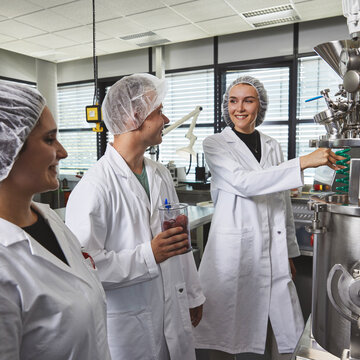 HSRW
HSRW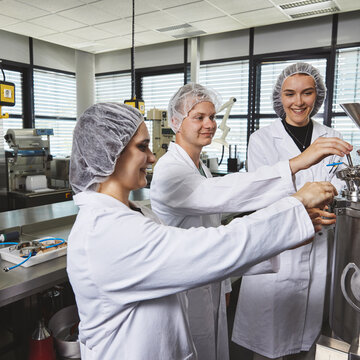 HSRW
HSRW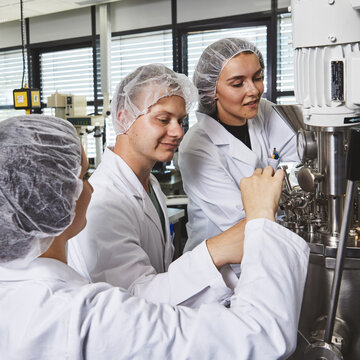 HSRW
HSRW


Application process
This degree programme has open admission, which means you will automatically be admitted once you have submitted your online application. Your Letter of Admission and all the important information regarding Enrolment will be available to you on Rhine-Waal University of Applied Sciences Application portal.
You only accept your place on the course once you have officially completed enrolment following your admission. As soon as you have been successfully enrolled, you will be notified by email.
Did you complete your school-leaving qualifications outside of Germany? If so, you’ll need to apply via uni-assist. The platform will guide you step by step through the application process. Your documents will then be checked by uni-assist and, provided you meet the admission requirements, forwarded to Rhine-Waal University of Applied Sciences for a final decision and the issuance of a decision letter. You will then be informed by email.
Questions und Contact

Campus
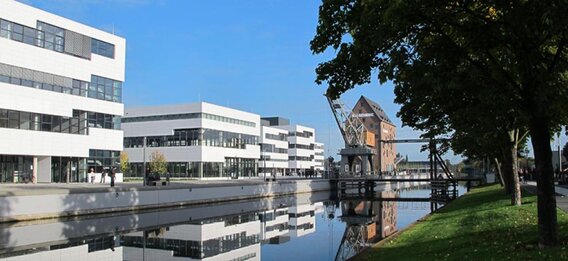
Kleve Campus
Related degree programmes


Student information

All about your studies
Have you just started your degree? On the following pages, you’ll find information about starting your degree.
- Information for all students: First day
- Information for students in your faculty: First-year students in the Faculty of Life Sciences
The Examination Service is here to help you with the following:
- the final processing of your recognised academic achievements and Examinations
- organising your examination registrations via HISinONE
- Certificates of achievement, diplomas, final grade certificates and the certification of the aforementioned documents
- applying for approval to undertake your Bachelor’s or Master's thesis
- applying for your work placement or semester abroad
- acceptance of your final thesis and forwarding it to the Examiners
- Issuing duplicate copies of your certificates and diplomas
Links and downloads
Examination directory/examination schedules
Examination regulations
page Examination Servicespage, including FAQs
Examination Board page
Rhine-Waal University of Applied Sciences offers advice and support not only regarding your studies but also on personal matters, e.g.:
- Literature research
- Starting a business
- Mental health
- Studying with a child
- Studying with a disability
- Anti-discrimination etc.
Here you will find an overview of all the support services available
In addition, your faculty offers support tailored to your Degree programme.
Here you will find an overview of the advisory services offered by your faculty
General Services
Student Services can help you with:
- your application and the admission and selection processes for Bachelor’s and Master’s degree programmes
- Enrolment and Deregistration
- Re-registration for a new semester, leave of absence or exemption from mobility requirements
- matters relating to guest student status, second-degree student status or early-entry programmes
- changing degree programmes or joining a Semester of study at a higher level
- the issuance of official documents, such as Proofs of enrolment
- all queries regarding semester fees and payments
- Notifications to health insurance providers in accordance with legal requirements
Library
, University
Sports,University
Music, Language Courses