

Biological Resources, MSc
Sustainable use of natural resources
The world’s natural resources are finite, and many of the raw materials used to date are slowly running out. Those wishing to study Biological Resources are tackling precisely this global challenge. There is a need for well-trained specialists who can contribute to the sustainable utilisation of existing resources (such as soil, plants, animals and marine habitats) and the development of new sources of raw materials for a bio-based economy.
In our English-taught Master’s degree programme in Biological Resources (M.Sc.) at the Kleve campus, you will learn to evaluate this potential scientifically. The degree programme, with its strong focus on research and practical application, combines natural science perspectives in an interdisciplinary manner with engineering sciences and the bioeconomy.
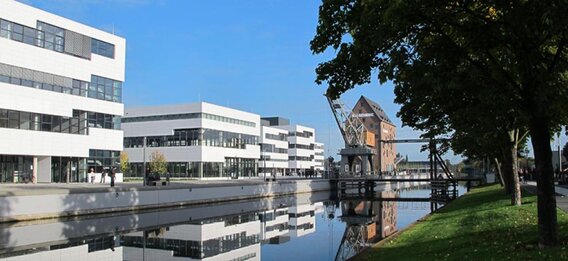
If you decide to study Biological Resources at Rhine-Waal University of Applied Sciences, you will benefit from state-of-the-art laboratories, the tropical greenhouse on campus and close collaboration with industry. This will provide you with the perfect preparation for the development of bio-based products and activities in the applied bioeconomy. A particular highlight: through our ‘Double Degree’ programme, you even have the chance to earn an international double degree!
At a glance
Master of Science
Full-time / Part-time / Work integrated
3 semesters
Unrestricted admission (no Numerus Clausus)
Kleve
English
1 September
1 March
Why study Biological Resources, MSc at Rhine-Waal?




Programme structure and content
As a qualified expert at the interface with the bio-based economy, you will have a wide range of career opportunities after completing your degree. For example, you could work as an assessor or consultant for government agencies and non-governmental organisations (NGOs) in the fields of environmental protection and nature conservation. You could also take on key roles as a sustainability or nature conservation officer in national and multinational companies, or lead research and development projects in industry and at universities.
- 1st semester: You’ll start straight away with research-oriented and project-based modules such as ‘Simulation of biological systems’, ‘Animal ecology’, ‘Soil biological resources’ and the resource-efficient management of waste products. In the ‘Research Project’, you’ll put your knowledge into practice.
- 2nd semester: You will deepen your knowledge in areas including environmental assessment, the management of forest resources and the processing of biological resources. You will set your own priorities through individual compulsory-elective modules.
- 3rd semester (final): You will devote your final semester entirely to your Master's thesis (often in collaboration with industry) and successfully complete your degree with the associated Colloquium.
As the Master’s programme is structured over three semesters, there is no traditional, dedicated Internship semester as there is in the Bachelor’s programme. However, thanks to our close research partnerships with companies in the Lower Rhine region, you will have ongoing opportunities to gain valuable practical experience in the bioeconomy.
In addition, the Degree programme offers an outstanding international opportunity: as part of the optional double degree programme, you can combine HSRW’s Master’s in ‘Biological Resources’ with the ‘TAIDA’ (Advanced Techniques in Agricultural and Food Research and Development) Master’s at the Technical University of Cartagena (UPCT) in Spain. You will spend part of your studies in Spain and, upon completion, receive degrees from both universities.
To start your studies with us, you will need a relevant first degree (Bachelor’s) in one of the following fields:
- Natural Sciences
- Agricultural sciences
- or Economics
You must provide evidence of this prior knowledge and academic performance from your first degree at the start of the programme:
- At least 10 ECTS credits in the field of natural sciences.
- At least 10 ECTS credits in the field of environmental or agricultural sciences.
- In total, you need a minimum of 30 ECTS credits combined from the fields of mathematics/statistics, chemistry, biology, economics and social sciences, and environmental/agricultural sciences.
For the Master’s programme in Biological Resources, the following additional requirements apply in accordance with the current Examination regulations:
- Good final grade: Your Bachelor’s degree must have been awarded an overall grade of at least ‘Good’ (2.2) or, alternatively, an ‘A’ or ‘B’.
- English language skills (certificate at level B2 according to the Common European Framework (CEF)), as the programme is taught entirely in English. This corresponds, for example, to seven years of English at a German school with a grade of “sufficient” or better.
- Practical experience: By the time you register your Master's thesis at the latest, you must also demonstrate relevant practical experience through at least 20 weeks of practical work (in the fields of agricultural, environmental or natural sciences, or the bioeconomy) or by completing a semester of study abroad.
Your entire degree programme is taught in English. This will prepare you perfectly for careers in multinational organisations around the world.
- A solid foundation is enough: your English doesn’t need to be perfect at the start – all you need to get started is a B2 certificate.
- Automatic practice: Through academic interaction with lecturers and fellow students, you’ll practise and improve your academic English almost without realising it.
- Additional support: If you’d like to practise your English in a more targeted way, the university’s accompanying language courses are here to help.
Yes, you can easily study the Master’s degree programme in Biological Resources on a part-time basis (whilst working). In accordance with Section 62a(2) of the Higher Education Act of North Rhine-Westphalia (HG NRW), the degree programme is explicitly designed for this Mode of study.
In the part-time option, you continue to work in your profession alongside your studies, which is why the Standard duration of study is extended from three to a total of six semesters. To ensure you can balance your studies and work effectively, the course content of the first two full-time semesters is spread across your first four part-time semesters. During this phase, you will typically set aside two days a week for on-campus classes at the university, leaving you with three full days for your job. In the 5th and 6th semesters of study, you will then devote yourself entirely to your Master's thesis.
Highlights
 HSRW
HSRW HSRW
HSRW HSRW
HSRW HSRW
HSRW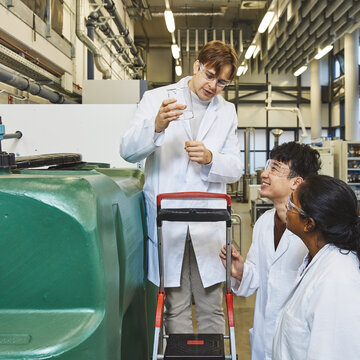 HSRW
HSRW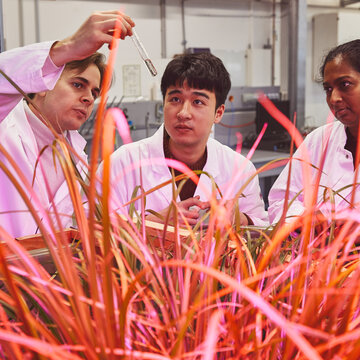 HSRW
HSRW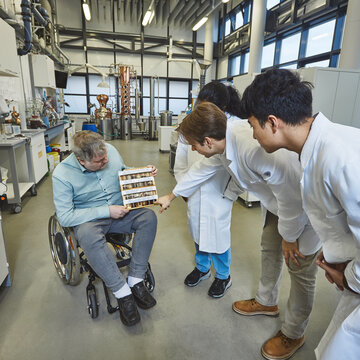 HSRW
HSRW HSRW
HSRW


Questions und Contact

Campus
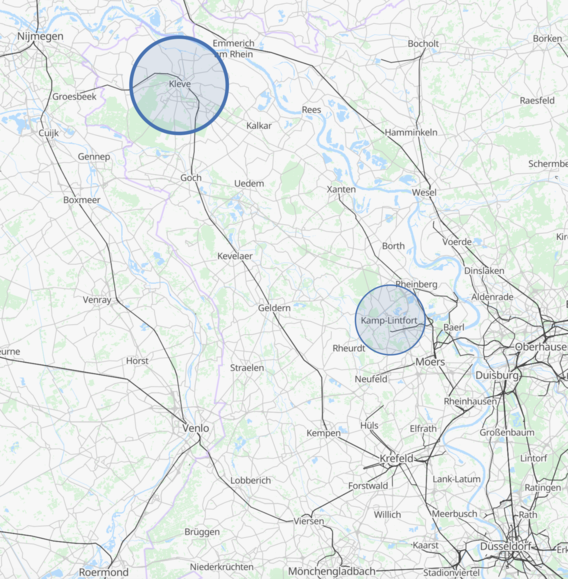
Kleve Campus
Related degree programmes


Student information

All about your studies
Have you just started your degree? On the following pages, you’ll find information about starting your degree.
- Information for all students: First day
- Information for students in your faculty: First-year students in the Faculty of Life Sciences
The Examination Service is here to help you with the following:
- the final processing of your recognised academic achievements and Examinations
- organising your examination registrations via HISinONE
- Certificates of achievement, diplomas, final grade certificates and the certification of the aforementioned documents
- applying for approval to undertake your Bachelor’s or Master's thesis
- applying for your work placement or semester abroad
- acceptance of your final thesis and forwarding it to the Examiners
- Issuing duplicate copies of your certificates and diplomas
Links and downloads
Examination directory/examination schedules
Examination regulations
page Examination Servicespage, including FAQs
Examination Board page
Rhine-Waal University of Applied Sciences offers advice and support not only regarding your studies but also on personal matters, e.g.:
- Literature research
- Starting a business
- Mental health
- Studying with a child
- Studying with a disability
- Anti-discrimination etc.
Here you will find an overview of all the support services available
In addition, your faculty offers support tailored to your Degree programme.
Here you will find an overview of the advisory services offered by your faculty
General Services
Student Services can help you with:
- your application and the admission and selection processes for Bachelor’s and Master’s degree programmes
- Enrolment and Deregistration
- Re-registration for a new semester, leave of absence or exemption from mobility requirements
- matters relating to guest student status, second-degree student status or early-entry programmes
- changing degree programmes or joining a Semester of study at a higher level
- the issuance of official documents, such as Proofs of enrolment
- all queries regarding semester fees and payments
- Notifications to health insurance providers in accordance with legal requirements
Library
, University
Sports,University
Music, Language Courses