
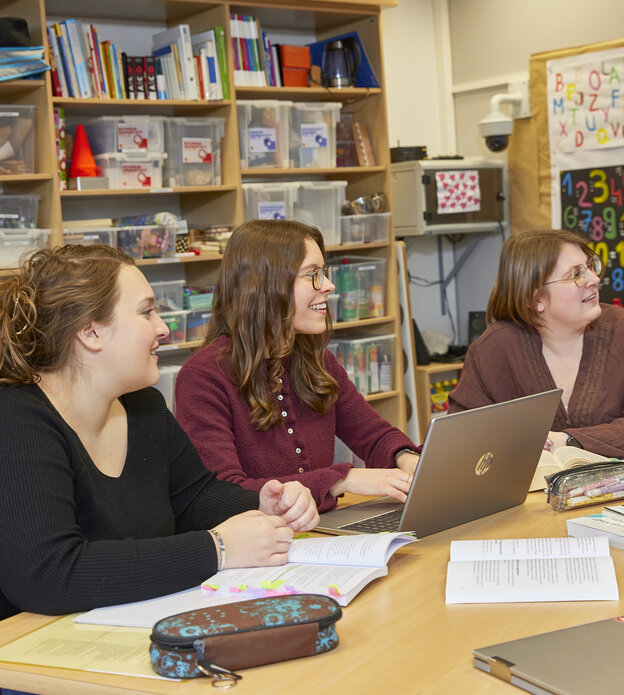
Our aim is to help you see, hear and understand children’s needs. This will enable you to make a valuable contribution to the field of early childhood education (e.g. in nurseries or schools).
At a glance
Bachelor of Arts
Full-time
7 semesters
Unrestricted admission (no Numerus Clausus)
Kleve
German
1 September
Why study Early Childhood Education, BA at Rhine-Waal?

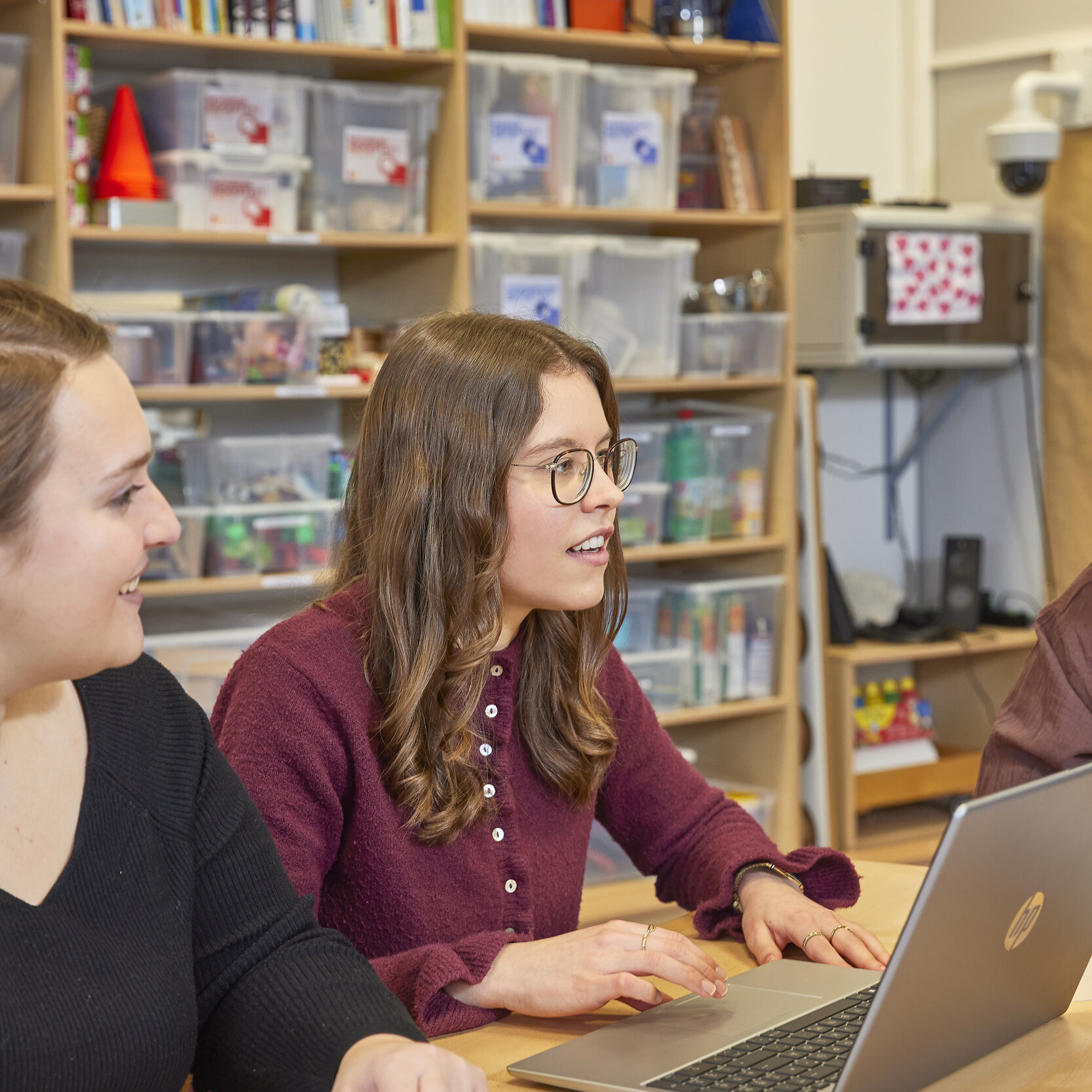
What makes this degree programme so special?
Leonie Otten reports on the degree programme
Career opportunities and prospects: Alumni share their stories

Programme structure and content
Your theoretically sound, practical knowledge of supporting and nurturing children opens up a wide range of career opportunities:
- Early years education institutions (e.g. crèches, nurseries, schools)
- Educational and educational policy institutions (e.g. family centres)
- Children’s leisure facilities
- Policy consultancy
- Childhood education-oriented associations and welfare organisations
- Youth welfare offices and education departments of public institutions
Semesters 1–2: Fundamentals of Early Years Education
Acquire comprehensive fundamental knowledge for professional practice in early years education and care.
Semesters 3–5: Advanced study and specialisation
Specialise in the fundamentals of early childhood education and academic theory through practical projects and compulsory elective modules.
6th semester: Internship semester
Gain practical experience in settings such as nurseries, schools, counselling services or children’s and youth facilities.
7th semester: Bachelor’s thesis & Colloquium
Apply your knowledge in a research project and academic presentation.
In Germany, the move towards academic qualifications for (early years) education professionals has led to the introduction of a new state-recognised Bachelor’s degree in Early Years Education.
On the Early Years Education degree programme at Rhine-Waal University of Applied Sciences, you will acquire comprehensive theoretical and practical skills for working with children aged between 0 and 14. The degree programme is based on methods and theories from the fields of education, the humanities, social sciences and psychology. You will learn to apply this theoretical knowledge in educational practice. This will enable you to work with children using a differentiated teaching approach, and to support and guide their individual development with knowledge, empathy and sensitivity.
As a graduate, you will be trained to critically reflect on educational situations based on educational and scientific theories, and to develop recommendations for action, particularly for parents and educational institutions. Practical teaching, group discussions and video analyses in the KLEX learning workshop, together with reflection and communication skills, will equip you for a job market offering excellent employment prospects. It is also possible to go on to study for a Master’s degree in Germany or other European countries.

Application process
This degree programme has open admission, which means you will automatically be admitted once you have submitted your online application. Your Letter of Admission and all the important information regarding Enrolment will be available to you on Rhine-Waal University of Applied Sciences Application portal.
You only accept your place on the course once you have officially completed enrolment following your admission. As soon as you have been successfully enrolled, you will be notified by email.
Did you complete your school-leaving qualifications outside of Germany? If so, you’ll need to apply via uni-assist. The platform will guide you step by step through the application process. Your documents will then be checked by uni-assist and, provided you meet the admission requirements, forwarded to Rhine-Waal University of Applied Sciences for a final decision and the issuance of a decision letter. You will then be informed by email.
FAQ
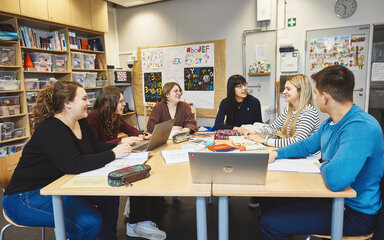
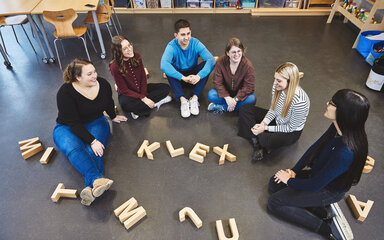
The KLEX Learning Workshop is a place where both students on the Bachelor’s degree programme in Early Years Education and children can learn in an active, inquisitive, exploratory, creative and open-minded way. It is a 70 m² room with an adjoining natural outdoor area, which was created in 2021. The abbreviation KLEX stands for ‘Child-centred Learning, Experience and Experimentation’. Further information about the learning workshop can also be found here:
The BOX (Behaviour, Observation& EXperience) is a space where students on the Bachelor’s degree programme in Early Years Education can actively develop skills in the areas of counselling, communication and conflict resolution, as well as in cultivating a professional attitude, and can learn about and apply specific psychological and educational testing and diagnostic procedures. Further information on the BOX and the test library can also be found here:
The timetable can be found here: Timetables

Campus
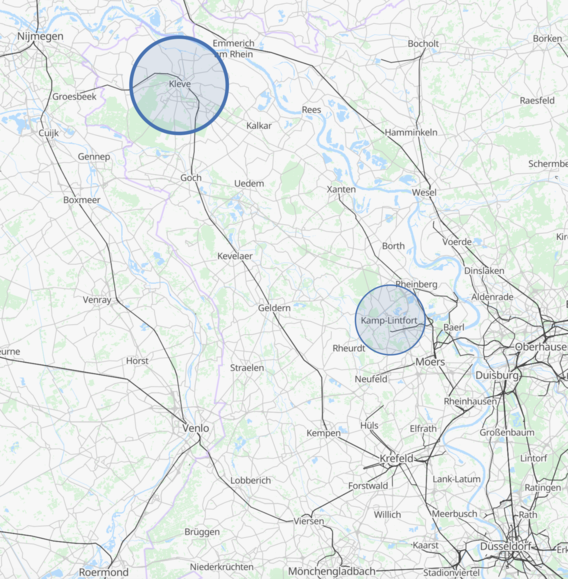
Kleve Campus
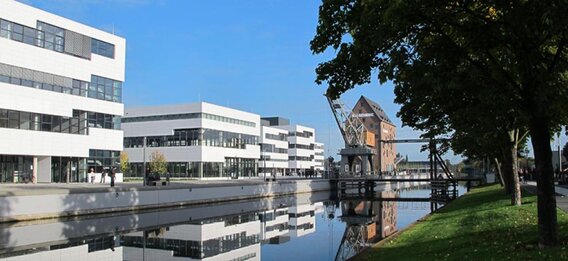
Related degree programmes
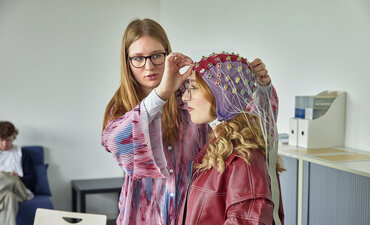
Student information
Information for students

All about your studies
Have you just started your degree? On the following pages, you’ll find information about starting your studies.
- Information for all students: First day
- Information for students in your faculty: First-year students in Faculty XY
The Examination Service is here to help you with the following:
- the final processing of your recognised academic achievements and Examinations
- organising your examination registrations via HISinONE
- Certificates of achievement, diplomas, final grade certificates and the certification of the aforementioned documents
- applying for approval to undertake your Bachelor’s or Master's thesis
- applying for your work placement or semester abroad
- acceptance of your final thesis and forwarding it to the Examiners
- Issuing duplicate copies of your certificates and diplomas
Links and downloads
Examination directory/examination schedules
Examination regulations
page Examination Servicespage, including FAQs
Examination Board page
Rhine-Waal University of Applied Sciences offers advice and support not only regarding your studies but also on personal matters, such as:
- Literature research
- Starting a business
- Mental health
- Studying with a child
- Studying with a disability
- Anti-discrimination etc.
Here you will find an overview of all the support services available
In addition, your faculty offers support tailored to your degree programme.
Here you will find an overview of the advisory services offered by your faculty
General Services
Student Services can help you with:
- your application and the admission and selection processes for Bachelor’s and Master’s degree programmes
- Enrolment and Deregistration
- Re-registration for a new semester, leave of absence or exemption from mobility requirements
- matters relating to guest student status, second-degree student status or early-entry programmes
- changing degree programmes or joining a Semester of study at a higher level
- the issuance of official documents, such as Proofs of enrolment
- all queries regarding semester fees and payments
- Notifications to health insurance providers in accordance with legal requirements

Library
, University
Sports,University
Music, Language Courses