

Psychology, Specialization: Industrial and Organizational Psychology, BSc
For sharp minds fascinated by human behaviour
Understand people today, shape the world of tomorrow – that’s what Industrial and Organisational Psychology is all about.
In this degree programme, you’ll explore how to reduce stress and boost motivation at work, turn groups of employees into effective teams, find the right people for the right roles and help them develop their potential. You’ll also learn how to train leaders and help organisations create positive change in their workplace culture.
At a glance
Bachelor of Science
Full-time
7 semesters
Unrestricted admission (no Numerus Clausus)
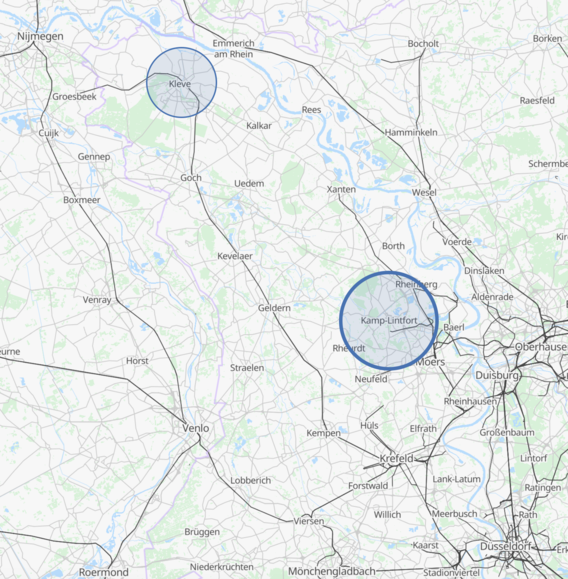
Kamp-Lintfort
German
1 September
Why study Psychology, Specialization: Industrial and Organizational Psychology, BSc at Rhine-Waal?



What makes this degree programme special?
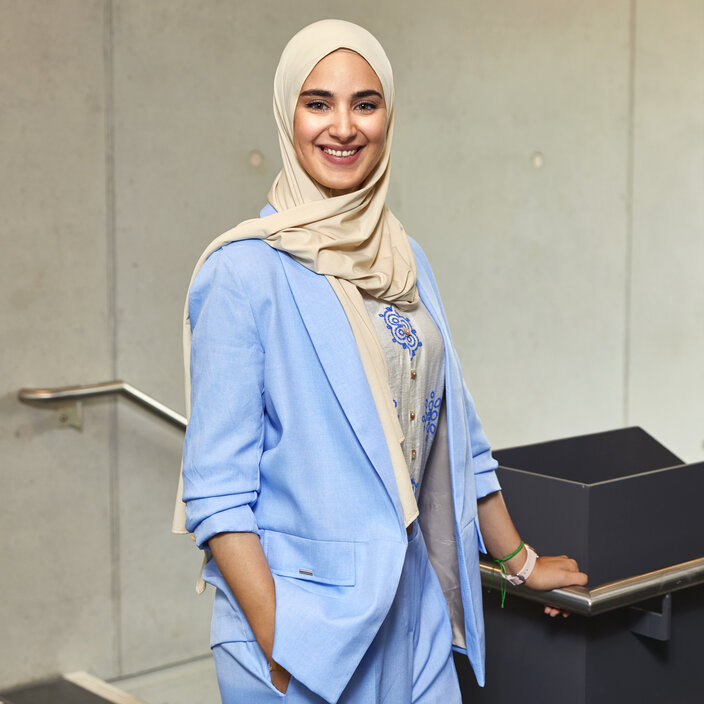
Emin Akcan shares his experiences.


Programme structure and content
With a Bachelor’s degree in Industrial and Organisational Psychology, you’ll have plenty of exciting career paths to choose from. You could work in recruitment, leadership and staff development, or help create safer, more people-friendly workplaces. Other opportunities include workplace health management and developing a company culture that encourages learning and growth.
You could also build a career in organisational consulting, training and skills development, coaching and mentoring, or knowledge and quality management.
In your first three semesters, you’ll build a strong foundation in psychology and key research methods. At the same time, you’ll develop your personal, social and methodological skills – a great basis for the rest of your studies and your future career.
You’ll then dive deeper into Industrial and Organisational Psychology, exploring topics such as communication and collaboration, motivation and leadership, recruitment and organisational development. You’ll also gain valuable knowledge in related subjects such as business administration, philosophy and law.
In your fifth and sixth semesters, the focus shifts to putting your knowledge into practice. In an interdisciplinary project, you’ll learn how to tackle real-world questions using scientific methods and develop practical solutions as part of a team. You’ll also gain your first professional experience during an internship semester – or take the opportunity to spend a semester abroad.
In your seventh semester, you’ll complete your degree with your Bachelor’s thesis, ready to start your career or continue with a Master’s programme.
We welcome applications from nationals of all countries. Please check here for general admission requirements.
For the Psychology, Specialization: Industrial and Organizational Psychology degree programme, the following additional requirements apply:
- German language skills at level B2 (according to the Common European Framework – CEF)
- and, above all: an interest in people, organisations and social issues
Application process
This degree programme has open admission, which means you will automatically be admitted once you have submitted your online application. Your Letter of Admission and all the important information regarding Enrolment will be available to you on Rhine-Waal University of Applied Sciences Application portal.
You only accept your place on the course once you have officially completed enrolment following your admission. As soon as you have been successfully enrolled, you will be notified by email.
Did you complete your school-leaving qualifications outside of Germany? If so, you’ll need to apply via uni-assist. The platform will guide you step by step through the application process. Your documents will then be checked by uni-assist and, provided you meet the admission requirements, forwarded to Rhine-Waal University of Applied Sciences for a final decision and the issuance of a decision letter. You will then be informed by email.
Insights





Campus
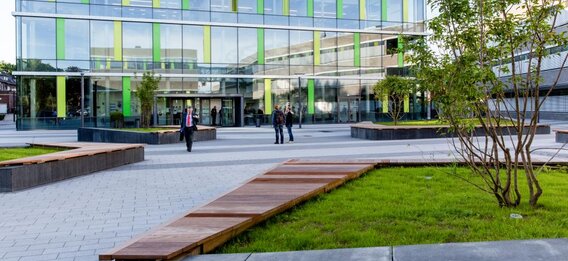
Kamp-Lintfort Campus
Related degree programmes


Student information

All about your studies
Bridging courses are intensive courses designed to help you prepare for your degree before your studies begin. Participation is voluntary and no credit points are awarded. You can use the courses to refresh your existing knowledge and fill in any small gaps before starting your studies.
The courses are held before the start of the winter semester, usually in September. The upcoming course programme will be available at the link below in due course.
The office of the examination board is the central point of contact for all questions and inquiries regarding examinations at your Faculty (Faculty of Communication and Environment).
Office of the Examination Board
On their website you will also find an overview of your first points of contact for various examination-related matters.
Overview
There is also a central Examinations Service for the entire University. It handles the administrative implementation of decisions made by the Examination Board and manages examination-related processes.
Examination Service
Your Faculty of Communication and Environment and the University’s central services offer advice and support throughout your studies – whether you need help with academic matters or personal challenges.
Advice and support services offered by the Faculty
Do you have any questions about your degree programme or exam-related matters? Are you experiencing issues with lecturers, or are you looking for personalised advice? Here you’ll find an overview of the key points of contact within the Faculty of Communication and Environment.
Services offered by the Faculty
Central advisory services
The university’s central advisory services are here to support you with a wide range of topics during your studies and beyond. Whether you need help with finding academic literature, developing a business idea, dealing with mental health challenges, studying with children or a disability, or have questions about anti-discrimination, you’ll find the right contacts and support for different situations in your studies and everyday life.
Central student services
The Central Student Services team is your main point of contact for organisational and administrative questions about your studies. They can help you with applications and admission, enrolment and deregistration, re-registration and leaves of absence, changing degree programmes, as well as questions about semester fees, certificates or health insurance notifications.
Contact
Programme Assistant
Ms Meike Hüsgen
Tel: 02842/90825679
meike.huesgen(at)
Office hours (room number 02 00 455)
Monday–Thursday: 10.00–12.15 and by appointment
Monday, Tuesday, Thursday: 13.30–15.00 and by appointment