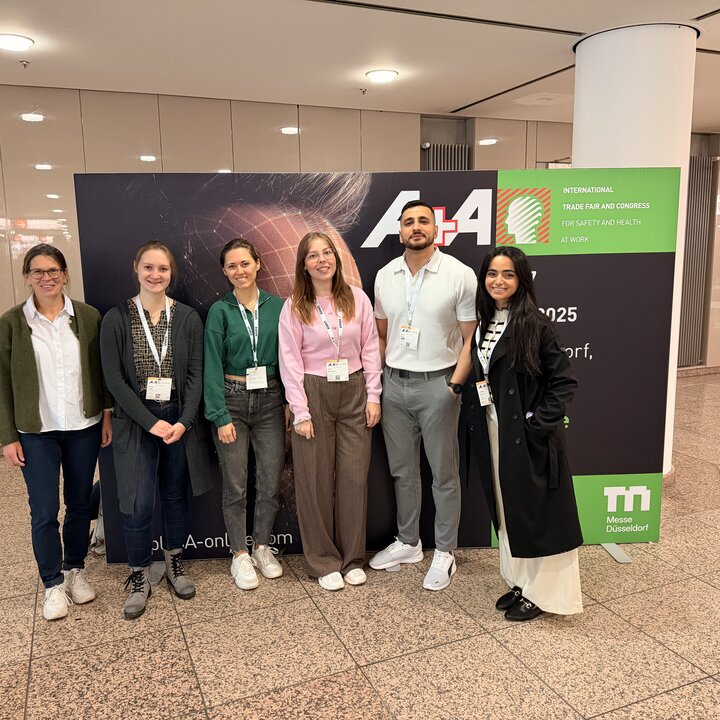
Together with eight other universities, she and her fellow students ran a joint stand and took the opportunity to provide information about their universities and the courses they offer. “The most interesting thing was that there were so many people there and that, as a university, we worked together with other universities to try and give people a better understanding of agricultural degree programmes,” she reports. This experience was a first for Jule and the students from the Faculty of Life Sciences, as none of them had visited Agritechnica before.
Jule found the presentations by the German Weather Service particularly interesting. “The German Weather Service was there and highlighted a wide range of topics relating to agricultural meteorology,” says Jule. She was also fascinated by the concept of insect farming. “The idea is to replace soya protein by rearing maggots in a five-day cycle and then using them, so to speak, for pig rearing or as chicken feed. In other words, finding alternative protein sources and creating sustainable cycles,” she says, reflecting on the possibilities offered by this technology.
The students used the trade fair not only to expand their knowledge, but also to make valuable contacts. “I spoke to various people at Agritechnica and asked if they offered work placements. I collected brochures and business cards and then got in touch with them from time to time.” An excursion had also been organised specifically for the students to experience and discuss the latest trends and technologies in agriculture first-hand. “We organised this specifically for students from the Faculty of Life Sciences so that they could go on a one-day excursion,” explains Jule.
The presentations and stands at the fair provided Jule and her fellow students with important learning opportunities. “Professor Kleinke was there with us, and amongst other things we had guided tours of the CLASS and KRONE stands, which essentially showcased their latest innovations and technology,” says Jule, describing the highlights. This gave the students the chance to network with key figures from the industry, such as representatives of the German Farmers’ Association, agricultural machinery manufacturers and agricultural service providers. “Here you can see where the journey is heading,” says Jule, with a look that reflects both curiosity and an understanding of the complex challenges facing the sector.
The trade fair not only opened up a broad spectrum of technological innovations and current trends in agriculture to her and the students of the Faculty of Life Sciences, but also reinforced their resolve to champion sustainable agriculture. “Agriculture is the key to tackling global challenges,” says Jule, whose awareness of the urgency of climate change and food security led her to choose the BSc in Sustainable Agriculture. Her experiences and thoughts reflect the dynamism of an industry that stands at a crossroads and must decide how it wants to shape the future.