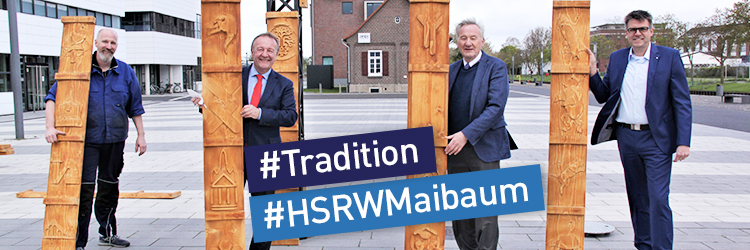
The maypole, like the university, is unique. It reflects the diversity of the university’s student body and draws inspiration not only from the maypoles of the Lower Rhine, but also from traditions in other cultures, such as the Bisj poles of New Guinea, the carved tent poles of the Tuareg, or the carved trees of West Africa. They all capture the history of a community in images carved into wood. In some regions, the maypole also celebrates the contribution of craftsmanship. And in North America, the home of university professor William Megill, a totem pole is used to celebrate life and immortalise the history of the community by depicting people and events in the carvings on the pole. The university’s maypole builds on these traditions in its own way to record the history of the university and the community that supports it.
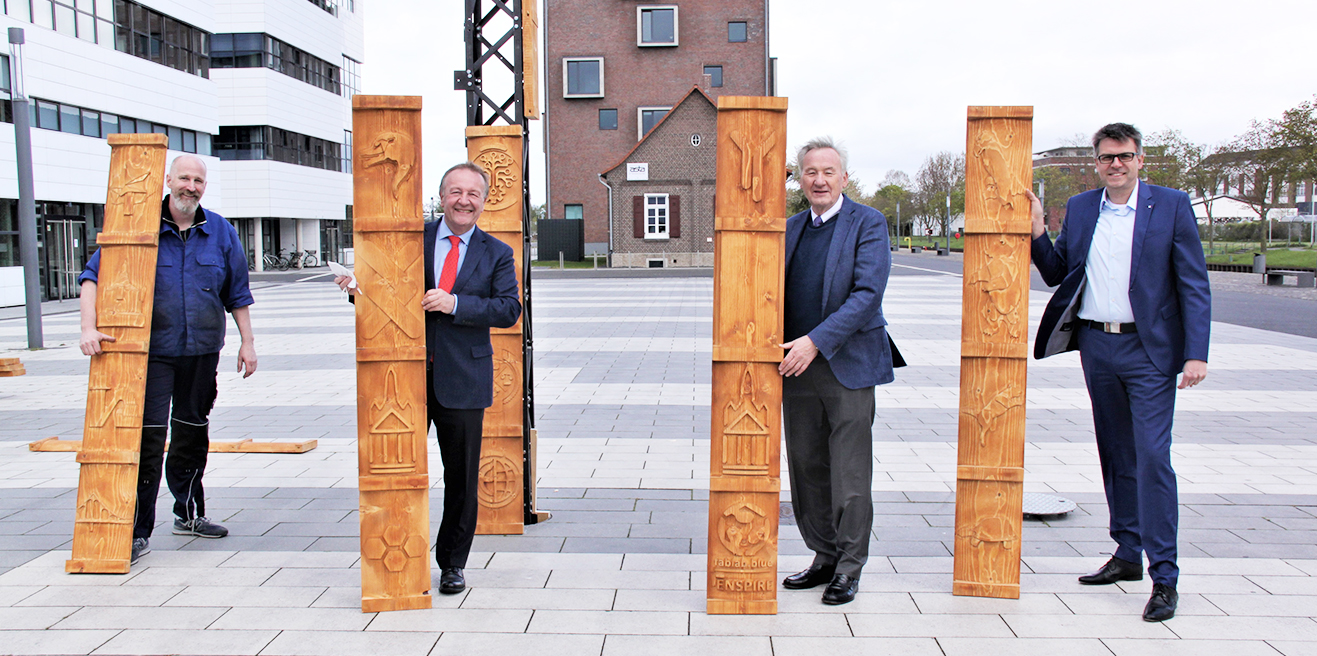
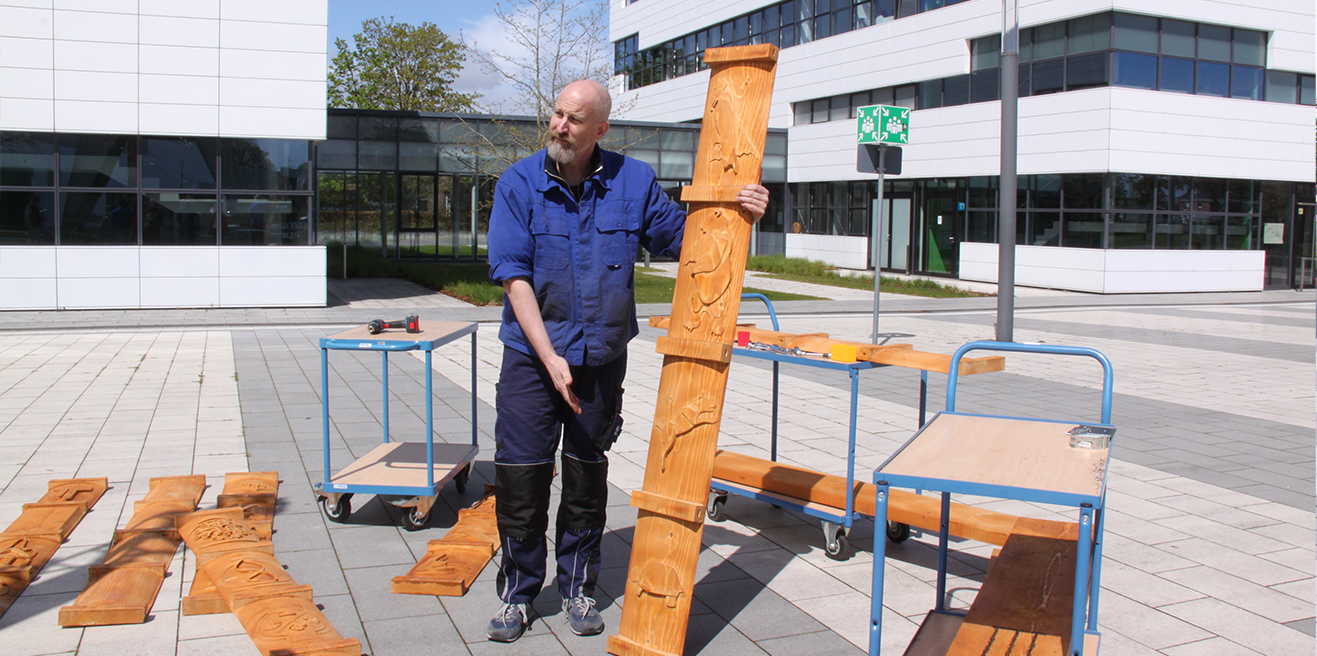
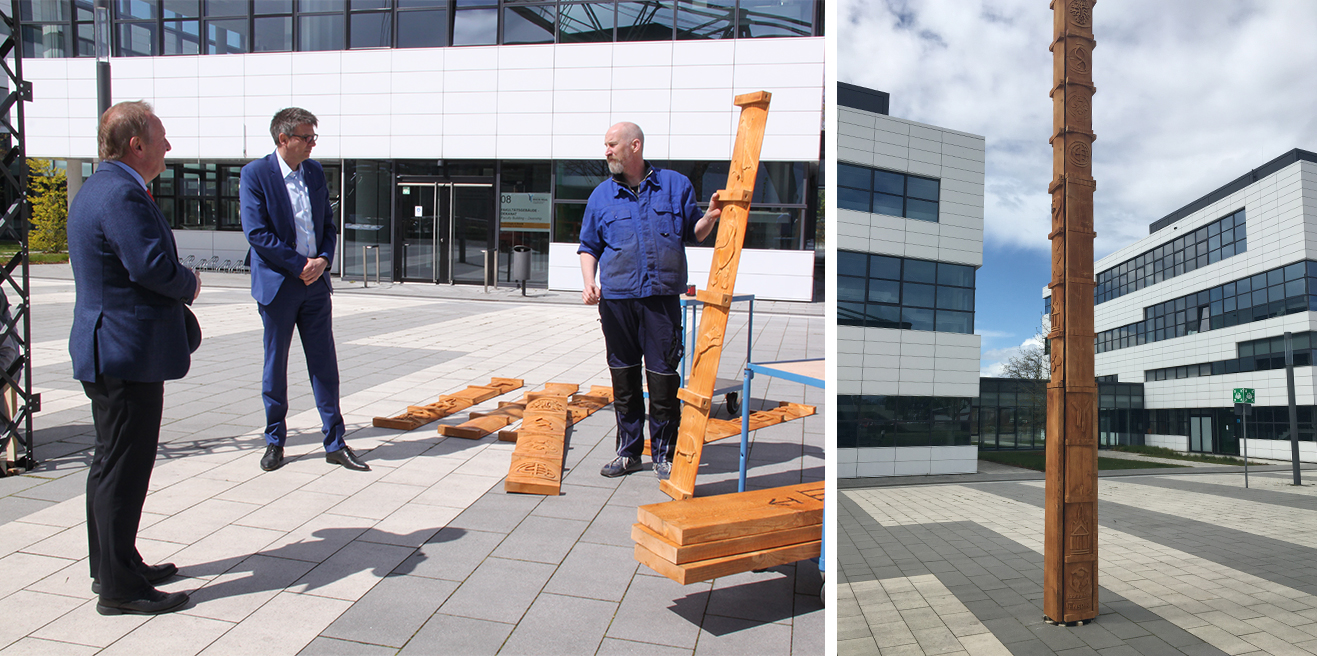
This Maypole, erected on 5 May 2021, is not actually a wooden pole, but a six-metre-high lightweight steel structure featuring twelve two-metre-long carved wooden planks, each of which tells a part of the university’s history. So far, five planks have been carved – these recount the history of the institution and the community to date. Three of the planks have been partially completed – these represent the present, a story that is slowly taking shape but is not yet clear. And four of the planks are still unfinished and represent the stories that will unfold in the future. These planks will be carved in the coming years, bearing the new stories yet to be told. The lightweight steel and timber structure also symbolises the university’s history in STEM and bionics.
The maypole chronicles the university’s history to date across four panels distributed around the framework. The first of the upper panels depicts the university’s eras using animals in the tradition of North American totem poles. The tortoise, wolf, bear and eagle each describe, in their own way, the university’s stages of growth.
The second panel on the upper level represents the university’s students through the logos of the four student councils, one from each of the institution’s four faculties. Their emblems were designed by the students themselves and represent their aspirations and dreams.
On the middle tier, a panel recounts both the geographical history of the university’s campuses and the history of the support the university has received from people in the local communities, represented by the symbols of the three towns that nourish the roots of the Tree of Learning. The equally important support provided by the business community to the university and its students is represented by the emblems of the friends’ associations.
At the base of the pole is a panel that tells the story of the pole itself: funding from the Friends of Rhein-Waal University – Cleve Campus e.V. made the creation of the pole possible and thus makes an important contribution to the growing traditions of the university community, ensuring that the university’s stories remain visible for years to come.