
International Management and Psychology, MSc
For pragmatic leaders and deep-thinking analysts of human behaviour.
Do you want to understand both people and international economic cycles, and more importantly how they interact with each another? Then earn your master’s in International Management and Psychology!
Here you’ll learn and practice the tools of good organisational leadership. We’ll teach you how to manage intercultural teams, conduct consumer research and better understand international markets. At the same time, you’ll learn how to develop your employees’ individual skills and personalities, nurture their potential and shape your organisation’s human resource culture, for example by advocating for and raising awareness of important ethical issues.
At a glance
Master of Science
Full-time
3 semesters
Restricted
Kamp-Lintfort
English
1 September
1 March
Why study International Management and Psychology, MSc at Rhine-Waal?

What makes this degree programme special?
Kim Luitjens shares her experiences.
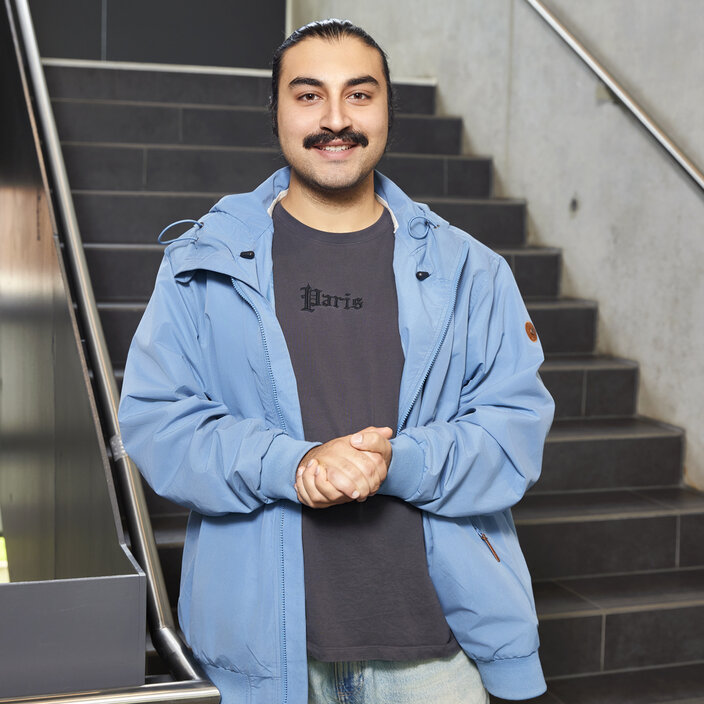
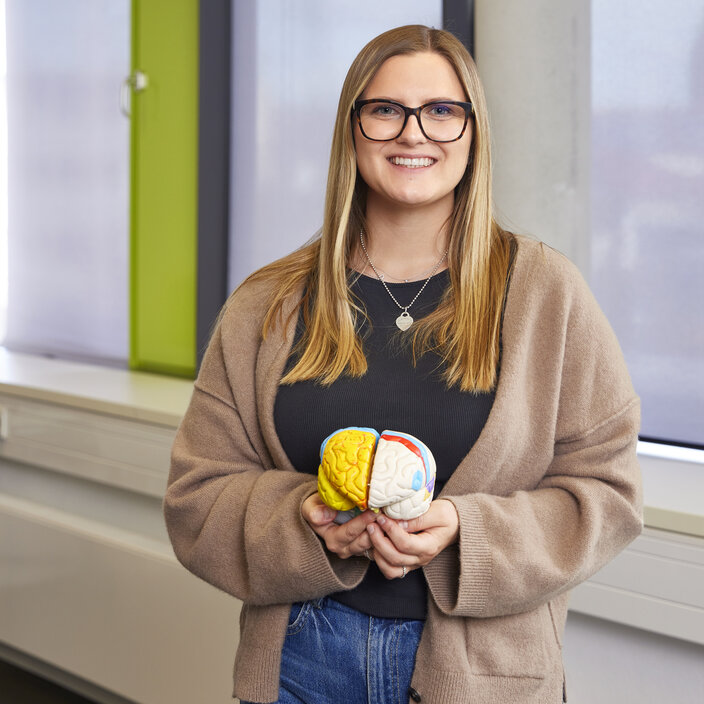

Career opportunities and prospects: Alumni share their stories

Programme structure and content
Shape the future with psychological expertise
Recent developments show that there is strong demand for graduates with expertise in business psychology. Our Master’s programme in International Management and Psychology prepares you specifically for the demands of tomorrow’s job market. The focus is on developing practical solutions to current challenges – through an interdisciplinary, international and applied approach.
Take the next step in your career
Building on the career opportunities offered by your Bachelor’s degree, this Master’s opens up new possibilities wherever human experience and behaviour intersect with business and organisational processes. You’ll learn to recognise and understand social and technological change in a globalised world – and play an active role in shaping it.
A wide range of career opportunities
Your degree prepares you for a variety of roles, including organisational consulting, strategic or performance management, leadership and team development, diversity and conflict management, change management and international organisational development. Further opportunities include quality and knowledge management, international human resource management, market and consumer research, as well as intercultural advertising and marketing.
Three semesters – in-depth, practical and future-focused
Our Master’s programme is designed to be completed in three semesters. During the first two semesters, you’ll develop the expertise you need for your future career – combining a strong academic foundation with practical application. The third semester is dedicated to your Master’s thesis and the accompanying colloquium.
Build your expertise and put it into practice
The modules are designed to help you not only understand key concepts, but also apply and critically reflect on them. Lectures, seminars and practical sessions complement each other, helping you strengthen your analytical, communication and implementation skills. You’ll deepen your knowledge in areas such as organisational, social and consumer psychology, behavioural economics, change management, organisational development, intercultural management and advanced research methods. You’ll also develop key skills in strategic management, organisational consulting, effective leadership and communication, enabling you to apply your psychological expertise effectively in organisational settings.
A Master’s thesis with real-world relevance
In your third semester, you’ll complete your Master’s thesis. Here, too, the focus is on combining high academic standards with genuine practical relevance.
Admission requirements for the Master’s programme in International Management and Psychology
For this English-taught Master’s programme, you need a professionally qualifying university degree (e.g. BSc, BA or Diplom) in a relevant subject such as Psychology, Industrial and Organisational Psychology, Business Administration or Economics with a focus on social or behavioural sciences. Your final grade should be 2.0 or better.
Ideally, your previous degree should comprise seven semesters of full-time study or at least 210 ECTS credits. If you have fewer than 210 ECTS credits, you may still qualify for admission by completing certain additional modules. You also need 15 ECTS credits in empirical research methods and statistics.
English language requirements
You also need English language skills at B2 level (CEFR). You can demonstrate your proficiency with one of the following, for example:
- IELTS: minimum score of 5.5
- TOEFL iBT: minimum score of 72
Application process
You can apply for Master’s programmes via Rhine-Waal University of Applied Sciences application portal. There you will find all the relevant information you need for your application and will be guided through the process step by step.
Admission requirements are assessed on a case-by-case basis for all Master’s programmes. You can then download your letter of acceptance or rejection from the Application portal.
Did you complete your school-leaving qualifications outside of Germany? If so, you’ll need to apply via uni-assist. The platform will guide you step by step through the application process. Your documents will then be checked by uni-assist and, provided you meet the admission requirements, forwarded to Rhine-Waal University of Applied Sciences for a final decision and the issuance of a decision letter. You will then be informed by email.
Insights
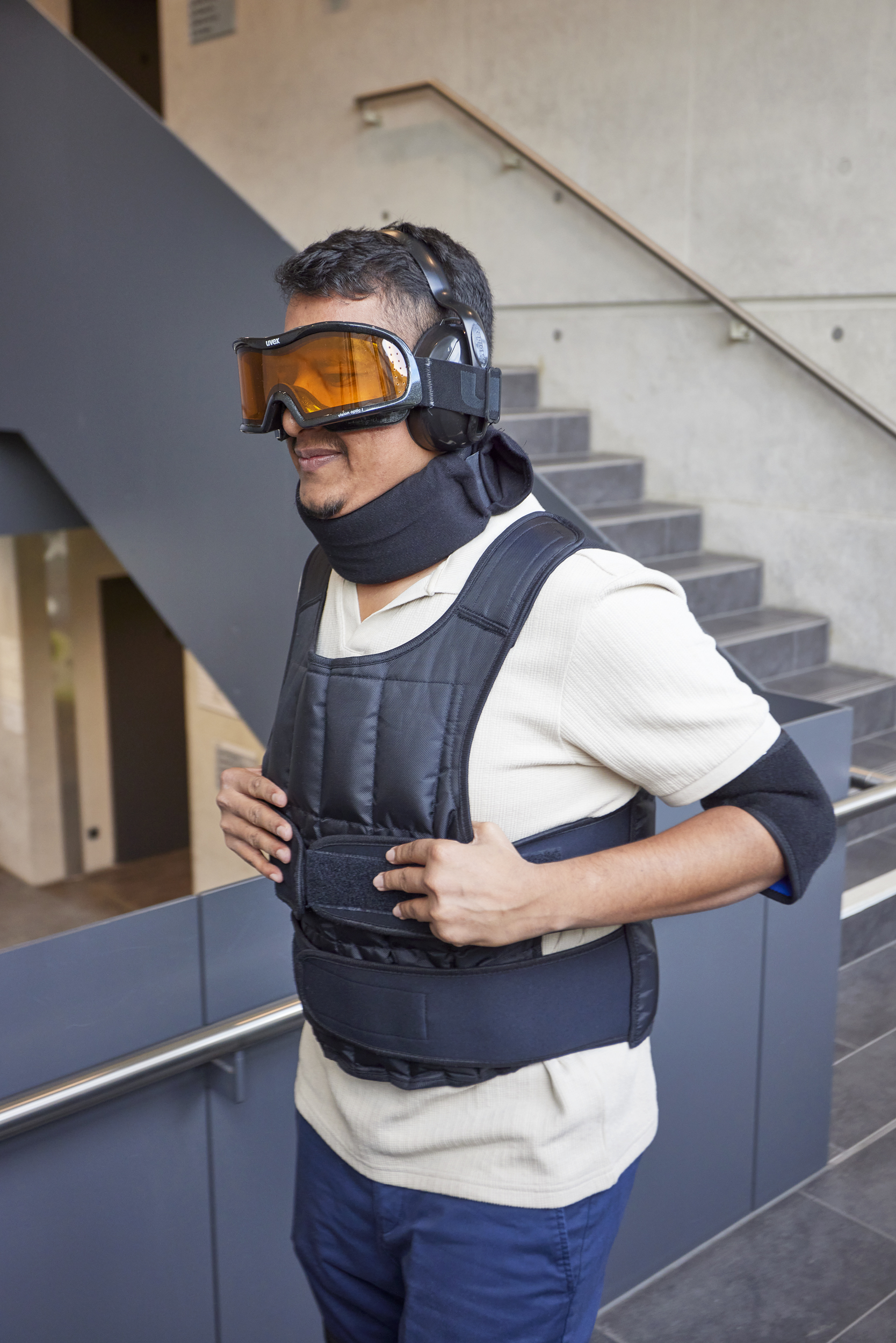
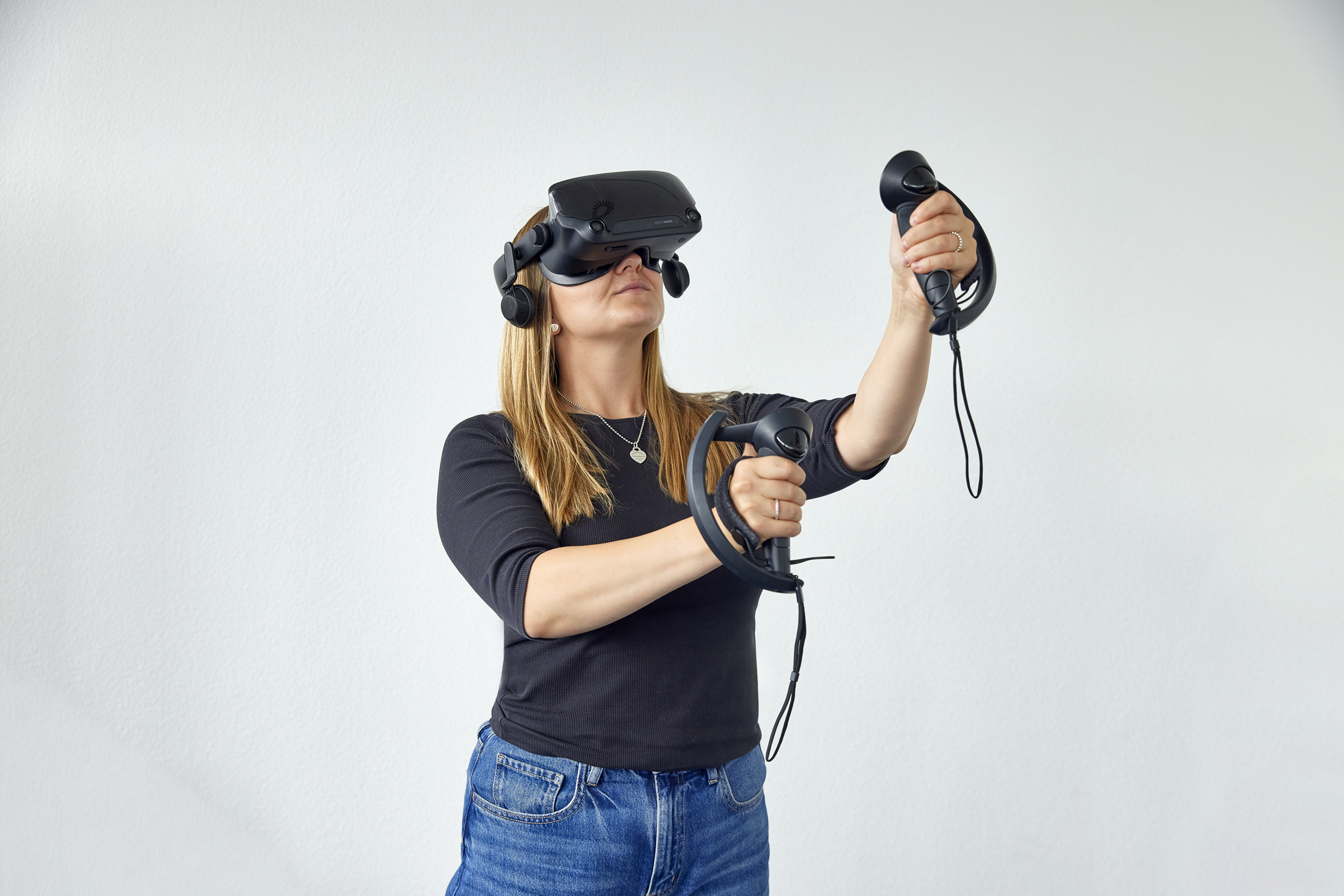

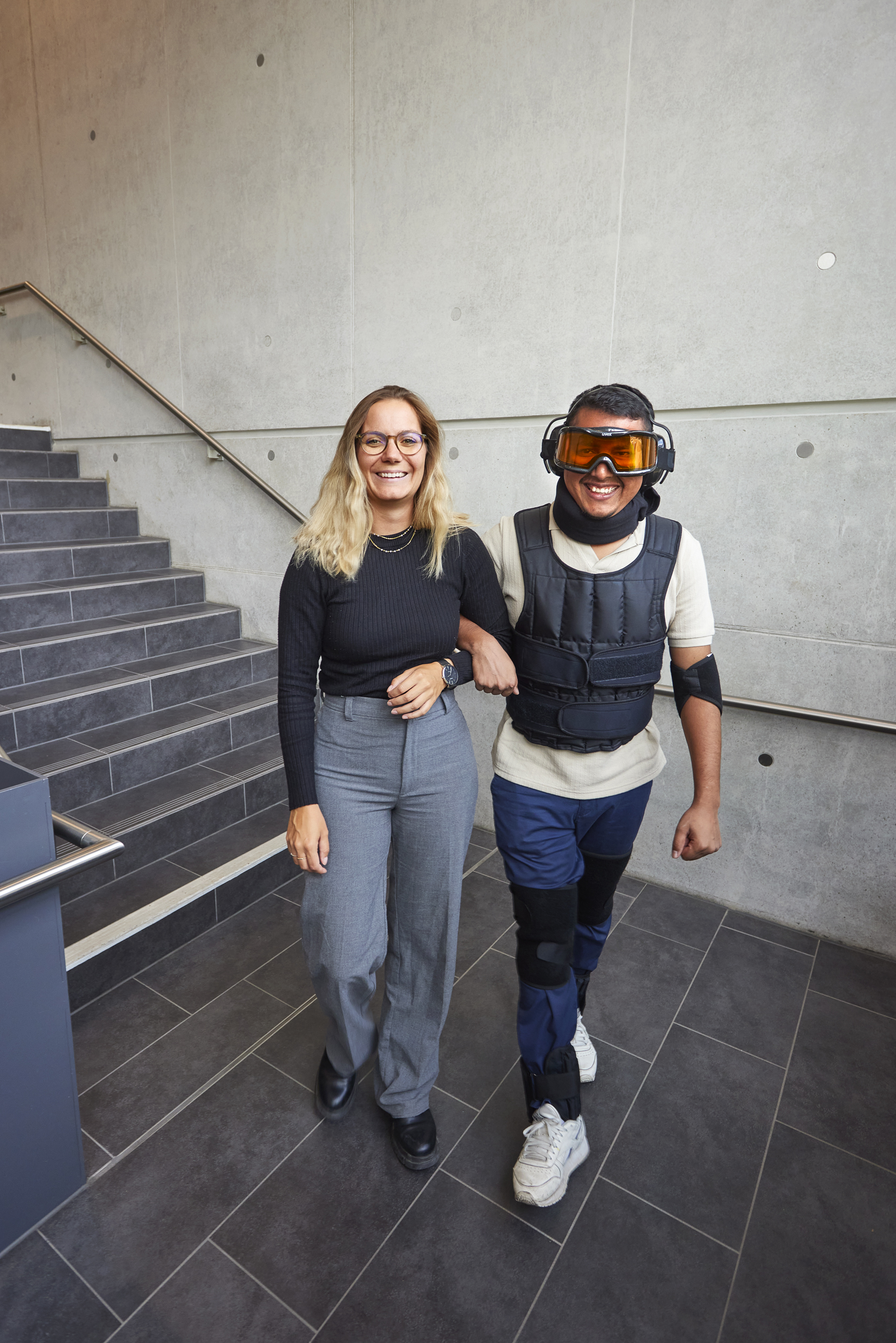
Campus
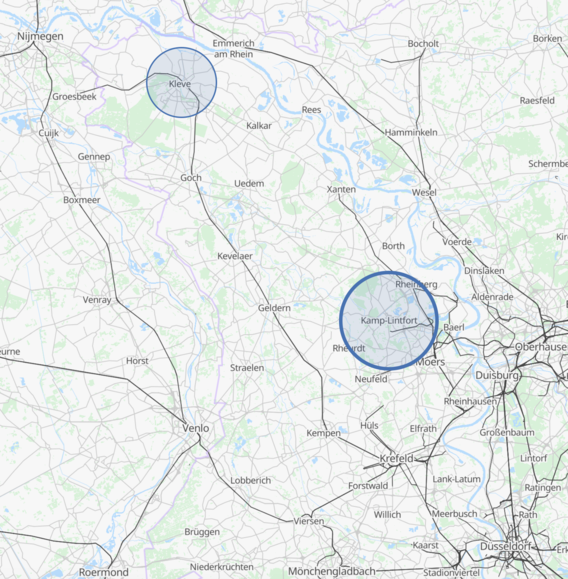
Kamp-Lintfort Campus
Related degree programmes



Student information

All about your studies
Bridging courses are intensive courses designed to help you prepare for your degree before your studies begin. Participation is voluntary and no credit points are awarded. You can use the courses to refresh your existing knowledge and fill in any small gaps before starting your studies.
The courses are held before the start of the winter semester, usually in September. The upcoming course programme will be available at the link below in due course.
The office of the examination board is the central point of contact for all questions and inquiries regarding examinations at your Faculty (Faculty of Communication and Environment).
Office of the Examination Board
On their website you will also find an overview of your first points of contact for various examination-related matters.
Overview
There is also a central Examinations Service for the entire University. It handles the administrative implementation of decisions made by the Examination Board and manages examination-related processes.
Examination Service
Your Faculty of Communication and Environment and the University’s central services offer advice and support throughout your studies – whether you need help with academic matters or personal challenges.
Advice and support services offered by the Faculty
Do you have any questions about your degree programme or exam-related matters? Are you experiencing issues with lecturers, or are you looking for personalised advice? Here you’ll find an overview of the key points of contact within the Faculty of Communication and Environment.
Services offered by the Faculty
Central advisory services
The university’s central advisory services are here to support you with a wide range of topics during your studies and beyond. Whether you need help with finding academic literature, developing a business idea, dealing with mental health challenges, studying with children or a disability, or have questions about anti-discrimination, you’ll find the right contacts and support for different situations in your studies and everyday life.
Central student services
The Central Student Services team is your main point of contact for organisational and administrative questions about your studies. They can help you with applications and admission, enrolment and deregistration, re-registration and leaves of absence, changing degree programmes, as well as questions about semester fees, certificates or health insurance notifications.
Contact
Programme Assistant
Ms Meike Hüsgen
Tel: 02842/90825679
meike.huesgen(at)
Office hours (room number 02 00 455)
Monday–Thursday: 10.00–12.15 and by appointment
Monday, Tuesday, Thursday: 13.30–15.00 and by appointment