It is a form of fraud that often goes unnoticed, yet is systematic: the adulteration of high-quality olive oil with cheaper vegetable oils, such as sunflower oil. The damage is not merely economic; it also undermines confidence in one of our most fundamental commodities.
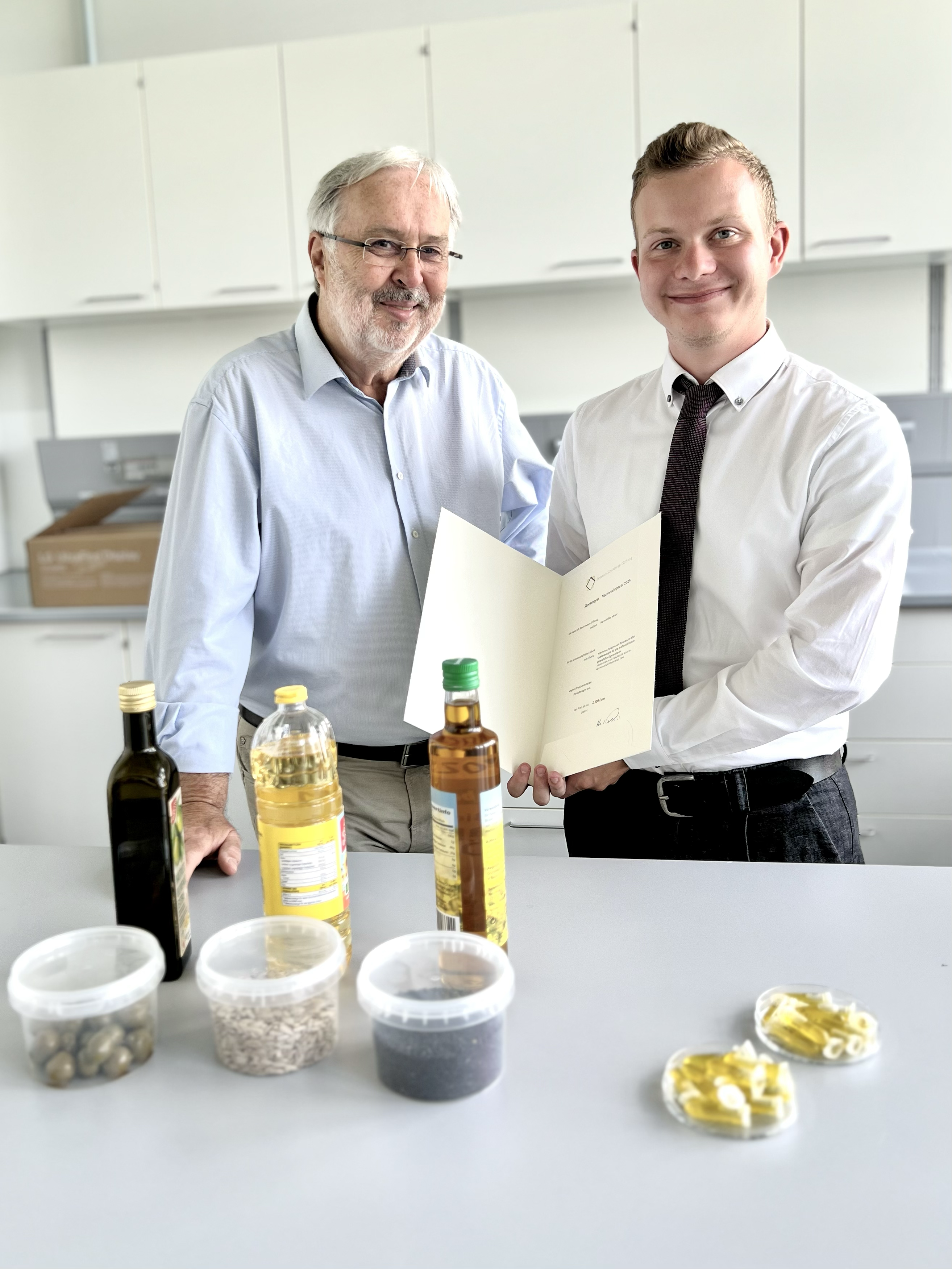
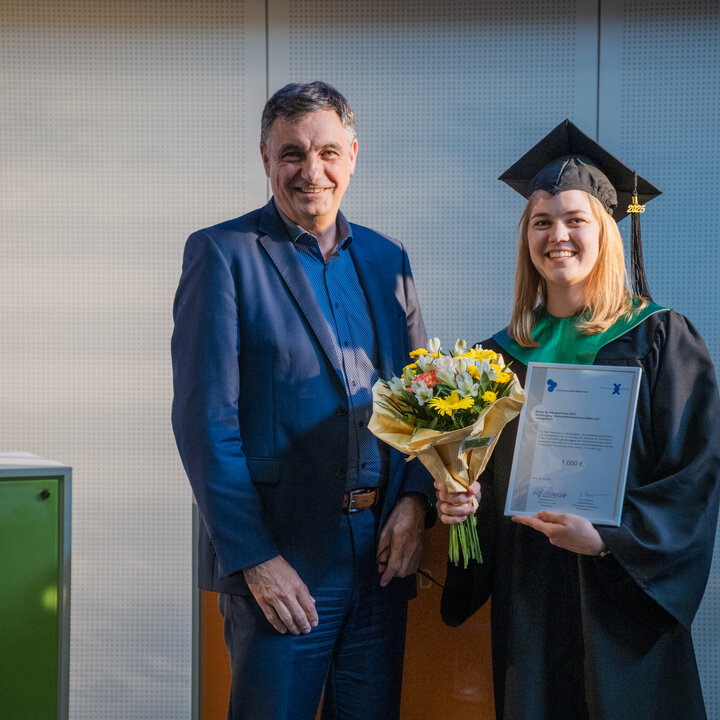
At Rhine-Waal University of Applied Sciences in Kleve, a young researcher has now taken up the fight against this problem. On 29 July 2025, Kilian Visser received the Heinrich Stockmeyer Foundation’s Young Researchers’ Prize, worth 2,500 euros, for his Master’s thesis at the Faculty of Life Sciences at Rhine-Waal University of Applied Sciences in Kleve. The award was presented by Prof. Dr Dr habil. Manfred Gareis, Chair of the Foundation’s Board of Trustees, who travelled specially from Bavaria to underline the Foundation’s personal commitment.
“Successes are most rewarding when they are also recognised,” emphasised Prof. Dr Peter Scholz, Dean of the Faculty of Life Sciences, and thanked the Foundation for “building the future”. At the heart of the award-winning thesis lies a problem of great economic significance. “In Europe in particular, olive oil is a foodstuff that is very often and very readily adulterated,” explained the award winner, Kilian Visser. To tackle this problem, Visser investigated in his Master’s thesis – which was carried out under the supervision of Prof. Dr Florian Kugler, Professor of Food Science and Technology and Programme Director of the Master’s programme in Food Sciences, as well as Thomas Tewes, a research assistant and PhD student at the Faculty of Life Sciences – the potential of Raman spectroscopy. Using a confocal Raman microscope, he recorded the chemical ‘fingerprints’ of a total of 27 cooking oil samples from a selection of 15 different types of oil, thereby creating a database comprising around 1,800 Raman spectra.
He placed particular emphasis on practical relevance. Among other things, he investigated the effects that a slight change in the laser’s focus within the edible oil samples – measured in droplet form – has on the measurement result. The real innovation lies in the data analysis: Kilian Visser combined established multivariate methods with modern machine learning techniques. The result is a method which, even when validated in practice, can reliably detect the adulteration of extra virgin olive oil with refined sunflower oil with very high precision, even at a concentration of just 0.25 per cent. The measurements themselves take only a few seconds. “It is practice-oriented, it is highly scientific, and it is presented in a well-founded manner,” said Prof. Gareis, praising the work, which was unanimously deemed worthy of the prize by the Board of Trustees.
For Kilian Visser, who has remained loyal to the university, this marks the completion of a full circle: having completed his Bachelor’s degree in ‘Quality, Environment, Safety and Hygiene’ and subsequently his Master’s degree in ‘Food Science’ at the Faculty of Life Sciences, he now works as a research assistant in the food science department there. He sees great potential in the method and considers it “entirely conceivable” that it will be adapted for portable systems in the future, enabling measurements to be taken directly on site. Such a development could reshape the landscape in the fight against food fraud and strengthen consumer confidence in the long term.