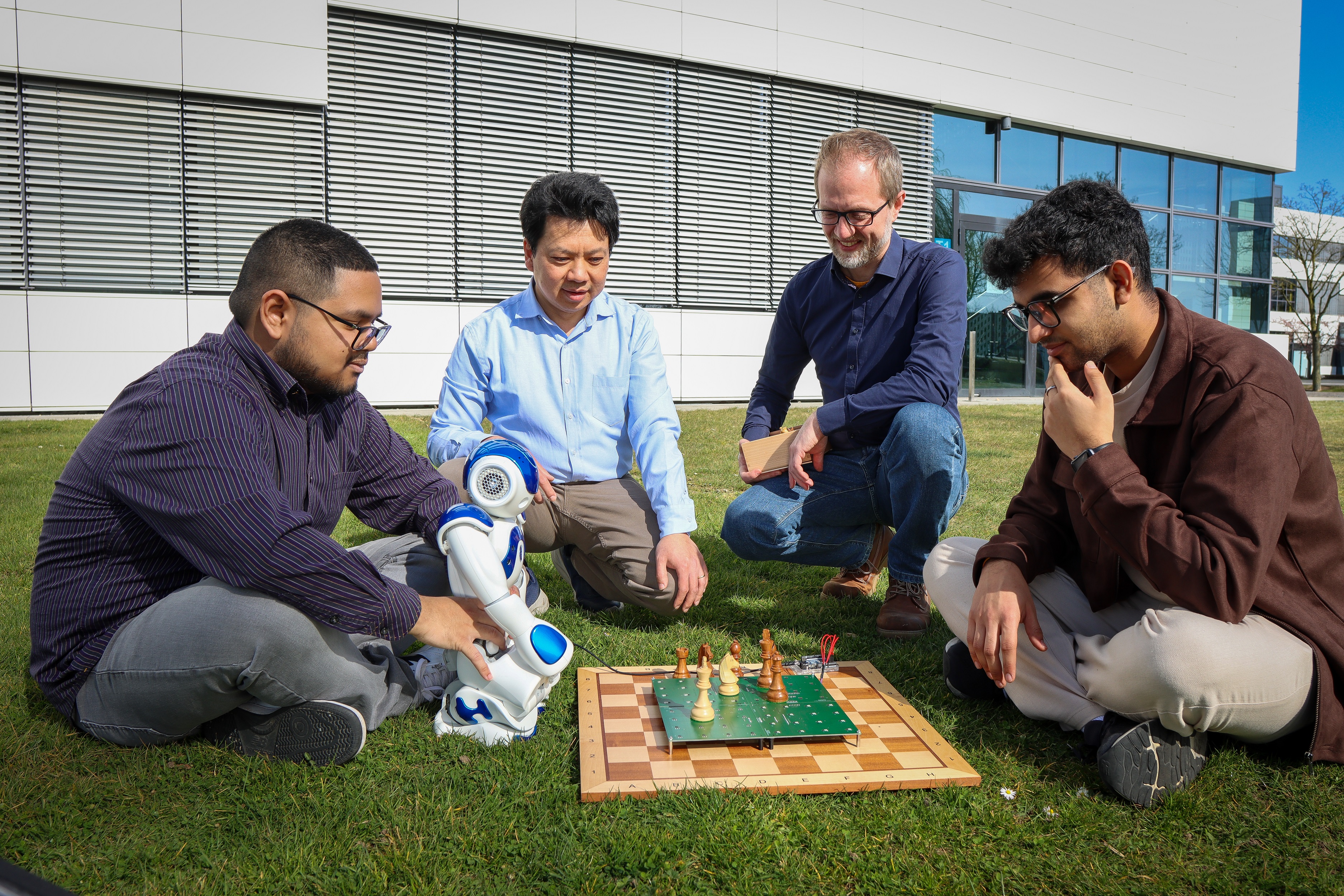
The two students, Praneel Bhatia (right) and Justin Chin Cheong (left), who are working as part of the university’s research focus group under Prof. Dr Matthias Krauledat (second from right) and Prof. Dr Ronny Hartanto (second from left), have designed an electronic chessboard with Hall-effect sensors that recognises the position and type of the magnetised chess pieces. This allows physical chessboards to be linked to online chess.
The two students, Praneel Bhatia (right) and Justin Chin Cheong (left), who are working for Prof. Dr Matthias Krauledat as part of the CAsPar university research centre (2nd from the right) and Prof. Dr Ronny Hartanto (2nd from the left), have designed an electronic chessboard with Hall-effect sensors that recognises the position and type of the magnetised chess pieces.
In addition, they have developed an interface between the board and the online chess service LiChess. With the help of this interface, every move made on the board is replicated online.
The two students, together with their professors, have documented and published the development of the electronic chessboard in a scientific article. At the end of May, they were invited to present their findings at the International Congress on Human-Computer Interaction, Optimisation, and Robotic Applications (ICHORA) conference in Istanbul.