Over the next three years, Rhein-Waal University of Applied Sciences will be working with two Ukrainian partners – Sumy State University in Ukraine and the L.V. Pisarzhevskii Institute of Physical Chemistry – on bio-inspired hybrid nanofibres that, amongst other things, can convert CO₂ into organic molecules. The FABIOCOM project aims to help tackle the challenges of climate neutrality by reducing the concentration of CO₂ in the atmosphere whilst simultaneously producing valuable organic compounds.
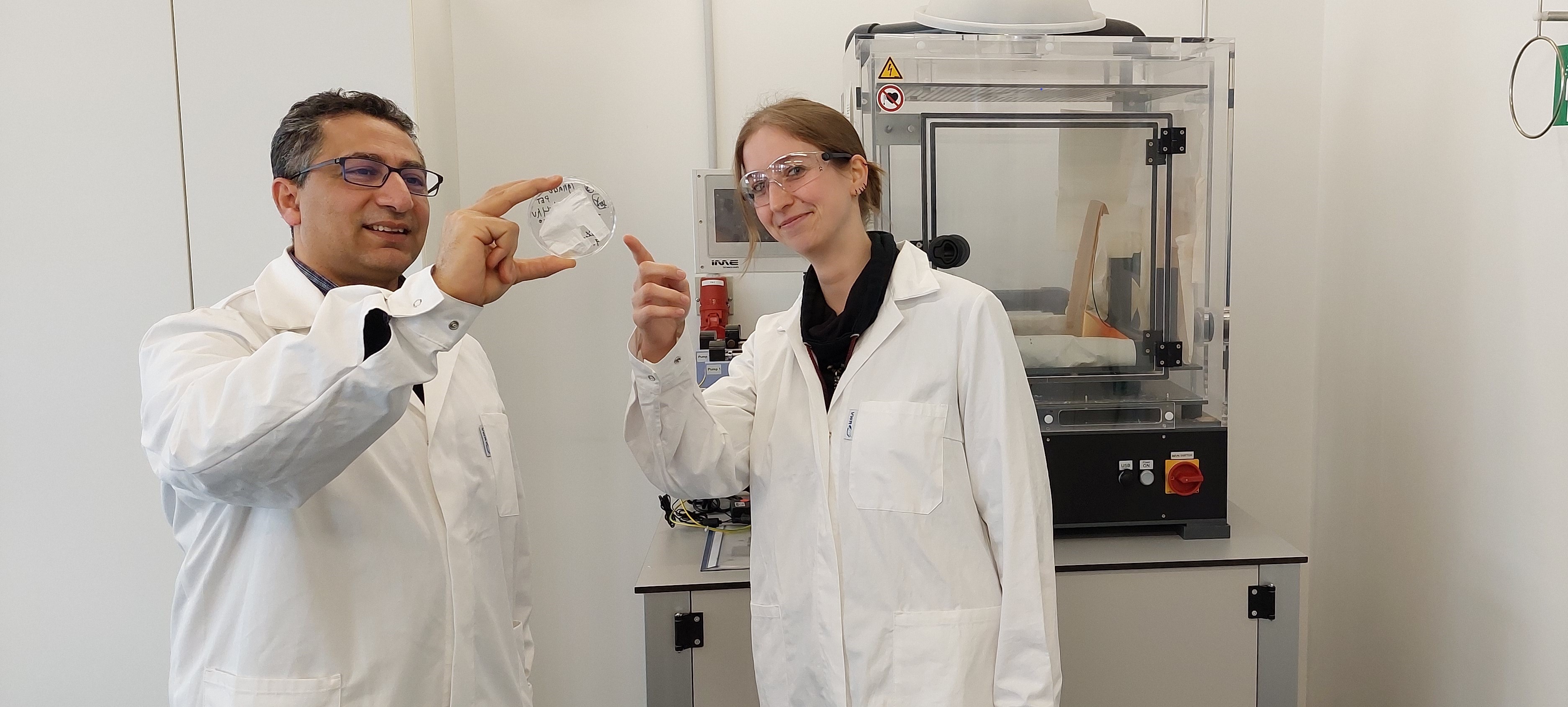
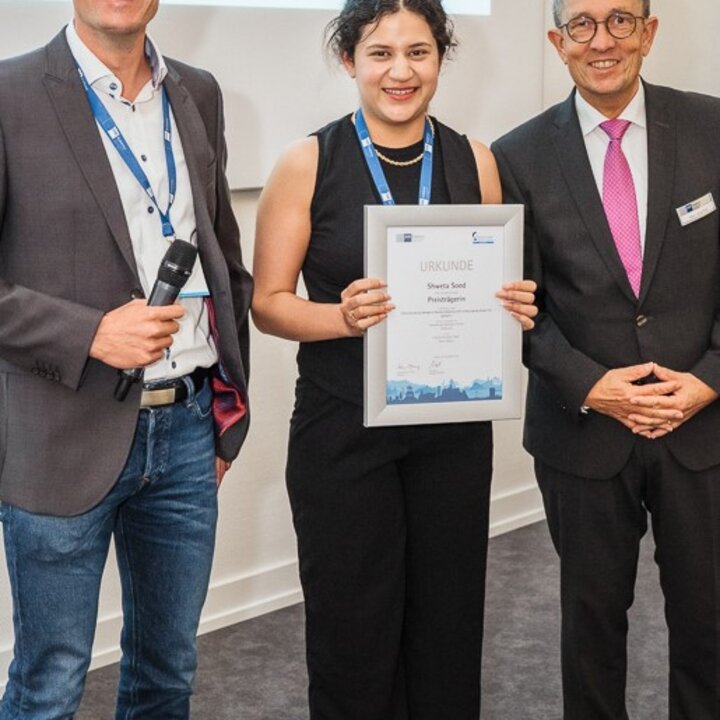
Prof. Dr Amir Fahmi (left) and Dr Rebecca Hengsbach (right).
Over the next three years, Rhein-Waal University of Applied Sciences will be working with two Ukrainian partners – Sumy State University in Ukraine and the L.V. Pisarzhevskii Institute of Physical Chemistry – on bio-inspired hybrid nanofibres that, amongst other things, can convert CO₂ into organic molecules. The FABIOCOM project (the acronym stands for Fabrication of Bio-inspired Hybrid Nanostructured Catalysts for CO₂ Capture and Conversion into Organic Molecules) is being coordinated by Prof. Dr Amir Fahmi at HSRW.
The aim of FABIOCOM is to develop novel nanofibre structures for the capture and conversion of CO₂ into important organic molecules. The project’s findings are intended to enable the properties of the hybrid nanofibres to be further improved and modified through intelligent design, so that they can, for example, be used in filters for specific pollutants. In addition to the development of new functional materials, other areas such as multifunctional materials, catalysis and green energy can be explored. Prof. Dr Amir Fahmi and his team have extensive experience in the field of nanofibre synthesis and the development of hybrid nanostructured materials.
FABIOCOM is an interdisciplinary project; whilst the focus at HSRW is on the synthesis and characterisation of hybrid nanofibres, research into the catalytic activities of these hybrid nanofibres is being carried out in Ukraine. The project also offers positions for early-career researchers. The project is funded by the Federal Ministry of Education and Research.