

Information and Communication Design, BA
For the passionately creative
Do you love developing ideas and making them come alive? Then Information and Communication Design is the right choice for you. Here you’ll study not only fundamental visualisation techniques such as illustration and photography, but also advanced subjects like interaction design, editorial design and identity design. Our greatest passions are the new and the visionary. During your studies, you’ll be tasked with numerous personal design projects, each one an opportunity to take your ideas from the drawing board to reality using your growing skills and knowhow. This type of approach provides the perfect preparation for a later career in the design world, whether at an agency or as an independent designer.
At a glance
Bachelor of Arts
Full-time
7 semesters
Unrestricted admission (no Numerus Clausus)
Kamp-Lintfort
English
1 September
Why study Information and Communication Design, BA at Rhine-Waal?


What makes this degree programme special?
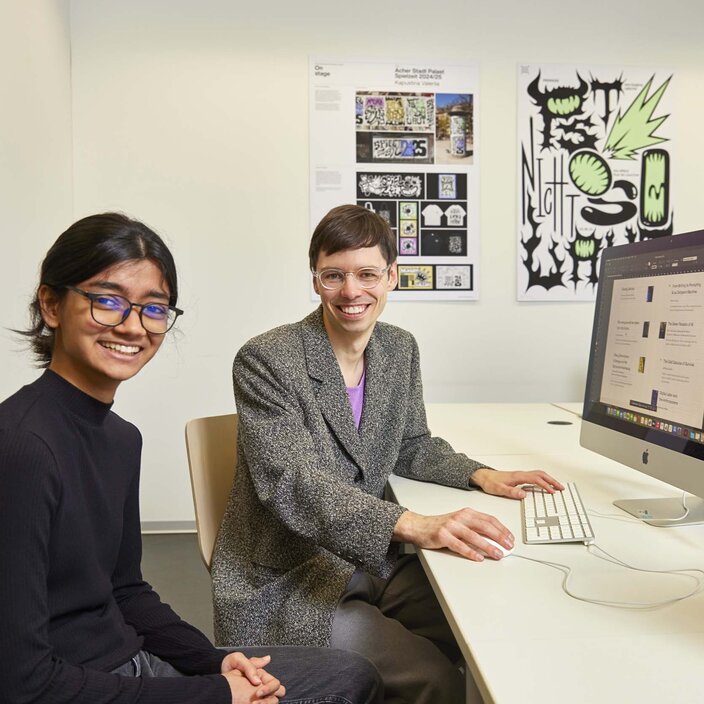
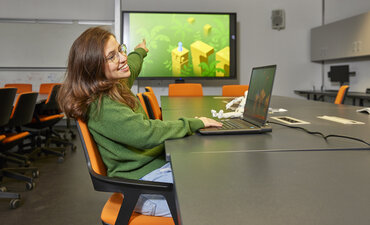
Su Kumran shares her experiences.


Programme structure and content
With your degree, you’ll have a wide range of career options. You could work in a design or advertising agency, for a media company, a start-up or a business developing its own brands and products. Freelancing is another option.
During your studies, you’ll develop creative ideas, learn to think strategically and gradually build a strong portfolio. It’s your chance to showcase your skills and prepare for a career in the diverse and dynamic creative industries.
In your first two semesters, you’ll build a solid foundation and learn how design works from a technical, creative and theoretical perspective. In courses such as illustration and photography, you’ll practise essential visual techniques and develop your own style.
From the third semester onwards, you’ll work on design projects – the core of the degree programme. You can choose from areas such as editorial design, corporate design, campaigns, interface and web design, exhibition design or information design. Many projects are carried out in collaboration with external partners, giving you valuable insights into professional practice while you study. Alongside your projects, you’ll take theory courses such as design history and design theory.
Technical skills are also an important part of the programme. Interface design, motion design and digital applications are integrated into your studies up to the fourth semester, alongside your design projects.
In the sixth semester, you’ll gain valuable experience through an internship or a semester abroad – the choice is yours. At the end of your degree, you’ll develop your own design project as your Bachelor’s thesis, combining creative and professional work with theoretical reflection.
You’ll also develop key skills in areas such as presentation, project management and starting your own business – everything you need to launch a successful career as a designer.
Yes. As an Information and Communication Design student, you have the opportunity to spend a semester abroad or complete an internship – both are valuable additions to your studies. You’ll gain practical experience, apply your knowledge to real-world projects and strengthen your portfolio for your future career.
Studying abroad gives you fresh creative inspiration and introduces you to international perspectives on design – a great fit for a degree programme that is already taught in English. At the same time, you’ll make valuable connections, become more independent and prepare for the demands of your future career.
The entire degree programme is taught in English – and that comes with plenty of advantages. English is the main language of today’s international design and creative industries, with many agencies, companies and clients working across borders. Studying in English from the start prepares you for this global working environment.
You’ll not only develop your subject knowledge, but also become familiar with the key terminology and communication skills you’ll need in your future career – whether you’re giving presentations, working in teams or communicating with international clients.
And don’t worry: your English doesn’t have to be perfect. What matters is that you have a solid foundation and are willing to use the language. Classes are practical and easy to follow, and you’ll quickly become more confident as you use English naturally in your everyday creative work.
Studying in English not only improves your language skills, but also opens up opportunities for internships, jobs and semesters abroad – all around the world.
We welcome applications from nationals of all countries. Please check here for general admission requirements.
For the Information and Communication degree programme, the following additional requirements apply:
- Passing an aptitude test (portfolio assessment)
- Interest in design, music and art
- English language skills (certificate at level B2 according to the Common European Framework (CEF))
Application process
Portfolio Assessment
For the Information and Communication Design degree programme, you’ll need to demonstrate your artistic and creative aptitude in addition to meeting the general university entrance requirements. This is assessed through a portfolio assessment, which determines whether you have the creative potential required for the programme.
Important: You can only be admitted to the degree programme if you pass the portfolio asessment and also apply via the application portal.
Insights


Campus
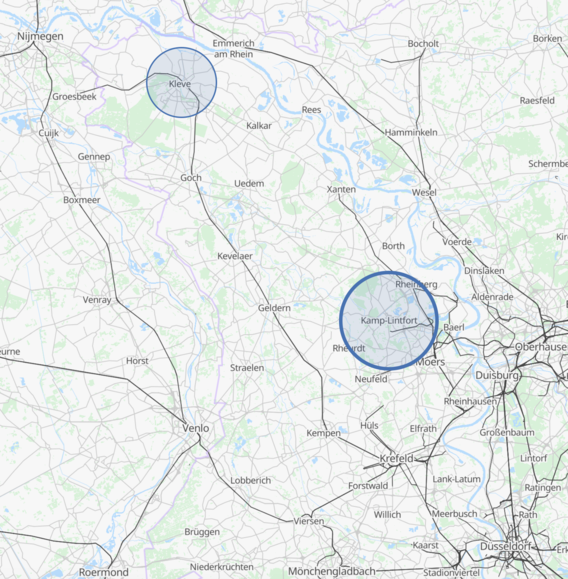
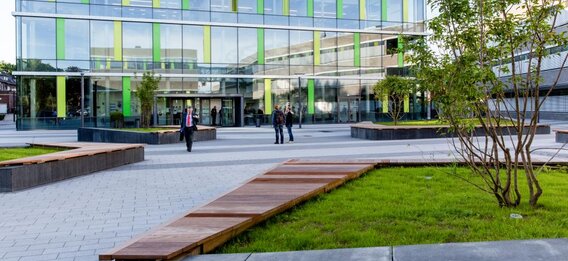
Kamp-Lintfort Campus
Related degree programmes
Student information

All about your studies
Bridging courses are intensive courses designed to help you prepare for your degree before your studies begin. Participation is voluntary and no credit points are awarded. You can use the courses to refresh your existing knowledge and fill in any small gaps before starting your studies.
The courses are held before the start of the winter semester, usually in September. The upcoming course programme will be available at the link below in due course.
The office of the examination board is the central point of contact for all questions and inquiries regarding examinations at your Faculty (Faculty of Communication and Environment).
Office of the Examination Board
On their website you will also find an overview of your first points of contact for various examination-related matters.
Overview
There is also a central Examinations Service for the entire University. It handles the administrative implementation of decisions made by the Examination Board and manages examination-related processes.
Examination Service
Your Faculty of Communication and Environment and the University’s central services offer advice and support throughout your studies – whether you need help with academic matters or personal challenges.
Advice and support services offered by the Faculty
Do you have any questions about your degree programme or exam-related matters? Are you experiencing issues with lecturers, or are you looking for personalised advice? Here you’ll find an overview of the key points of contact within the Faculty of Communication and Environment.
Services offered by the Faculty
Central advisory services
The university’s central advisory services are here to support you with a wide range of topics during your studies and beyond. Whether you need help with finding academic literature, developing a business idea, dealing with mental health challenges, studying with children or a disability, or have questions about anti-discrimination, you’ll find the right contacts and support for different situations in your studies and everyday life.
Central student services
The Central Student Services team is your main point of contact for organisational and administrative questions about your studies. They can help you with applications and admission, enrolment and deregistration, re-registration and leaves of absence, changing degree programmes, as well as questions about semester fees, certificates or health insurance notifications.
Contact
Programme Assistant
Ms Elena Quasten
Tel: 02842/908259680
elena.quasten(at)
Office hours (room number 02 00 455)
Monday–Thursday: 10.00–12.15 and by appointment
Monday, Tuesday, Thursday: 13.30–15.00 and by appointment
Questions degree programme / portfolio assessment
Degree programme-related questions
administration-ICD(at)hsrw.eu
Questions about the portfolio assessment
portfolio-ICD(at)hsrw.eu