This year’s competition task was to determine the exact value of a so-called hexadecimal number and to be the first to submit the result. These numbers, which consist of 16 different digits and therefore have six more digits than the decimal system we are familiar with, are of particular importance when calculating economic and administrative processes. For example, computers can digitally map and process business processes and application procedures using specialised number systems. This makes it possible for information from public authorities to be accessible to citizens ‘round the clock’. The scope for communication via the internet is also significantly expanded.
To solve the problem, the students had to learn how to carry out calculations in number systems that were unfamiliar to them. “Tasks of this kind present a challenge to students: within a short space of time, they must produce a result that must be exactly correct in order to be technically applicable,” explains Prof. Greveler, who launched the annual competition.
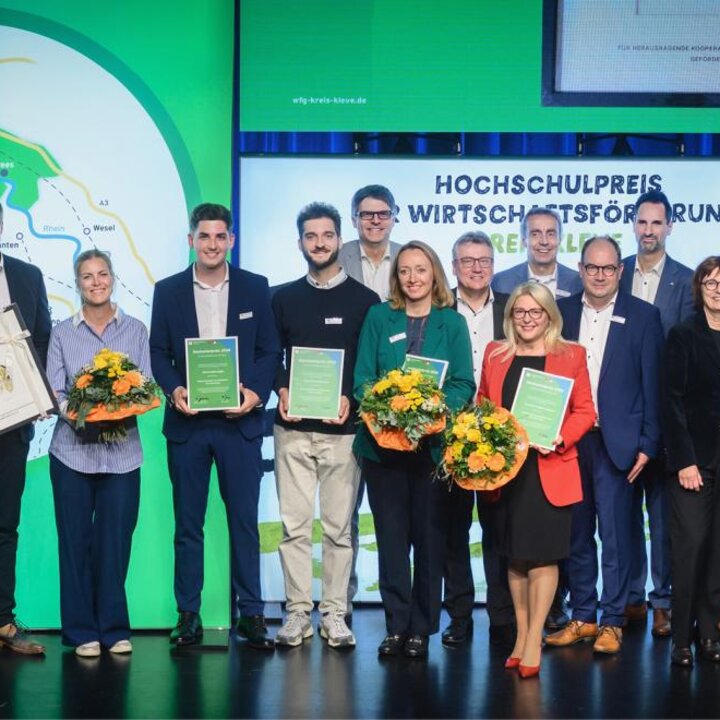
“We learnt to programme whilst still at school and were able to solve the problem using the scripting language PHP!” says Tim Wawer (a student on the E-Government degree programme), delighted with the award. “It’s rare for students to have this kind of knowledge. Unfortunately, computer science plays far too minor a role in schools in North Rhine-Westphalia. Through its computer science degree programmes, Rhine-Waal University of Applied Sciences provides a solid grounding in the basics, with a focus on practical applications and the latest technologies,” says Prof. Greveler, congratulating the two winners.