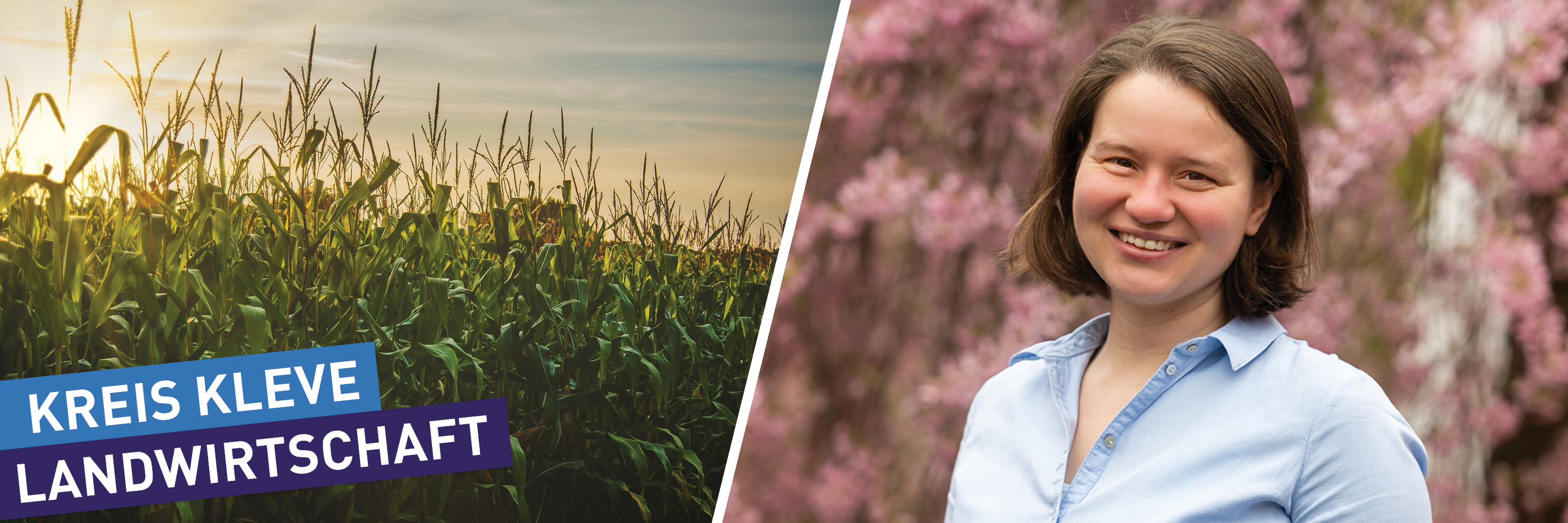
The professor of soil science and plant nutrition and the PhD student Bernou Zoë van der Wiel from Rhine-Waal University of Applied Sciences, together with colleagues from the Netherlands, examined the entire supply chain from producer to consumer and analysed the flows of nitrogen, phosphorus and potassium across the whole district of Kleve. Professor Wichern explains: “Our study confirms that there is an annual surplus of these nutrients, and this has negative consequences that contribute to damage to water bodies and the loss of biodiversity.” Van der Wiel adds: “In an ideal world, of course, we would only produce locally what is consumed locally, but that does not, of course, reflect reality, as many regions rely on food imports and the Lower Rhine has great potential to produce food for other regions.”
The necessary transformation identified by the researchers involves restoring nutrient cycles at a regional level through closer integration of arable farming and livestock farming, whilst reducing nutrient imports. “Of course, there is no single solution to this; instead, we must tackle the issue from various angles,” says Wichern. “This could involve, for example, technical solutions where manure is further processed and the nutrients are specifically exported, or it could mean, for instance, permanently reducing livestock farming in the region.” The most important thing, he added, is to explore the various options together with regional farmers and other stakeholders and businesses. The researchers at Rhine-Waal University of Applied Sciences are offering their support in this regard. “The Chamber of Agriculture’s recently published nutrient report shows that farmers in the district of Kleve are on track to reduce nutrient surpluses. We would like to help find further possible solutions to support this process,” adds van der Wiel. “We welcome any farmers, entrepreneurs and representatives of other stakeholder groups who get in touch with us to work together to find solutions.”
Background
The study described in the article has been published in the journal *Nutr Cycl Agroecosyst* under the title ‘Restoring nutrient circularity in a nutrient-saturated area in Germany requires systematic change’. The authors are Bernou Zoë van der Wiel, Matthias Kleinke and Florian Wichern from Rhein-Waal University of Applied Sciences, and Jan Weijma, Corina Everda van Middelaar and Cees Jan Nico Buisman from Wageningen University (Netherlands).
Contact
: Farmers, entrepreneurs and representatives of other stakeholder groups from the Kleve region who are interested in collaborating with Rhein-Waal University of Applied Sciences can contact Bernou Zoë van der Wiel by email at bernouzoe.vanderwiel@hochschule-rhein-waal.de.