The results of the study show that the walnut forests in southern Kyrgyzstan offer great potential for tackling the country’s environmental and socio-economic problems. Nevertheless, the local population currently lacks incentives to go beyond simply collecting and selling the nuts and to sustainably increase the walnut tree population through propagation. One of the research consortium’s objectives was therefore to demonstrate that not only the nuts, but also the wild berries, fruits and herbs that grow in these forests can yield economic benefits. As the potential of these species is not currently being fully exploited – partly due to a lack of processing and marketing opportunities – the research findings also include proposals for measures that can serve as a benchmark for the development of various initiatives and business projects. Specifically, as part of the research project, Rhine-Waal University of Applied Sciences, in collaboration with the Kyrgyz-Kazakh University, has developed a technology for producing eight products from seven wild plants and fruits found in the Kyrgyz nut forests, including wild alycha ketchup and a berry chocolate. These forest products are intended to boost marketing potential both domestically and for export, whilst preserving biodiversity. The researchers are confident that the development of such economic activities will also reduce the pressure on the nut trees and minimise environmental risks.
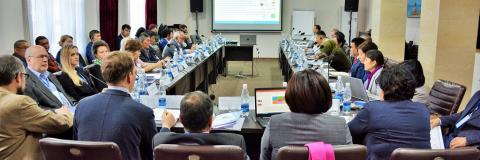
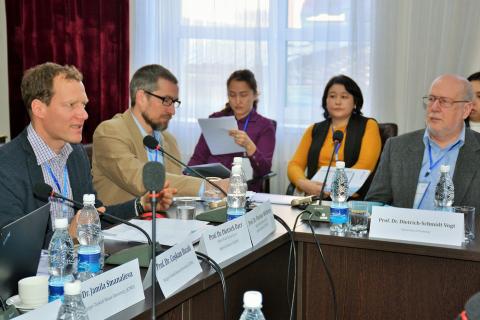
Representing Rhein-Waal University of Applied Sciences, Professor Dietrich Darr and Professor Florian Wichern from the Faculty of Life Sciences attended the event to present the research findings. The event was also attended by scientists from the Central Asian University, Manas KTU, the Kyrgyz-Kazakh University and the Institute of Nanotechnologies and Fruit Growing at the National Academy of Sciences of the Kyrgyz Republic. The SUSWALFOOD project was funded by the Federal Ministry of Education and Research (BMBF).