
The Laboratory for Analytics, Quality and Ecology at the Faculty of Technology and Bionics at Rhein-Waal University of Applied Sciences is receiving funding through a donation

The Laboratory for Analytics, Quality and Ecology at the Faculty of Technology and Bionics at Rhein-Waal University of Applied Sciences is receiving funding through a donation
Kleve/Kamp-Lintfort, 9 January 2014: SPECTRO Analytical Instruments GmbH, based in Kleve, and the AMETEK Foundation have made it possible to expand a laboratory at Rhine-Waal University of Applied Sciences through a generous grant, thereby supporting the students and the Analytics, Quality and Ecology research group within the Faculty of Technology and Bionics.
Thanks to a donation of 29,500 euros, a laboratory with six identical workstations has been set up. With regard to standard glassware and small equipment, the research team used the funds to purchase basic equipment suitable for fundamental experimental investigations. In addition, the funding enabled the purchase of larger items of laboratory equipment, such as an analytical balance, a water bath, a pH meter and a bench-top centrifuge, all of which are essential for the effective operation of an analytical laboratory.
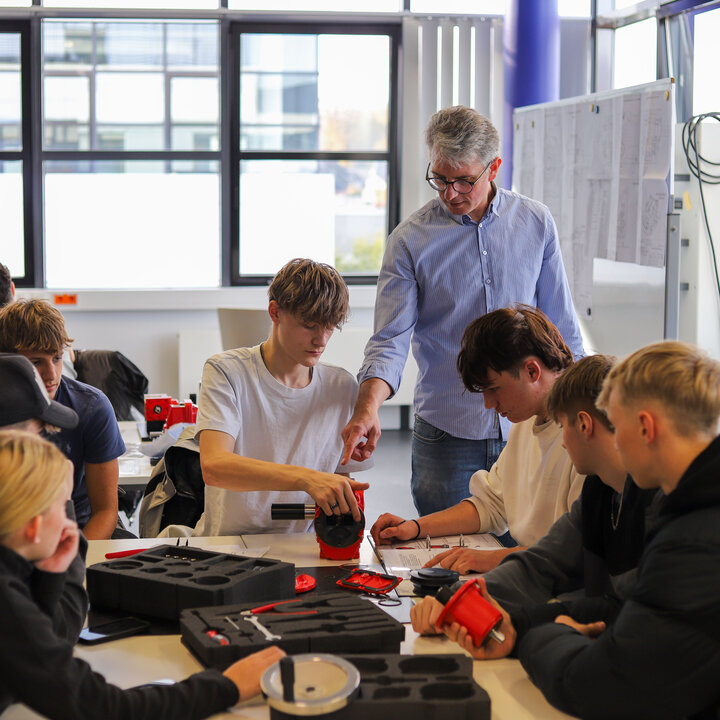
Thanks to the newly established laboratory, students at Rhein-Waal University of Applied Sciences can now work alongside the research team to tackle specific problems and develop chemical-analytical solutions. Research carried out in the laboratory includes, amongst other things, the determination of heavy metals in soil (agriculture), the determination of metals in plastic (consumer protection), the determination of sulphur in blast furnace slag (production control) and the analysis of jewellery (gold content). Projects with local companies are also in the pipeline.
For the President of Rhein-Waal University of Applied Sciences, Prof. Dr Marie-Louise Klotz, this donation is a fine example of how students at the university can be meaningfully supported: “This improves the learning and teaching conditions at the university, which we are delighted about! By supporting science, teaching and research, SPECTRO and the AMETEK Foundation are making a significant contribution to the region’s future viability.”