“The project by Rhein-Waal University of Applied Sciences, which forms part of our research collaboration on cross-border labour migration, is another important step towards continuing the fight against exploitative living and working conditions. The results show that we are taking exactly the right approach with our cross-border strategy and cross-border checks. We are helping towns and local authorities to achieve this through a whole network of different North Rhine-Westphalian and European authorities. This puts local authorities in the driving seat. Legally, we have empowered our local authorities through the Housing Strengthening Act to crack down hard on black sheep. “That is why we will not let up in future and will continue to keep exploitative companies on their toes,” says Ina Scharrenbach, Minister for Home Affairs, Local Government, Construction and Digitalisation of the State of North Rhine-Westphalia.
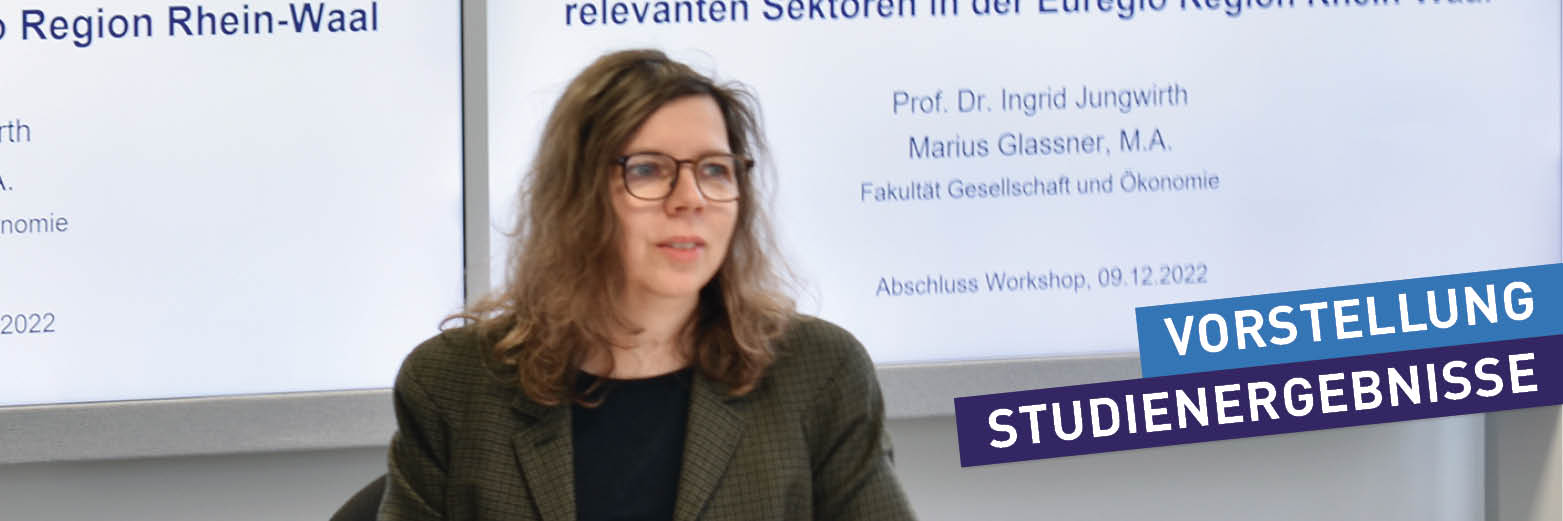
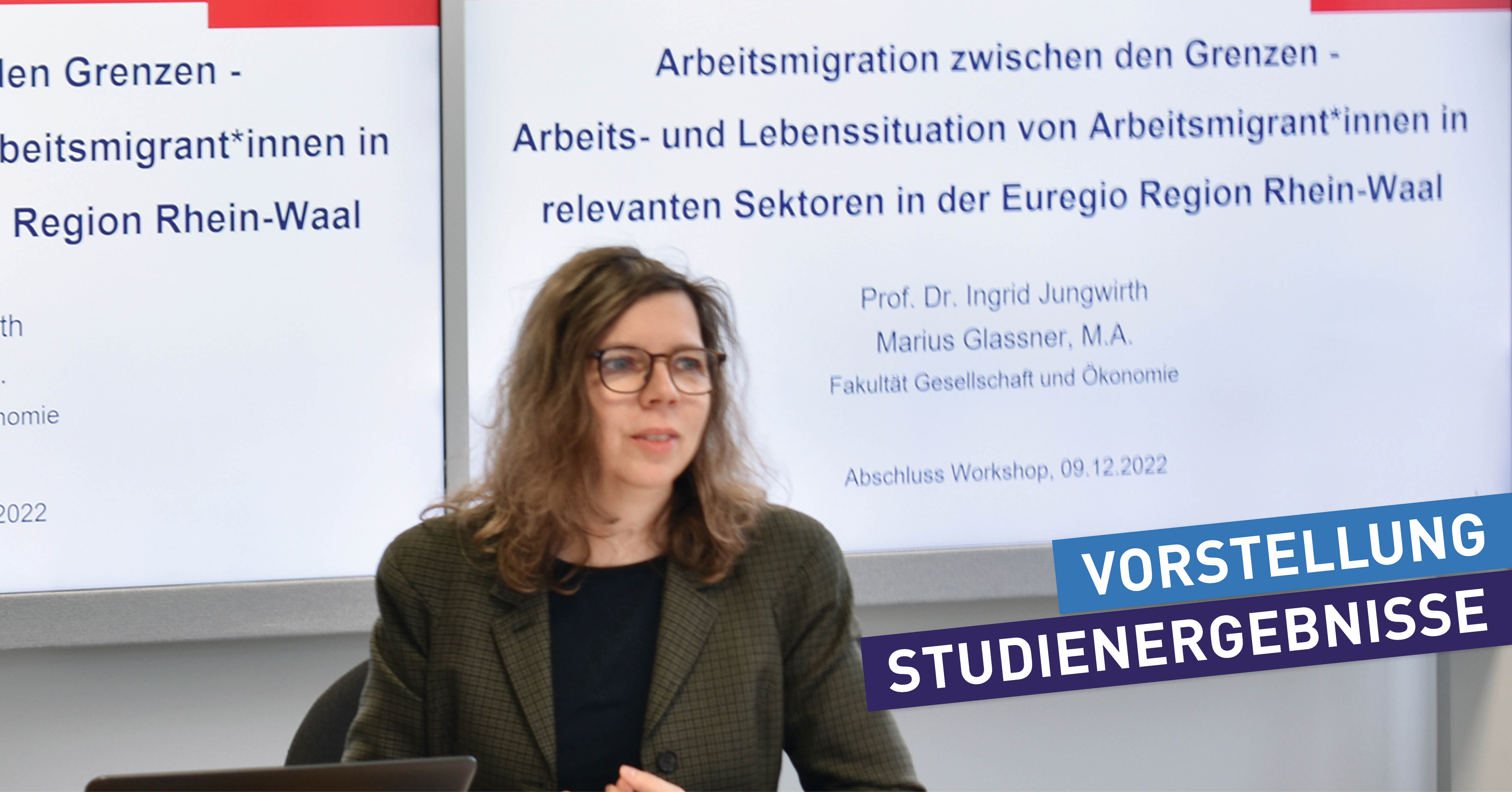
The research project entitled ‘Labour Migration Across Borders’ provided insights into the specific situation in the Euregio region, where migrant workers from Eastern European countries live and work: These workers move freely across borders, work in the meat industry in the Netherlands and are housed in accommodation in North Rhine-Westphalia, which is often in poor or dilapidated condition: “Their situation is particularly precarious, as differences in national jurisdiction within the border region are exploited to maximise profits and exploit migrant workers on a larger scale – even leading to criminal structures and slavery-like dependencies,” said Dr Ingrid Jungwirth, Professor of Social Sciences specialising in diversity and inclusion at the Faculty of Society and Economics and head of the project. Together with Marius Glassner, a research assistant on the project, she presented the findings.
During the discussion, it became clear to what extent local authorities on the German side of the border in the Euregio region see themselves as a safety net for a range of problems arising from the sometimes dire situation faced by cross-border migrant workers. This is the case, for example, when they become homeless following redundancy or when, in the event of illness, the local authorities have to cover the costs of medical treatment because employers shirk their responsibilities. In particular, representatives of the local authorities emphasised that they had lacked the capacity to monitor the implementation of COVID-19 measures during the pandemic. Today, they lack the resources to monitor the standards of accommodation for cross-border migrant workers.
It was also noted that the Occupational Safety and Health Inspection Act, which was introduced in 2020 during the first year of the pandemic, has brought about structural changes. As a result, temporary agency work in the meat industry in Germany was effectively banned, and a number of further legal provisions were introduced, for example concerning inspections of occupational safety and accommodation in other sectors as well. An analysis of media reports and other documents, including handouts and guidelines for advising migrant workers, as well as an evaluation of interviews with experts, showed that significant changes had been achieved. This is evident, amongst other things, when compared with the measures taken in the Netherlands, which were less far-reaching, particularly with regard to the protection of migrant workers under labour law, which in turn has implications for the health and safety of employees.
Another finding of the study is that, whilst the increase in health and safety inspections in meat-processing factories on the German side of the border has led to improvements in technical shortcomings, furthermore, the COVID-19 pandemic and statutory regulations such as the Occupational Safety and Health Inspection Act have led to comprehensive changes in the contractual arrangements for migrant workers, to refurbishments of accommodation and to improvements in occupational safety and health in the workplace. Standards of accommodation in the meat industry, as well as in agriculture in North Rhine-Westphalia, have therefore improved. However, during the workshop discussion, the frequency of inspections was still considered to be too low. One conclusion drawn from the discussion was therefore that inspections of businesses and accommodation, in particular, needed to be stepped up further and that the planned inspections were insufficient.
Another piece of legislation adopted in the context of the pandemic and in light of findings in the Euregio region regarding the cross-border mobility of migrant workers is the Housing Improvement Act at state level in North Rhine-Westphalia. The Act expands the powers of local authorities to inspect problematic accommodation and sets out requirements for any buildings in which migrant workers live or are accommodated. The Housing Improvement Act thus also serves as the basis for the cross-border inspection campaigns of temporary agency workers’ accommodation in the border region, which are taking place for the first time since early 2022; these are being carried out by a wide range of competent German regulatory authorities with the involvement of the Dutch occupational safety and health authorities and the European Labour Authority (ELA).
“The findings of the research collaboration demonstrate once again that the introduction of the Occupational Safety and Health Inspection Act has led to tangible improvements in working and living conditions for migrant workers in the meat industry. This enables us not only to achieve isolated changes, but to transform the entire system. The research findings and the discussion make it clear that the pressure exerted by the occupational safety and health inspection authorities must be maintained and strengthened to ensure that these improvements have a lasting effect. ‘It is important for the workers themselves that they are supported by advisory services in asserting their rights. To this end, the State of North Rhine-Westphalia is promoting a comprehensive network of “Arbeit” advice centres,’ said Karl-Josef Laumann, Minister for Labour and Social Affairs.
About the project
The research project ‘Cross-border labour migration – working and living conditions of migrant workers in relevant sectors in the Euregio Rhine-Waal’ was carried out in cooperation with the Ministries for Home Affairs, Local Government, Construction and Digitalisation, and for Labour, Health and Social Affairs of the State of North Rhine-Westphalia, and in collaboration with Radboud University Nijmegen (led by Prof. Dr Tesseltje de Lange). The project is a preliminary study for a more comprehensive project and aimed, through document analysis and expert interviews with relevant stakeholders in politics, civil society and the business sector, to develop recommendations for policy and advisory services. During the workshop, the findings and recommendations developed during the project were presented to and discussed with stakeholders in the field. In a second phase of the project, affected migrant workers are also to be interviewed.