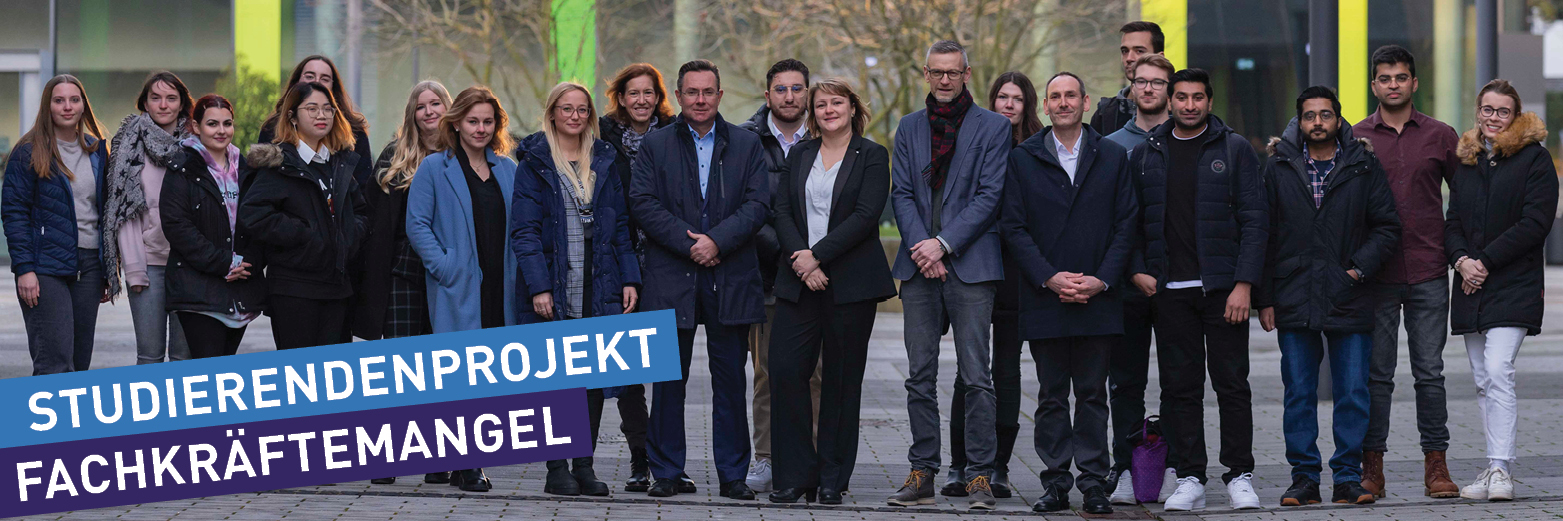
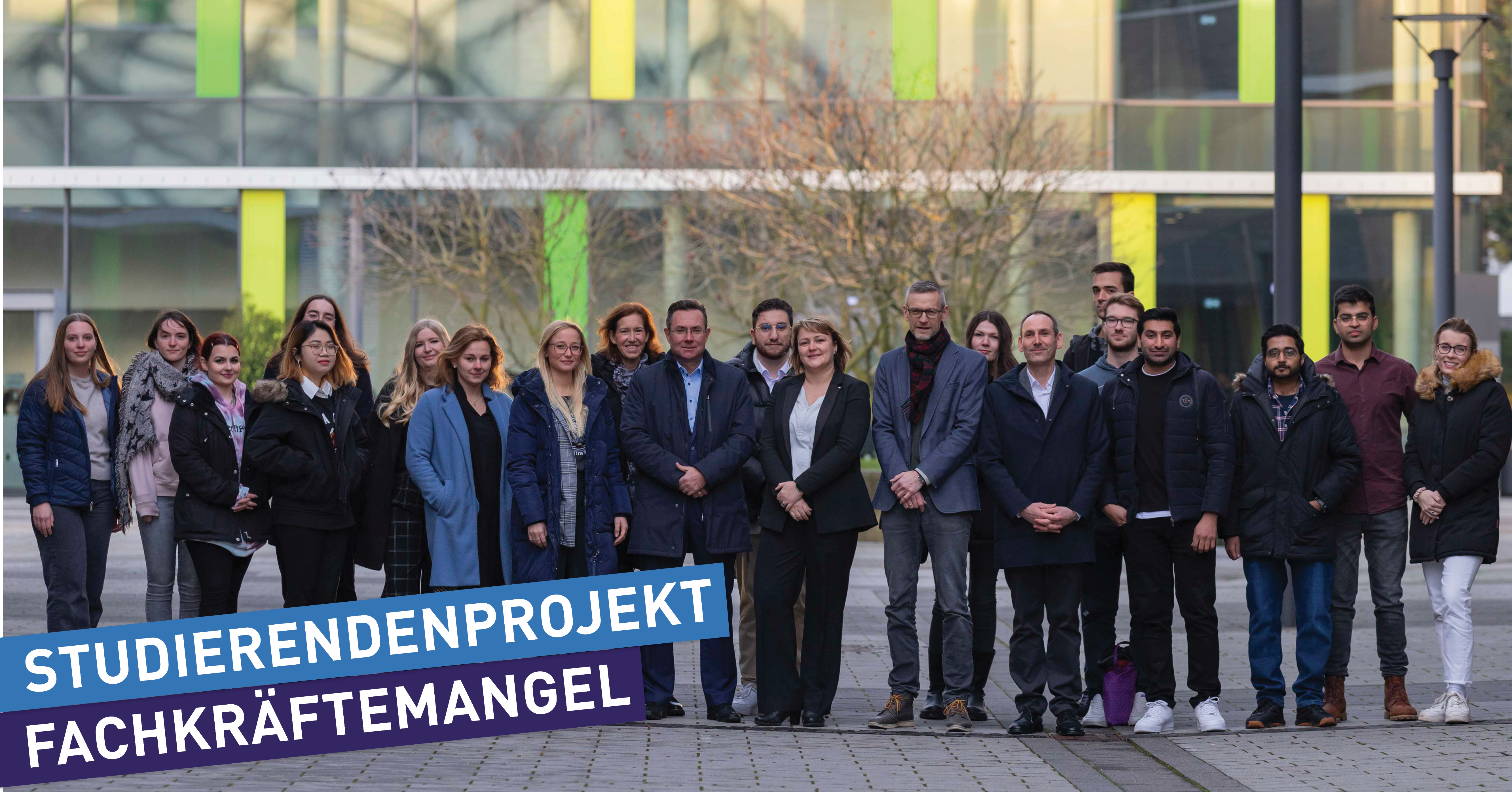
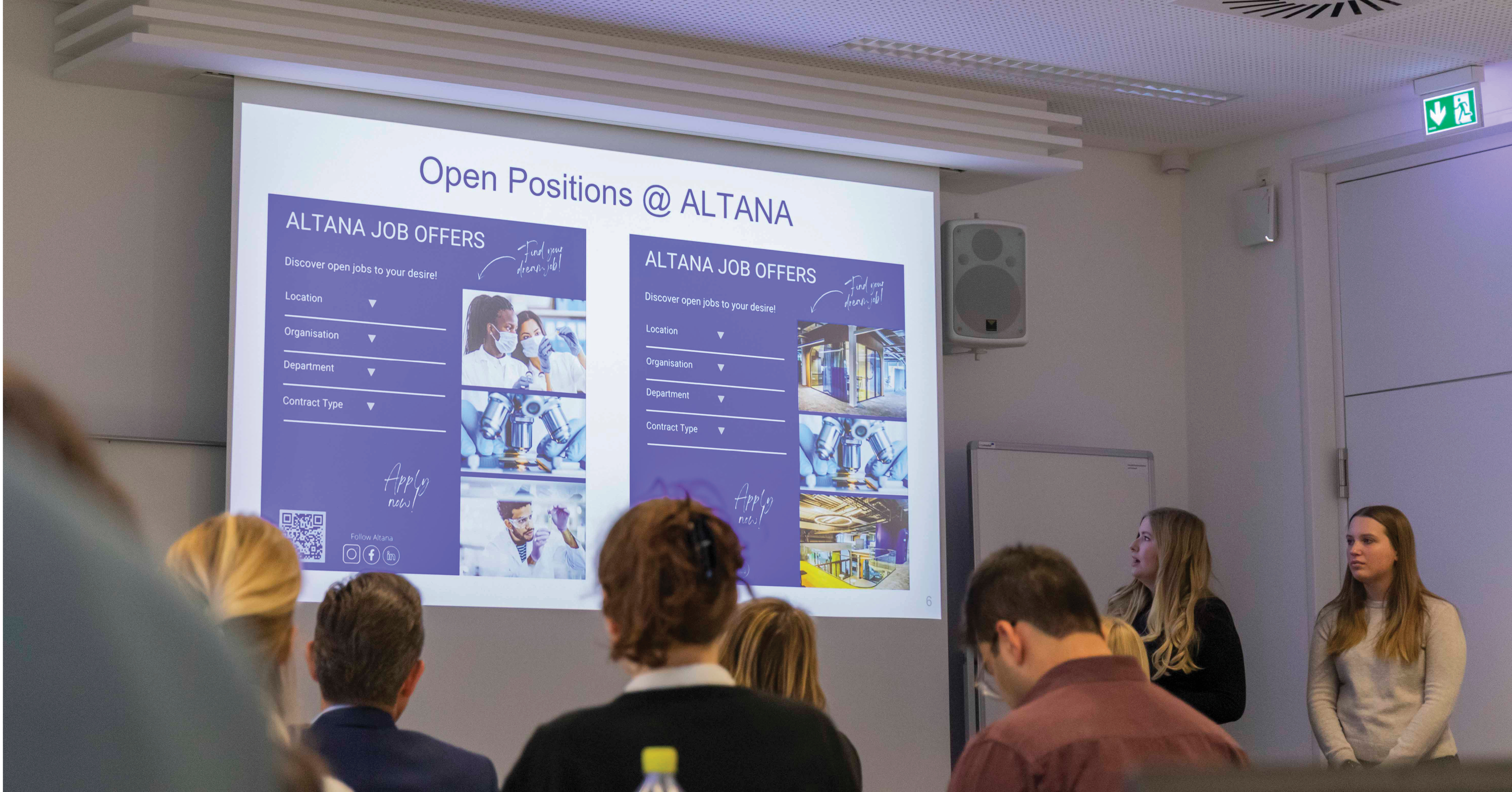
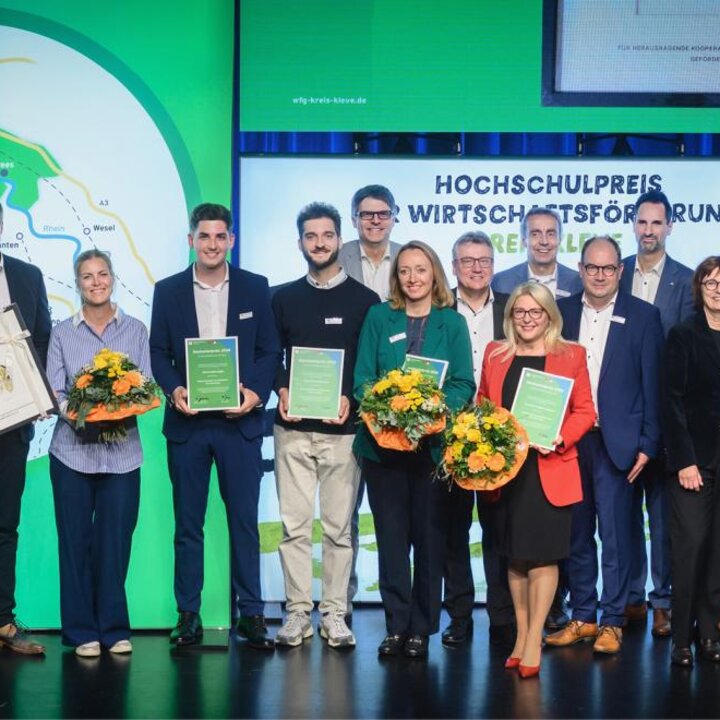
Demographic change is also leading to a shortage of IT specialists in North Rhine-Westphalia. This is also affecting globally active companies such as ALTANA in Wesel. As part of a one-year, interdisciplinary research collaboration with Rhein-Waal University of Applied Sciences, international students – with the support of Kamp-Lintfort-based professors Dr Thomas Heun and Christoph Zielke – analysed the situation and, in a second step, formulated proposed solutions.
The students developed a wealth of ideas for engaging job applicants via digital media. Particular emphasis was placed on targeted engagement via social media and the development of innovative and surprising ways of addressing the target audience. This approach could be used to reach future workers from Generation Z, also known as post-millennials. What made this collaborative project unique was that, prior to developing these innovative communication concepts, students on the Master’s programme in International Management and Psychology conducted research into the motivations of Generation Z IT students. Through in-depth psychological interviews, they discovered that flexibility, autonomy and authenticity are of central importance to the next generation of IT professionals. Members of Generation Z want to be taken seriously; they are not content with a traditional ‘nine-to-five’ job, but are looking for opportunities for personal development – in the spirit of lifelong learning – even within permanent employment.
The findings then helped students from various degree programmes to develop new approaches for engaging these young IT professionals. Project leader Dr Thomas Heun, Professor of Marketing and Research Methods, is pleased with the results: “It is impressive how our Master’s students managed, in a very short space of time, to acquire the methodological interview skills and to gain an understanding of Generation Z’s motivations regarding the topics of ‘New Work’ and the ‘Modern Workplace’. Employers who offer future employees flexible working conditions, treat them with respect and are not afraid to delegate responsibility to them at an early stage should continue to have good prospects of succeeding in the competition for the IT talent of the future.”
Professor Christoph Zielke also shares this enthusiasm. The professor of communication design provided support, particularly in the implementation of the communication concepts: “I am delighted at how quickly students from various disciplines familiarised themselves with this task, which was unfamiliar to them. Compelling ideas were developed with a great deal of dedication.”
For the regionally based company ALTANA, the collaboration with the university was also a resounding success. Stephan Heinelt, Group Chief Information Officer (CIO) at ALTANA, heads the IT department at ALTANA Management Services and was pleasantly surprised by this form of collaboration: “Based on our briefing, the student working groups engaged very intensively with the perspective of our target group. Their results were impressive for their high level of creativity and practical relevance, and were in no way inferior to our collaboration on consultancy projects or with agencies.”