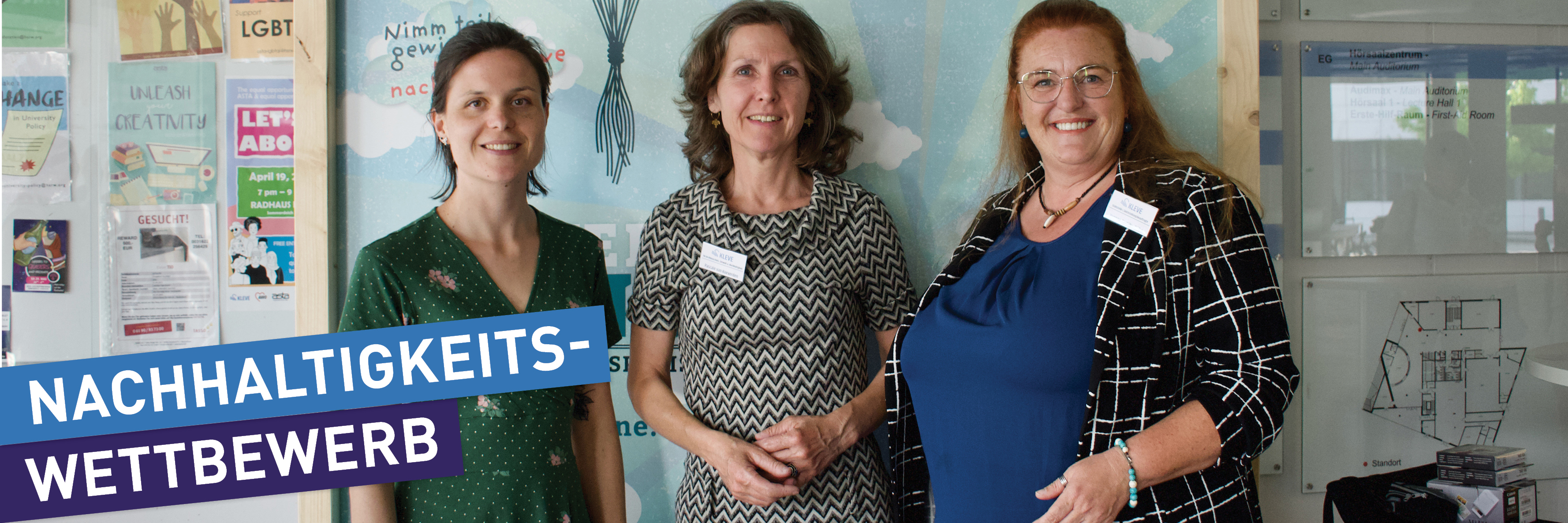
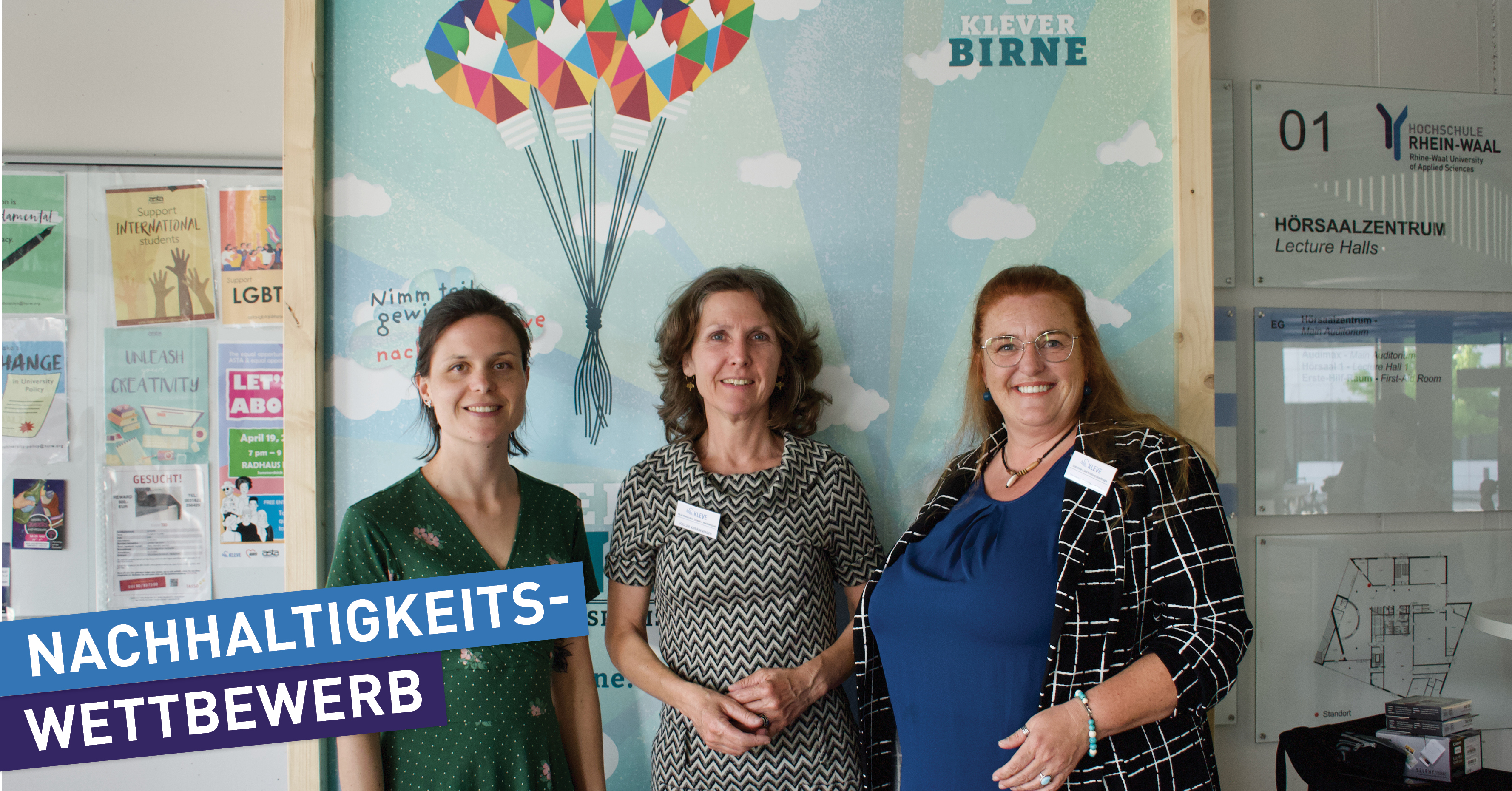
 Local action has global implications. The City of Kleve’s sustainability team is well aware of this. In her presentation at the information session on the ‘Klever Birne’ project, Pascale van Koeverden outlined the initiatives – both planned and already implemented – aimed at transforming Kleve into a sustainable city. Many aspects of the United Nations’ 17 Sustainable Development Goals are already being pursued in Kleve: courses on the subject at the adult education centre, Repair Cafés, the promotion of green roofs and solar panels on balconies, sustainable commercial development, the integration of climate considerations into urban planning, the drafting of a climate adaptation strategy, ‘Fairtrade Town Kleve’, the cycle station, as well as measures promoting gender equality, accessibility and neighbourhood engagement are all being implemented.
The university has also committed itself to sustainability goals: a paperless and, where possible, digital administration; the use of electric vehicles in its fleet; the Days of Antidiscrimination; involvement in the Day Against Homophobia; and its commitment as a Fair Trade University are just some of the measures already in place.
The university also places a strong emphasis on sustainability in teaching and research: degree programmes such as Sustainable Tourism and Sustainable Agriculture already include the term ‘sustainable’ in their names. The Gender and Diversity degree programme alone covers five of the 17 Sustainable Development Goals. The ‘Sustainable Food Systems’ research priority, launched in 2021, addresses, amongst other things, working conditions in agriculture, food processing, the utilisation of waste materials, and innovative production systems such as ‘edible forests’ or food produced using 3D printers.
The recently launched TransRegINT project now aims to achieve even more: ‘TransRegINT – Transformation of the Lower Rhine Region – Innovation, Sustainability, Participation’ addresses the region’s needs and challenges, develops solutions and builds the skills required to shape this transformation. To this end, just under 10 million euros will be provided from January 2023 until the end of 2027 through the ‘Innovative University’ funding initiative of the Federal Ministry of Education and Research.
Together with the city of Kleve as a model municipality, the transformation towards a sustainable Kleve is being piloted, supported and guided in line with the United Nations’ 17 Sustainable Development Goals. The ‘Klever Birne’ sustainability competition, launched jointly by the city and the university, is now also intended to promote civic engagement.
Facts about the competition:
Project ideas must address at least one of the 17 United Nations Sustainable Development Goals, which were established globally in 2015 but are to be implemented locally by 2030.
Individuals or teams may apply, each with an innovative idea to be implemented in Kleve.
Applications are open until 4 August 2023.
1st prize: €2,000.
00 2nd prize: €1,000.00
3rd prize: €500.00
The twelve best ideas will then be selected and will have the opportunity to present them to the public on 14 September 2023 at ‘Make an Impact Day’. A jury will select the top three ideas, and there will also be an audience award.
Further information, the terms and conditions of entry and the registration form can be found at www.kleverbirne.de.