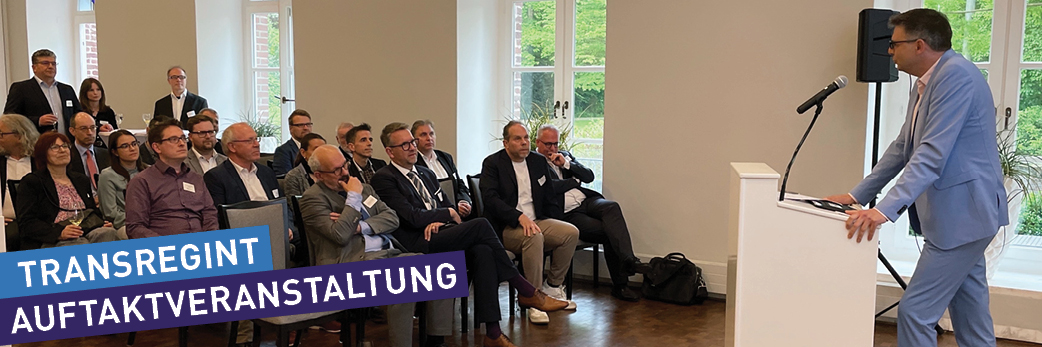
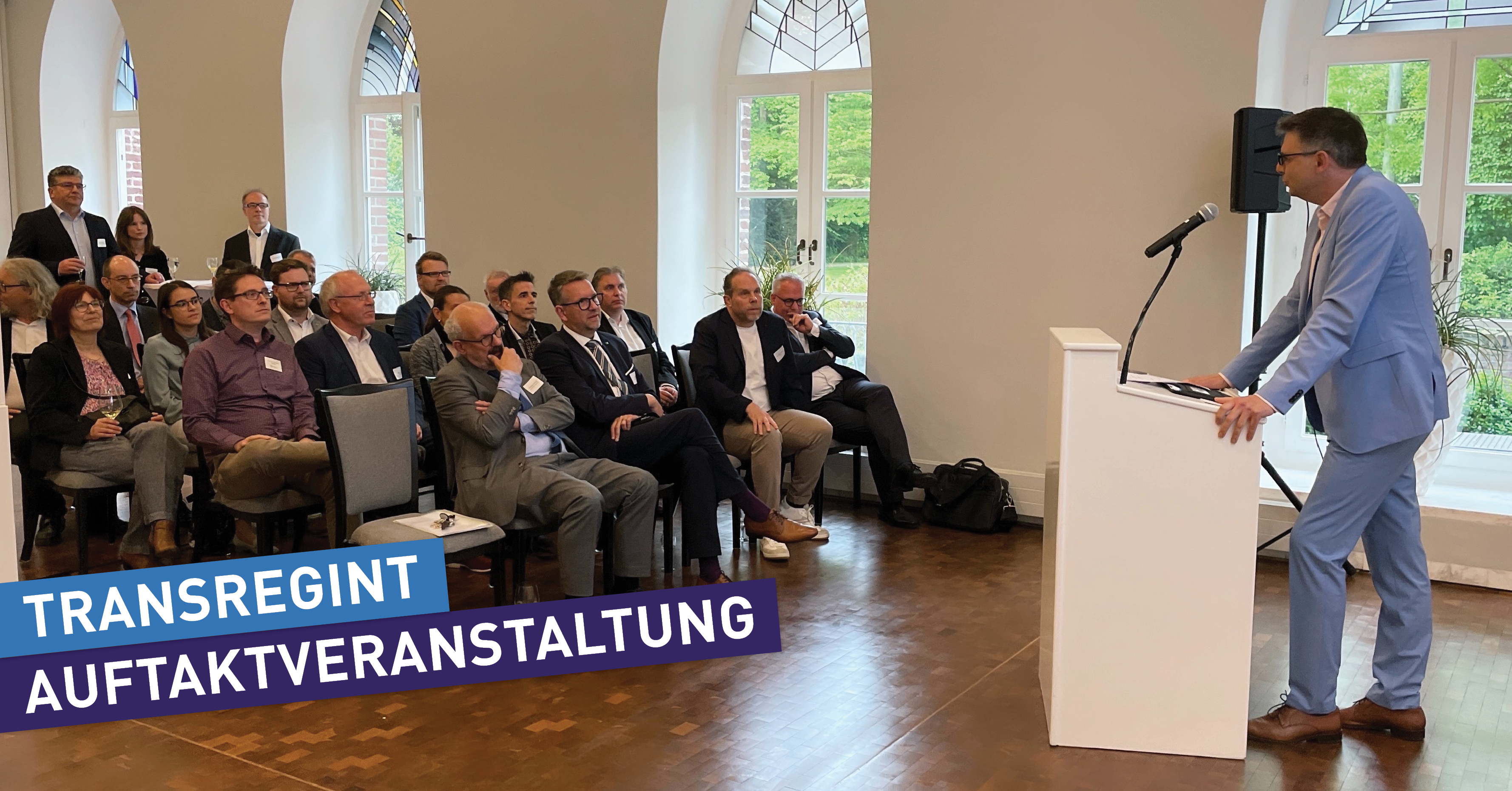
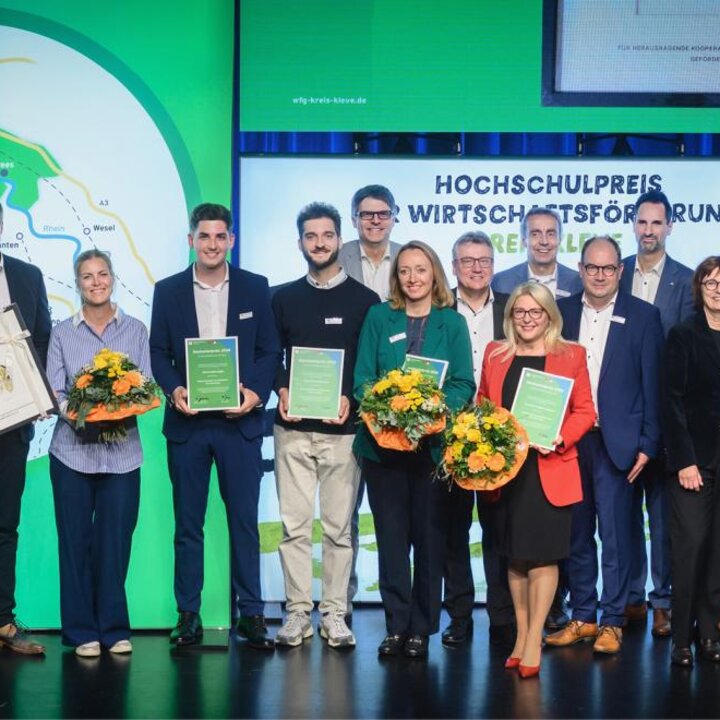
“Those who know the past can understand the present and shape the future, and that future is our TransRegINT project.” With these words, echoing August Bebel, Prof. Dr Oliver Locker-Grütjen, President of Rhein-Waal University of Applied Sciences, welcomed those present who had gathered on Friday, 12 May 2023, at Moyland Castle for a festive gathering. Sponsors from the business community and local authorities, as well as members of the university, came together for the official launch ceremony of the TransRegINT project.
“Those who know the past can understand the present and shape the future, and that future is our TransRegINT project.” With these words, drawing on August Bebel, Prof. Dr Oliver Locker-Grütjen, President of Rhein-Waal University of Applied Sciences, welcomed those present who had gathered on Friday, 12 May 2023, at Moyland Castle for a ceremonial gathering. Sponsors from the business sector and local authorities, as well as members of the university, came together for the official launch ceremony of the TransRegINT project. It has been exactly one year since Rhein-Waal University of Applied Sciences (HSRW) learnt of the success of its project application, which secures five years’ funding under the ‘Innovative University’ programme of the Federal Ministry of Education and Research (BMBF). The launch event also marks the start of the substantive work being carried out by the university’s more than 20 staff members, some of whom were recruited specifically for the project.
“TransRegINT stands for ‘Transformation of the Lower Rhine Region – Innovation, Sustainability, Participation’, and that is exactly what we stand for,” explains Prof. Dr.-Ing. Peter Kisters, Vice-President of the university and project lead. “We want to demonstrate what is possible when academia, society, local authorities and the business community interact and work together to find solutions to the major challenges of our time,” Kisters continues. Through this project, the university aims to strengthen its position in the region and, through a wide range of initiatives such as real-world laboratories and innovation sprints, to engage the business community and society in order to jointly shape sustainable transformation in the region and take responsibility.
A further aim is to establish a European Centre for Sustainability Transformation (EUZENT), thereby embedding the issue in the region and advancing it through a wide range of collaborations. “In future, with the support of many sponsors and supporters, we would like to establish a research centre dedicated to European sustainability transformation and invite researchers from all over the world to our university,” says Locker-Grütjen. Locker-Grütjen and Kisters extend special thanks to the numerous sponsors of the project in the region and emphasise the importance of the BMBF’s ‘Innovative University’ funding programme, which they say is indispensable for such a comprehensive project.