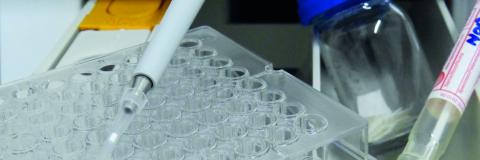
In collaboration with the Dr Stein + Kollegen medical centre in Mönchengladbach, the ‘Hygiene and Microbiology’ working group at the Faculty of Life Sciences at Rhein-Waal University of Applied Sciences tested washing machines and dishwashers from private households for antibiotic-resistant germs. In addition to methicillin-resistant Staphylococcus aureus (MRSA) strains, the investigations also focused on enzymes produced by bacteria, known as beta-lactamases. These enzymes are capable of breaking down various antibiotics, such as penicillins or carbapenems, and rendering them ineffective.
Whilst MRSA could not be detected in the domestic appliances, washing machines and dishwashers were colonised by beta-lactamase-producing microorganisms more frequently than expected. Around 96 per cent of dishwashers were affected. In the case of washing machines, the hygiene experts found such microorganisms in 79 per cent of the appliances examined. To test the effect of wash cycles on resistant germs, they went on to treat cotton test fabric samples with both non-resistant and resistant bacterial strains. They ran the samples through wash cycles both with and without oxygen bleach, at temperatures ranging from 20 to 50 degrees Celsius. A wash cycle at higher temperatures was able to eliminate the bacterial contamination almost 100 per cent completely. In general, the reduction in resistant bacteria was slightly lower.
“The results in no way suggest a direct health risk posed by household appliances; however, it makes sense to clean washing machines and dishwashers regularly and not to rely exclusively on low-temperature programmes,” advises Professor Dr Dirk Bockmühl, Professor of Hygiene and Microbiology at Rhine-Waal University of Applied Sciences and lead author of the study. “Although antibiotic-resistant bacteria can withstand standard washing conditions better than non-resistant strains, higher temperatures and the use of detergents containing oxygen bleach can reliably remove even these germs,” Professor Bockmühl continued. The study therefore recommends that, particularly in households with infants or relatives requiring care, wash programmes set to at least 40 degrees Celsius should be used regularly in conjunction with heavy-duty detergents in powder or bead form. The same applies to the dishwasher: according to the study, the programmes currently in use offer reliable protection against germs. Professor Bockmühl states that, particularly when hygienically sensitive foods such as raw meat have been prepared, the dishwasher is the best choice for crockery and cutlery that has come into contact with these foods.
The original publication of the study can be found here.