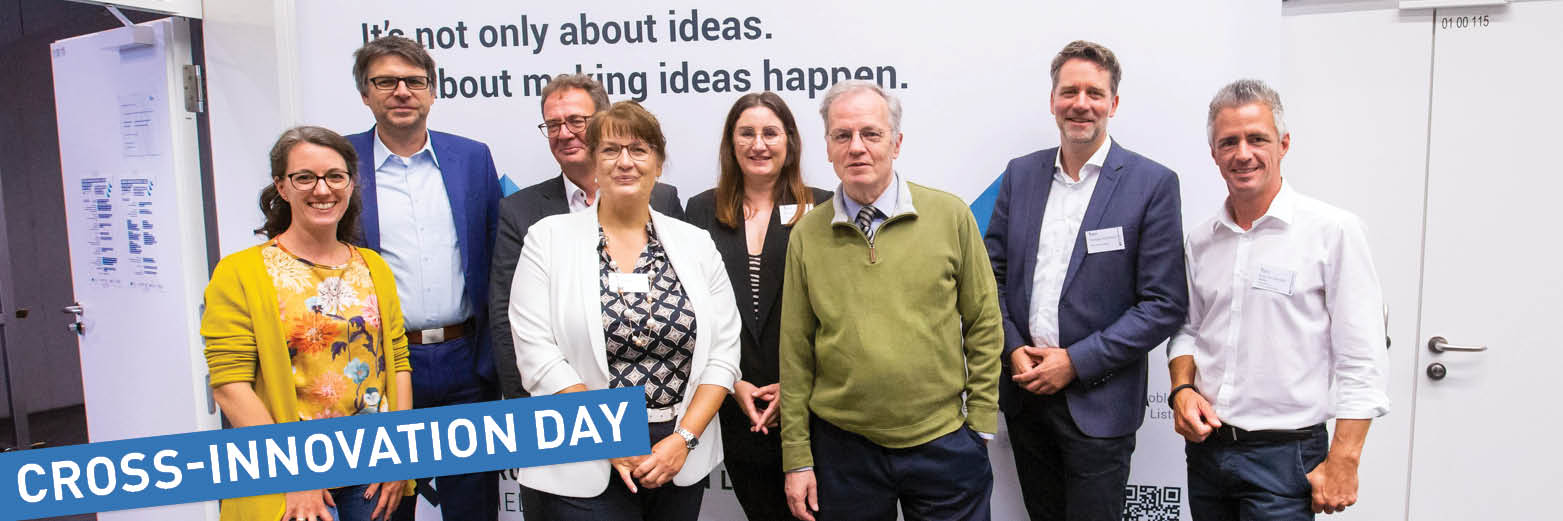
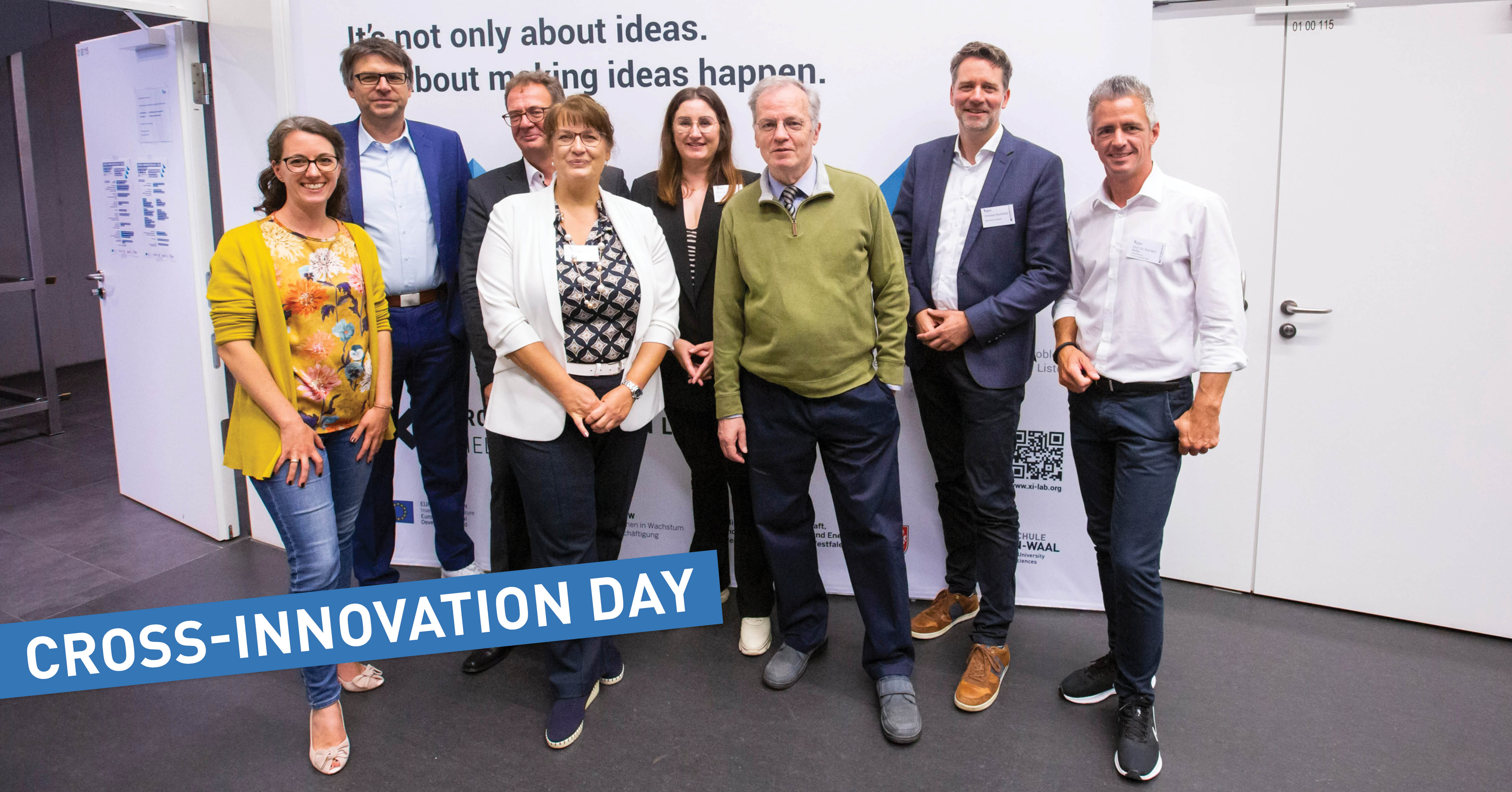
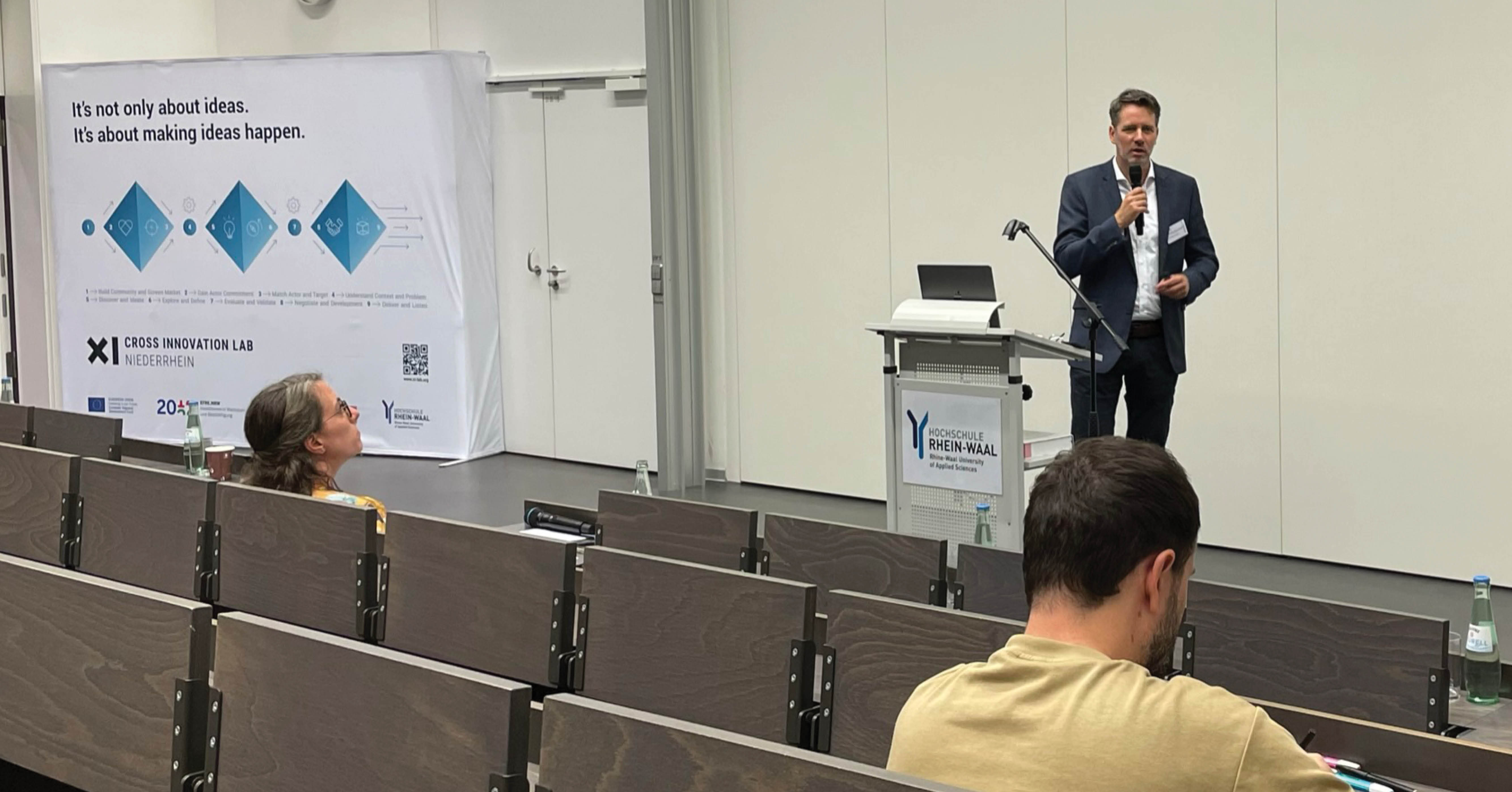
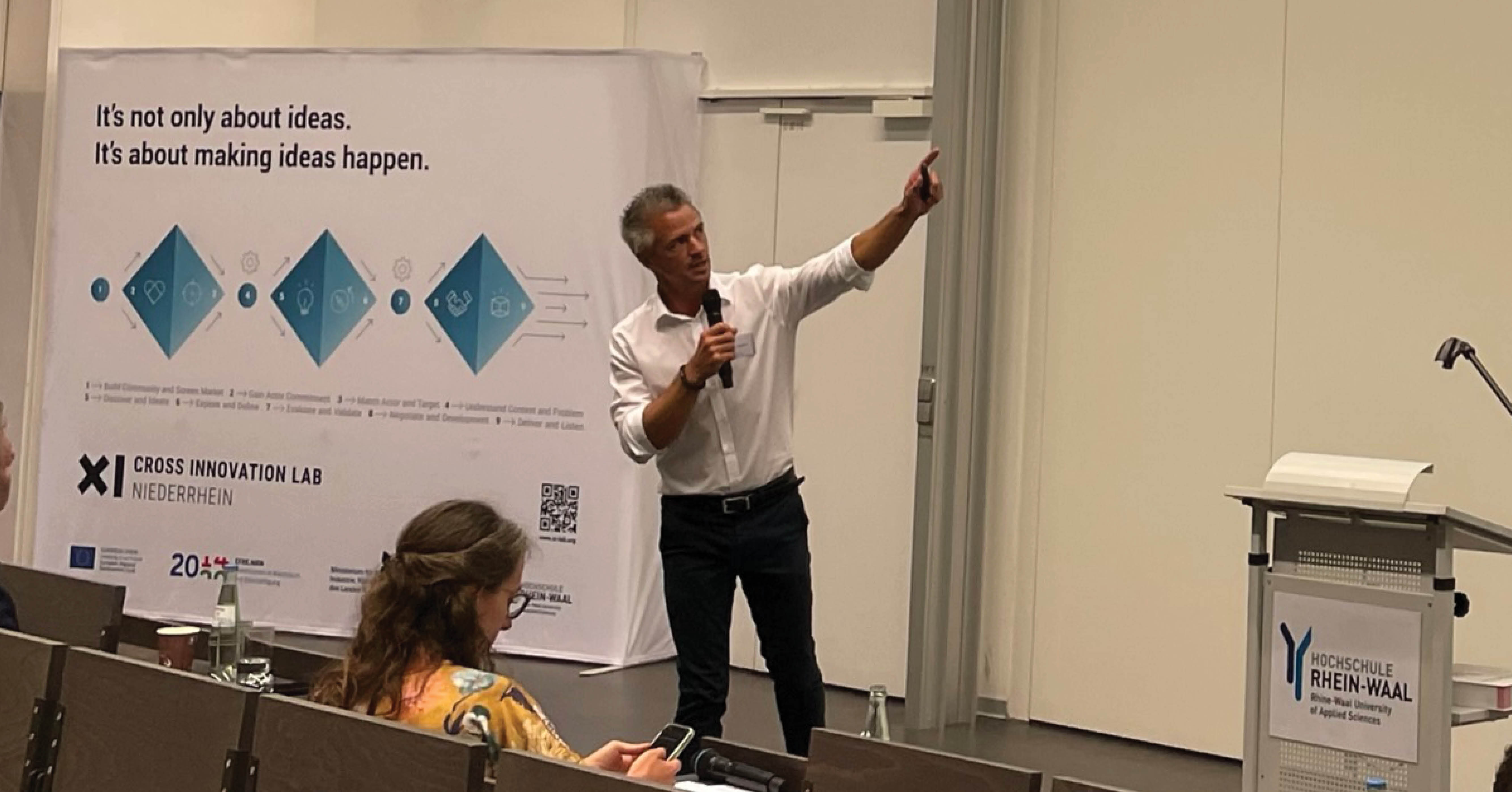
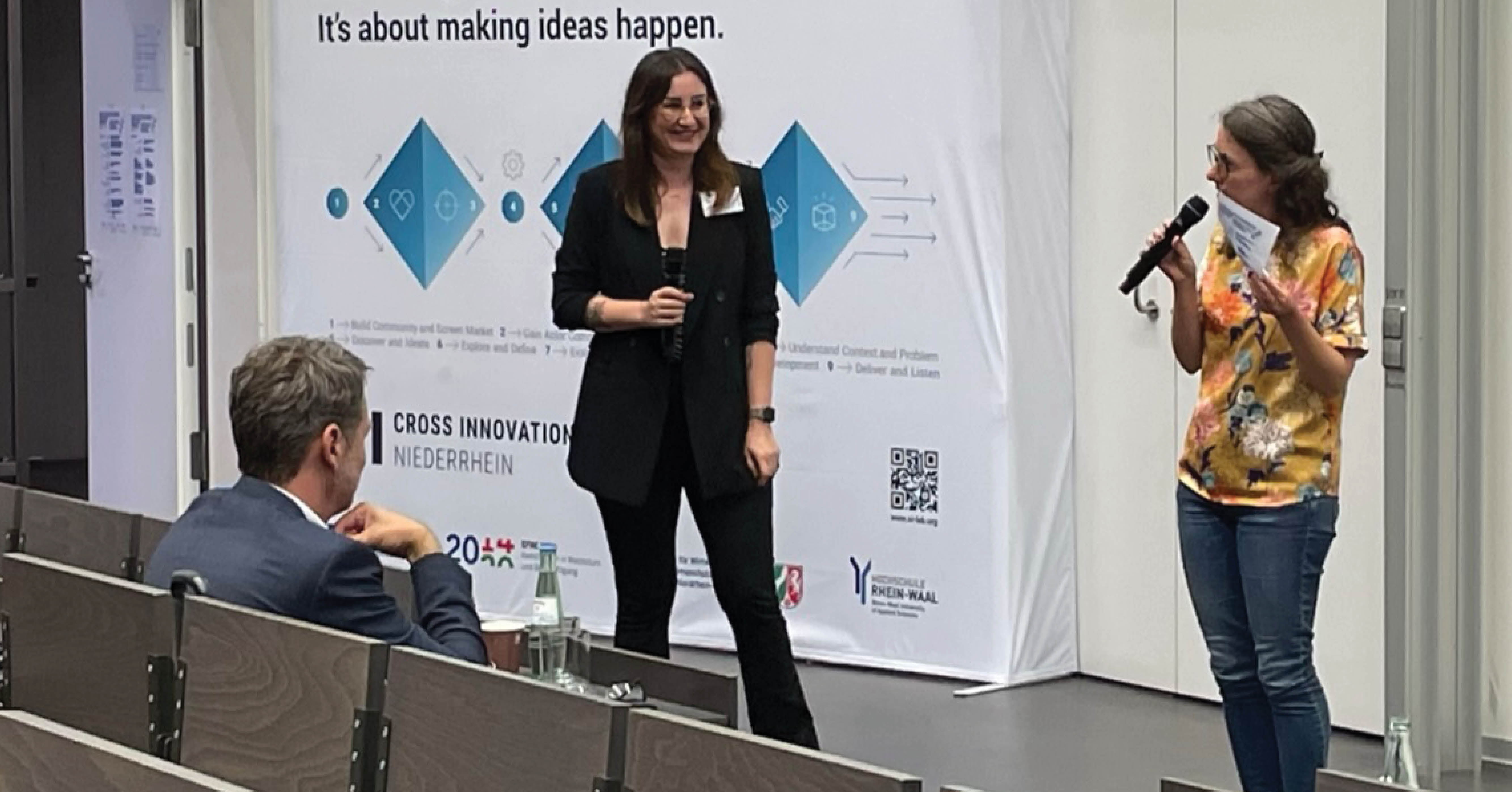
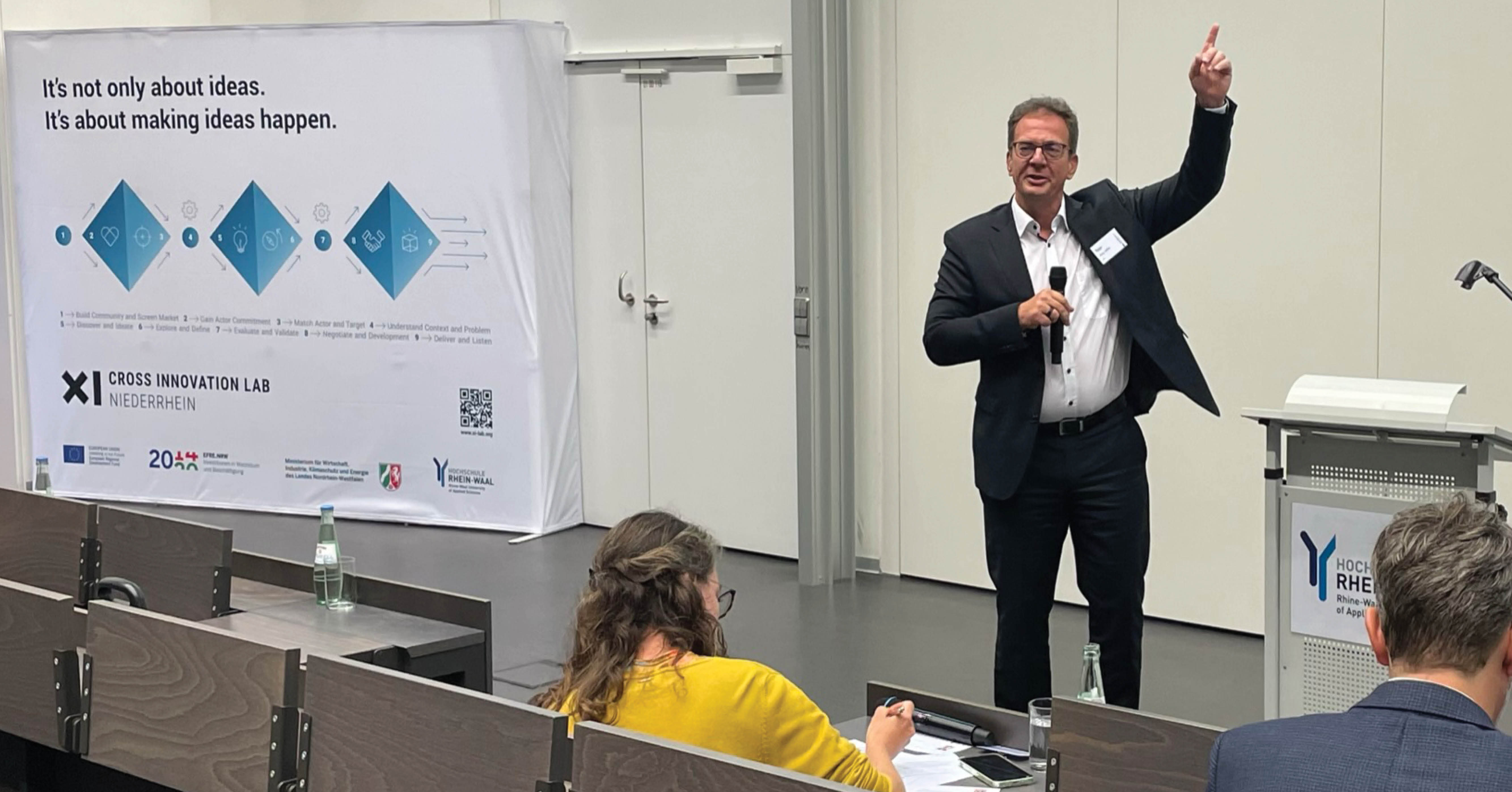
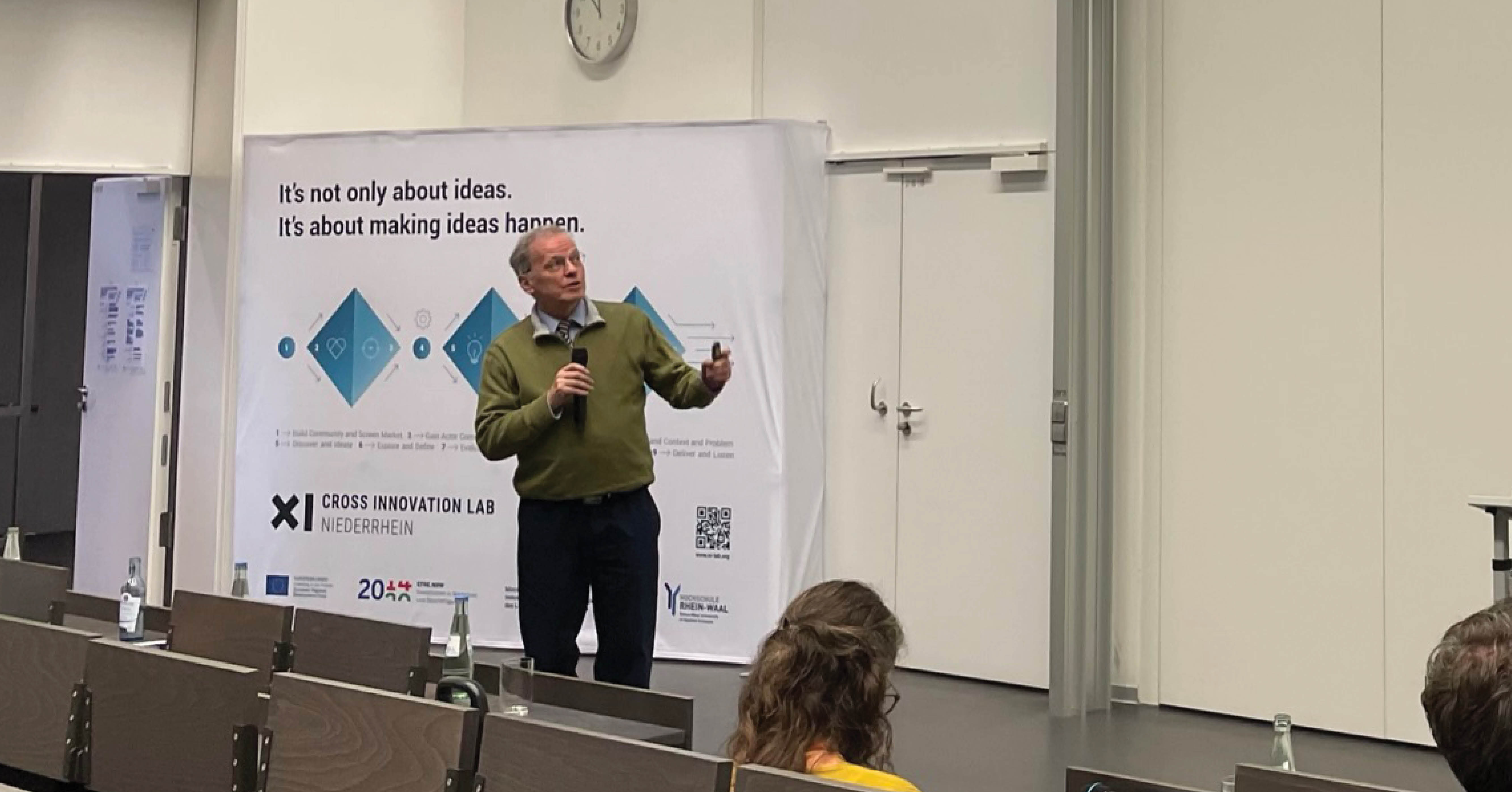
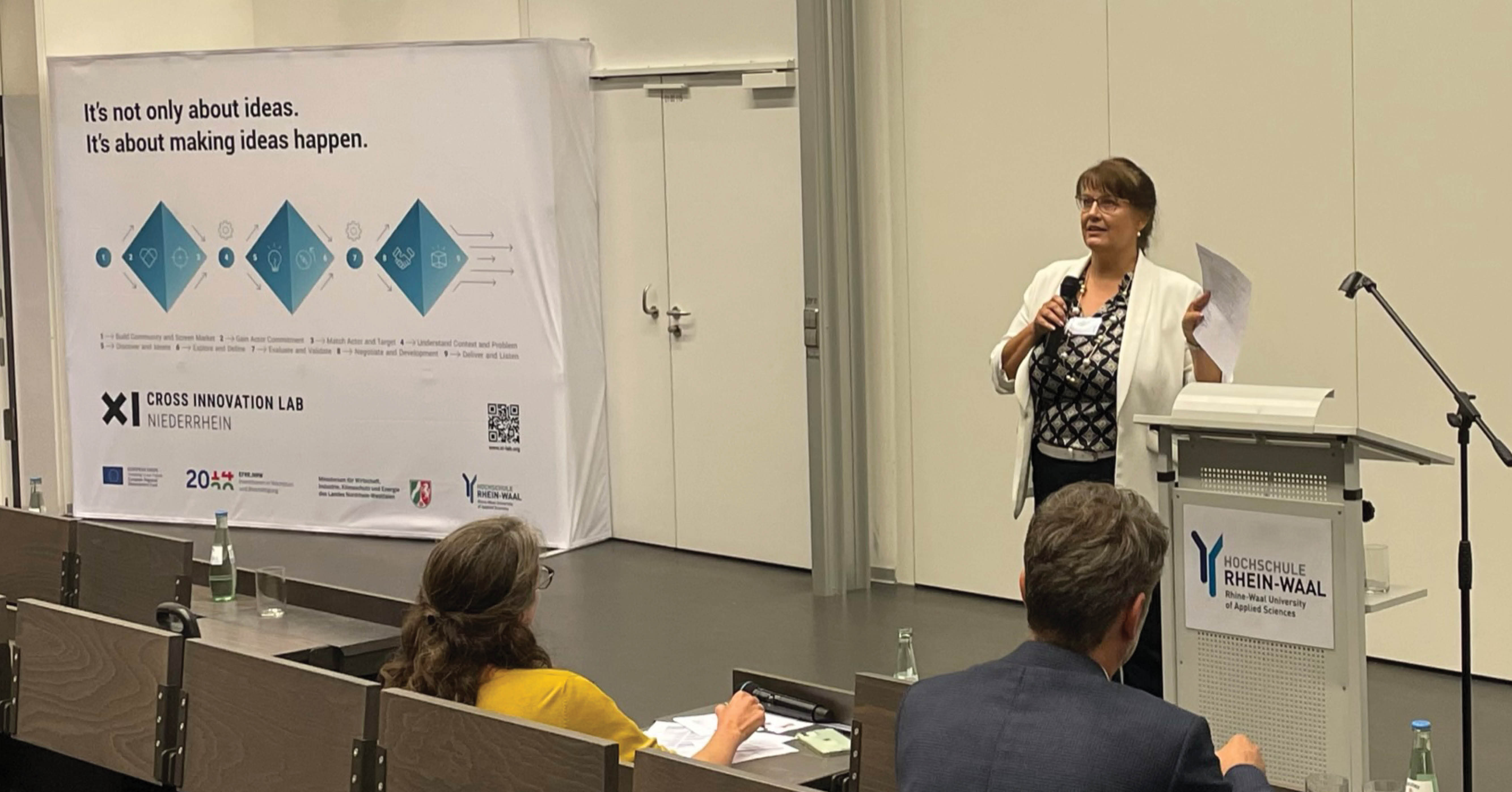
Around 70 participants from small and medium-sized enterprises (SMEs), the Chamber of Industry and Commerce, business development agencies, trade associations and members of the public with an interest in the subject from the Lower Rhine region gathered in the Audimax at Rhein-Waal University of Applied Sciences to discuss the topic of cross-innovation. Project leader Prof. Dr Karsten Nebe explained: “The aim of the event is to give participants from the region an insight into the topic of cross-innovation, to provide new impetus and to encourage discussion, with a view to fostering innovation even beyond the ‘four walls of one’s own company’.”
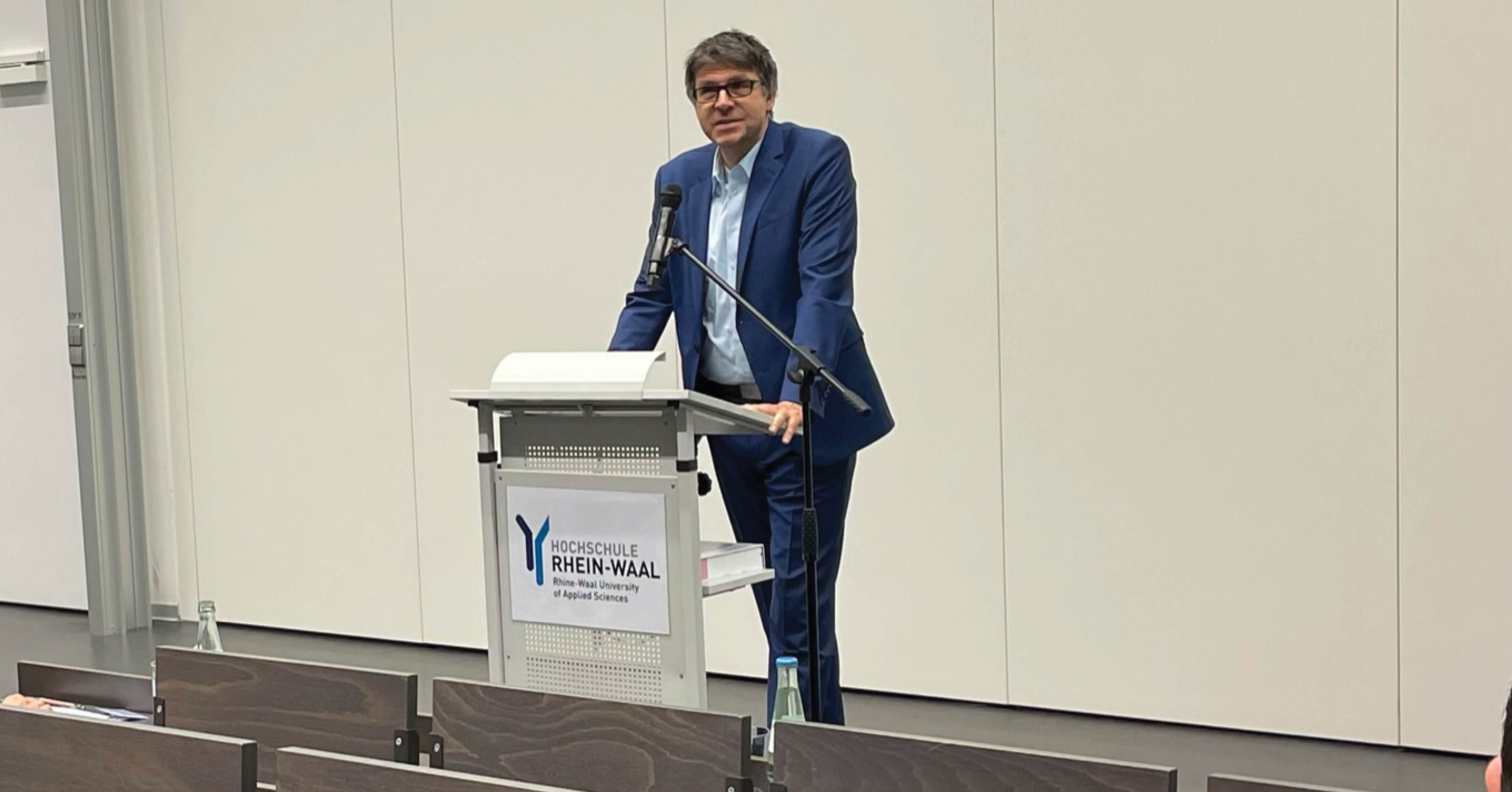
In his welcome address, President Dr Oliver Locker-Grütjen highlighted the theme of the day: thinking outside the box. Cross-innovation, he said, is an approach that the university has pursued from the very beginning and strives to put into practice on a daily basis. Cross-disciplinary innovation exchange also takes place in the students’ day-to-day projects and is particularly facilitated by the international nature of the student body. Dr Oliver Locker-Grütjen saw the greatest opportunity for cross-innovation in relation to sustainability and the transition in the fight against climate change.
Christian Buchholz from the ‘Institute for Innovation Competence’, who has been working as an innovation coach in various fields for many years, kicked off the main programme. For Christian Buchholz, however, innovation is not merely something new, but above all something useful. It is the customer who decides how innovative a product really is, which is why innovations should always be tested at an early stage. As a positive example of this, he cited the IKEA founder, Ingvar Kamprad, who, through close observation of his customers, sensed what they really wanted even before they did. “Really good ideas solve problems that the customer hasn’t even realised they have yet,” said Christian Buchholz. And these ideas arise through cross-innovation. Furthermore, the product must not only be designed with customers and users in mind. Consideration must also be given to what happens to the product when it is no longer needed. Sustainability must be factored into the design of every product and can only be fully addressed if there is dialogue between various stakeholders, as the problem is simply too complex to tackle alone.
Prof. Dr Karsten Nebe then introduced the Cross-Innovation Lab Niederrhein in his capacity as project leader. The aim of the Cross-Innovation Lab is to develop a novel methodological approach for a regional innovation system, one that relies heavily on engaging regional stakeholders by involving them in specific idea-generation and implementation processes. Nebe also explained what cross-innovation means and cited some positive examples that already exist. Cross-innovation describes the process of knowledge transfer between industry players from different sectors. At the heart of cross-innovative collaboration lies a problem in which at least two different stakeholders have an interest in finding a solution and therefore work together, such as the collaboration between a car manufacturer and the gaming industry, which jointly developed a controller for a vehicle’s centre console that offers numerous functions in a very small space whilst allowing the driver to keep their eyes on the road.
To work in a cross-innovative manner, it is important to remain open-minded and to address problems openly, so as to allow knowledge from outside to be incorporated. Work at the Cross-Innovation Lab Niederrhein is method-based and takes place in various phases. Labs and workshops bring together different stakeholders – such as, most recently, 16 companies from the region – to develop new ideas and business models. This has also led to collaborations.
Eva de Schrevel, founder and start-up consultant at Düsseldorf University of Applied Sciences, spoke about the innovative value of successful failure. With her first start-up, Eva de Schrevel even won the German Gastronomy Start-up Award in 2019. However, it became clear that even the best business idea depends on many other factors to succeed, including choosing the right location, conservative projections in the business plan, available business partners and, ultimately, industry knowledge. During the pandemic, de Schrevel had to make the decision to shut down her first start-up. She now works as a start-up consultant and, drawing on her own experiences, explains to students how they can do things better. She herself has now taken the plunge and launched a new start-up. She explained that fostering intrapreneurial skills in people and staff lies particularly in giving ideas space to develop and also in placing trust in them. Management must inspire staff, keep them informed and also develop their skills to drive personal growth. For her, fostering intrapreneurship means fostering innovation.
Dr Jörg Liebe, Chief Innovation Officer at Lufthansa Systems, gave a short talk on how to motivate staff in the field of innovation. He noted that whilst many innovation methods focus on generating ideas, there must always be a concept behind them. If employees are to be involved in an innovation process, it is important to make it clear right from the start that not all ideas can be implemented. In his talk, Dr Jörg Liebe emphasised that internal communication is the most important aspect of these processes.
According to Dr Reiner Nikula, the biggest difference between ‘radical innovators’ and others is that they do not know their market and are therefore unable to carry out a market analysis. Innovations are something completely new, and the market for them simply does not yet exist. According to his study, ‘radical innovators’ are more individualistic and, surprisingly, less communicative than incremental innovators, but have a significantly higher level of education. Nikula noted that four skills are required for radical innovation: a team must first be shielded from everything else and must then be able to switch between thinking, dreaming, inspiring and acting.
The lecture series was concluded by Prof. Dr Ellen Enkel from the University of Duisburg-Essen, who specialises in the theory of cross-industry innovation. She presented a study that investigated why certain partnerships within cross-industry innovation produced radical innovations, whilst others produced incremental ones. The study was based on the fundamental assumption that knowledge has a ‘distance’. There is knowledge that is closer to people because they have already engaged with it, and there is knowledge that lies far away on a scale of knowledge distance. The result: when distant knowledge is brought together, there is great potential for radical innovations to emerge. And the more radical the innovation, the more revolutionary it is for the market.
Following the presentations, panel discussions and workshops, the organiser, Prof. Dr Karsten Nebe, gave a positive assessment: “We are keen to see how these new ideas will be put into practice.” To this end, the Cross-Innovation Handbook will be produced by the end of the project in January 2023; this is intended to help ensure that these ideas are turned into actionable concepts.
Background information on the “Cross Innovation Lab NiederRhein”
“It’s not just about ideas. It’s about making ideas happen.” – The “Cross-Innovation Lab NiederRhein” project tackles the declining propensity for innovation amongst SMEs through exchange and cooperation. Together with project partners, Rhein-Waal University of Applied Sciences and Ruhr West University of Applied Sciences are supporting regional stakeholders in their specific idea generation and implementation processes. The cross-sector opportunities offered by digitalisation are at the forefront of these efforts. Participation is expressly encouraged. The “Cross-Innovation Lab Niederrhein” has a total budget of around 2.3 million euros and is funded by the European Regional Development Fund (ERDF). Further information is available here: https://www.xi-lab.org/.
The project’s website enables visitors to follow results and further developments in the field of cross-innovation in the Lower Rhine region (www.xi-lab.org). The Cross-Innovation Process Model, developed by the project, is also available for download there.
For anyone who missed the Cross-Innovation Day, the presentations will shortly be made available online on the Cross-Innovation Lab’s YouTube channel.