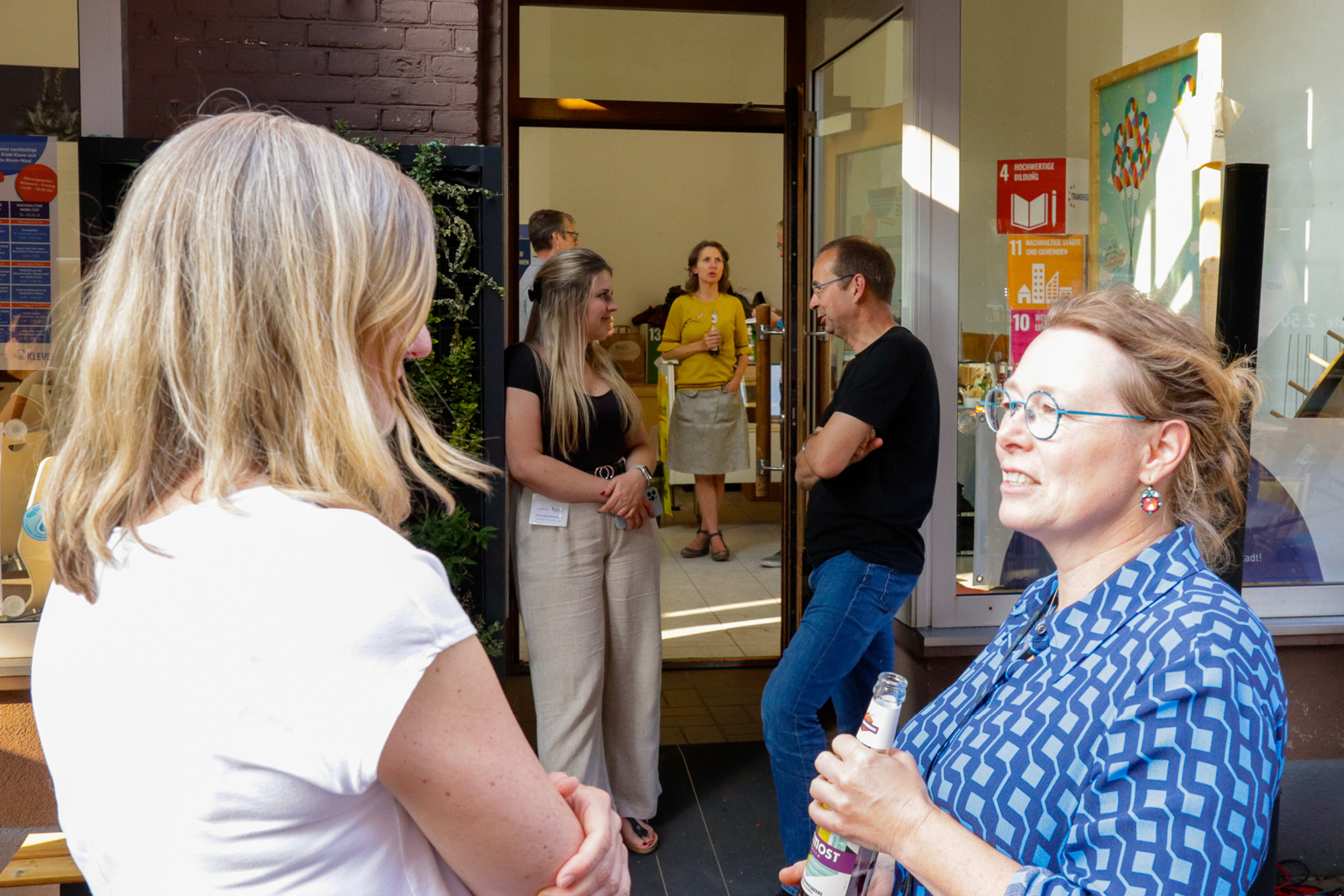
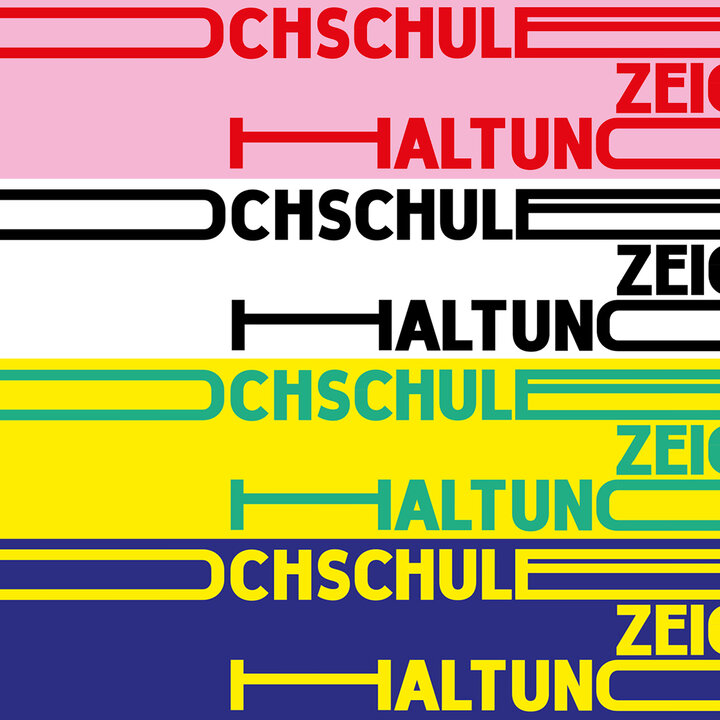
From 6 to 28 June 2024, the DialogPunkt Kleve – organised by Rhein-Waal University of Applied Sciences in collaboration with the City of Kleve – served as a meeting place for exchanging ideas and showcasing sustainable projects, as well as a starting point for informative excursions and other activities. Three themed weeks focused on various aspects of sustainability: sustainable communities, food and mobility.
A positive and reflective atmosphere at the closing event
On Friday evening, the DialogPunkt Kleve was bid farewell with music and canapés. Short speeches and a photo slideshow from the events, projected onto the walls, provided a retrospective of the past four weeks.
Florian Gaisrucker, Innovation Manager for Society in the TransRegINT project at Rhine-Waal University of Applied Sciences, and jointly responsible for the programme items organised by the university, was impressed by the range of topics and the participants’ reactions. “Your work is making a difference. You have created a platform for very specific topics,” noted Philipp Cantos from the City of Kleve. He added that DialogPunkt Kleve had created a participatory space that makes sustainable activities visible and tangible.
Pascale van Koeverden, who is responsible for sustainability within the Climate Protection, Environment and Sustainability Department at the City of Kleve, described the DialogPunkt Kleve as the “first regional office for sustainability in the Lower Rhine region”. “We have gained experience and laid the foundations.” Participants had expressed a desire for a regular forum. She noted that environmental education topics were in demand amongst the younger target group. Older participants, on the other hand, had also felt engaged by other sustainability topics, such as sustainable communities. The middle-aged generation – people aged between around 30 and 60, also known as Generation XY – had proved more difficult to engage with over the four weeks. Furthermore, hands-on formats and activities had been better received than, for example, lecture-style sessions. This was confirmed by Christina Martens, Interaction Hub Coordinator at TransRegINT. She looked to the future: “In our upcoming Dialogue Points, we must respond even more specifically to the individual needs of citizens in the various towns and local authorities and do more networking. We need key individuals who act as multipliers within society and work with us to build a sustainable future.” She concluded the official part of the evening with a big thank you to all contributors and participants.
Hopes for greater participation
Although situated in Kleve’s pedestrian zone, the Kleve ‘DialogPunkt’ unfortunately attracted fewer guests than had been hoped for. It was conceived in exactly the same way as a sports channel once summed it up in its advert: “Right in the thick of it, rather than just watching from the sidelines.” Colourful posters adorned the windows, and on sunny days during opening hours, yellow sun loungers stood invitingly in front of the façade; yet many people merely cast a curious glance at the shop premises before hurrying on their way.
Prof. Dr.-Ing. Peter Kisters, Vice-President for Research, Innovation and Knowledge Transfer at Rhine-Waal University of Applied Sciences and TransRegINT project manager, commented: “With great dedication, the TransRegINT team, together with the City of Kleve, created a centrally located space intended to involve the citizens of Kleve in the complex process of transition towards sustainability. Even whilst putting the programme together, it became clear just how numerous – but also how varied – the wishes and needs are. Unfortunately, the level of interest and participation from the general public fell short of expectations.” Questions being asked by the TransRegINT team and those responsible at Kleve City Council include: What are the reasons for the lack of interest? It cannot be solely due to the 2024 European Football Championship taking place at the same time. Has society grown weary of the sustainability debate? Were the topics poorly chosen or the timing unsuitable? Over the coming weeks, the concept, the individual events and the venue will be analysed in detail. Prof. Dr.-Ing. Peter Kisters is already looking to the future: “The experience gained is valuable for planning future ‘DialogPunkte’ events in other local authorities in the Lower Rhine region.”
Outlook
The Kleve ‘DialogPunkt’ was the first regional office to be established as part of the TransRegINT project. Further ‘DialogPunkte’ are set to follow in the Lower Rhine region in the coming months and years. To this end, the TransRegINT project team is already in close discussions with local authorities on both the left and right banks of the Rhine. Interested local authorities are warmly invited to get in touch with Christina Martens, Interaction Hub Coordinator at TransRegINT, to discuss formats and opportunities for cooperation.
TransRegINT
press contact: Christina Martens
, ‘Interaction Hub’ Co-ordinator, TransRegINT
project, Rhine-Waal
University of Applied Sciences, Kleve
Campus, Marie-Curie-Straße 1
, D-47533 Kleve
Tel.: +49 (0) 2821 806 73-9637
Email: presse-transregint@hochschule-rhein-waal.de