

Designing, researching, communicating – your range of responsibilities
A professorship at a university of applied sciences involves a wide range of varied and responsible duties: the focus is on dedicated teaching within a practice-oriented learning environment. In addition, you will play an active role in applied research, take on responsibilities within the university’s self-governing bodies, and promote the transfer of knowledge and technology to industry and society.
These roles offer scope for your own ideas, collaborations and career development opportunities.

Effective teaching – practical, personalised and forward-looking
Through teaching, you help shape the future: you not only impart specialist knowledge, but also foster independent thinking, problem-solving skills and the ability to work in a team. Teaching forms the core of your work. This includes delivering lectures, leading seminars, tutorials and laboratory sessions, as well as imparting specialist knowledge and providing individual support to students throughout their studies and as they transition into professional life. In addition, you will provide students with advice, set and mark examinations, and supervise academic theses such as Bachelor’s and Master’s dissertations and PhD theses. The close link to professional practice enables you to bring current challenges from business, technology, society and healthcare directly into the university.
Small groups, committed students and modern teaching flexibility create an inspiring environment for teaching that makes a real difference – tailored to the individual and practice-oriented.
You will receive support on all matters relating to teaching from the Centre for Quality Development in Studies and Teaching (ZfQ) at HSRW.
Applied research – innovation you can experience first-hand
Research at universities of applied sciences is practice-oriented, collaborative and solution-focused. You will work closely with businesses, public bodies or civil society organisations to address specific issues and develop innovative solutions. This offers a wide range of opportunities to work in an interdisciplinary manner, initiate externally funded projects and actively involve students in research processes. You will work independently on research topics, secure external funding, publish your findings and take part in international specialist conferences and meetings. In doing so, you will benefit from the expertise of your faculty, interdisciplinary collaboration and the support of the Centre for Research, Innovation and Transfer (ZFIT) at HSRW.
If you want to do more than just generate knowledge – if you want to make a real impact – you’ll find the ideal environment here.


Academic self-governance – playing an active role in shaping university development
Participation in academic self-governance is a key part of your role as a professor. Whether on appointment committees, faculty councils or strategic bodies – you will play an active part in shaping the future of HSRW. Here, subject-specific expertise is combined with scope for influence and responsibility: for quality development, study programmes, research profiling and a vibrant academic culture.
If you want to have a say and help shape the future, you’ll find a platform here for making a lasting impact.
Knowledge transfer and professional development – building bridges between academia and practice
As a professor at a University of Applied Sciences, you act as a bridge between theory and practice. You are committed to knowledge transfer, support businesses in their innovation efforts, develop practice-oriented continuing professional development programmes, or contribute your expertise to public debates. Through collaborations, project partnerships and practice-oriented initiatives, you strengthen the university’s regional and national networks.
If you are looking to engage with the professional world and want to shape education beyond traditional degree programmes, you will find a wide range of opportunities here that are relevant to society.

Formal appointment requirements for a professorship at a University of Applied Sciences
The legal requirements for a professorship at HSRW are based on Section 36 of the Higher Education Act of North Rhine-Westphalia. In addition to subject-specific knowledge, you must meet the following formal requirements for appointment:
- a completed university degree
- exceptional aptitude for academic work (usually demonstrated by the quality of a doctoral thesis)
- pedagogical aptitude (demonstrated by relevant prior experience, such as independently delivered courses in an academic setting and during the appointment process; this is usually achieved by conducting a teaching demonstration as part of the appointment process)
- at least 5 years’ professional experience relevant to the professorship, of which 3 years must have been gained outside the higher education sector
Selection and appointment procedures for professorships at HSRW
The path to your professorship at our university – known as the appointment procedure – is governed primarily by the Higher Education Act of North Rhine-Westphalia (HG NRW, Sections 37 and 38) and the appointment regulations of Rhine-Waal University of Applied Sciences.
An appointment procedure is a demanding, important and multi-stage process. At Rhein-Waal University of Applied Sciences, we ensure that this process is structured in a clear and transparent manner. The process usually takes several months, but in specific cases it can last up to a year or longer. From your initial application right through to the final decision, you will be given a clear insight into every stage – so that you know exactly what to expect at all times.
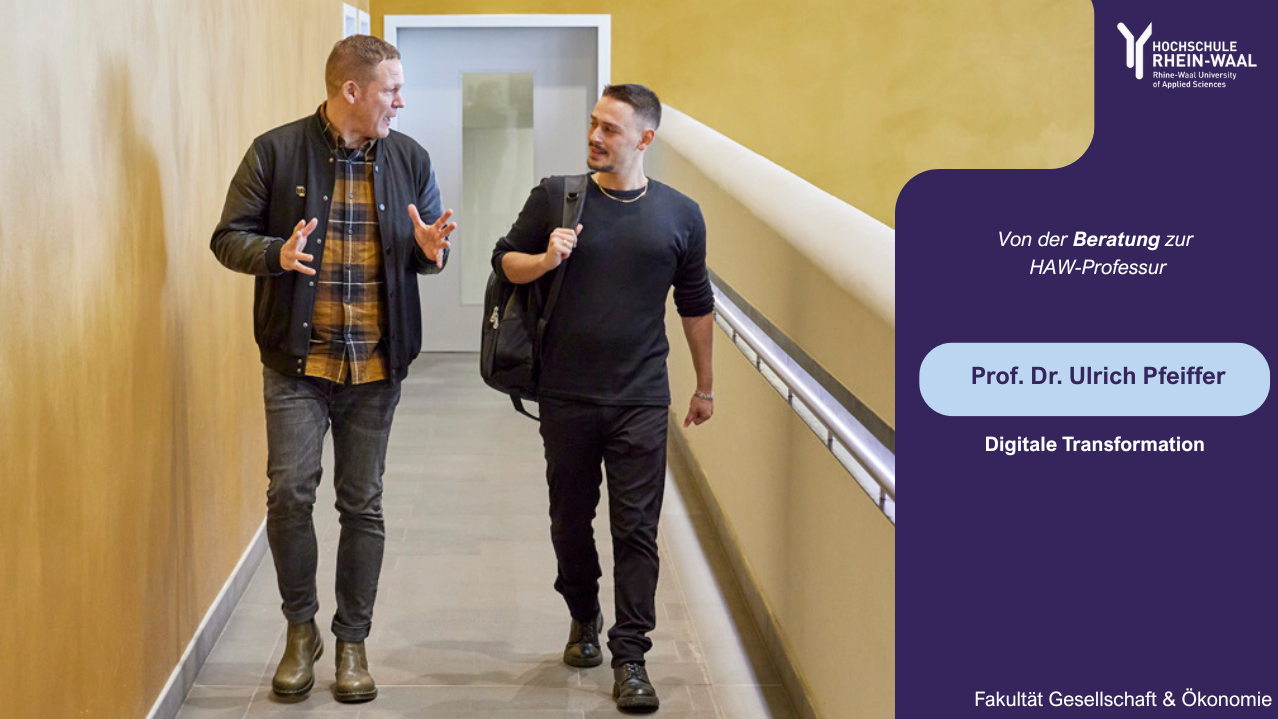
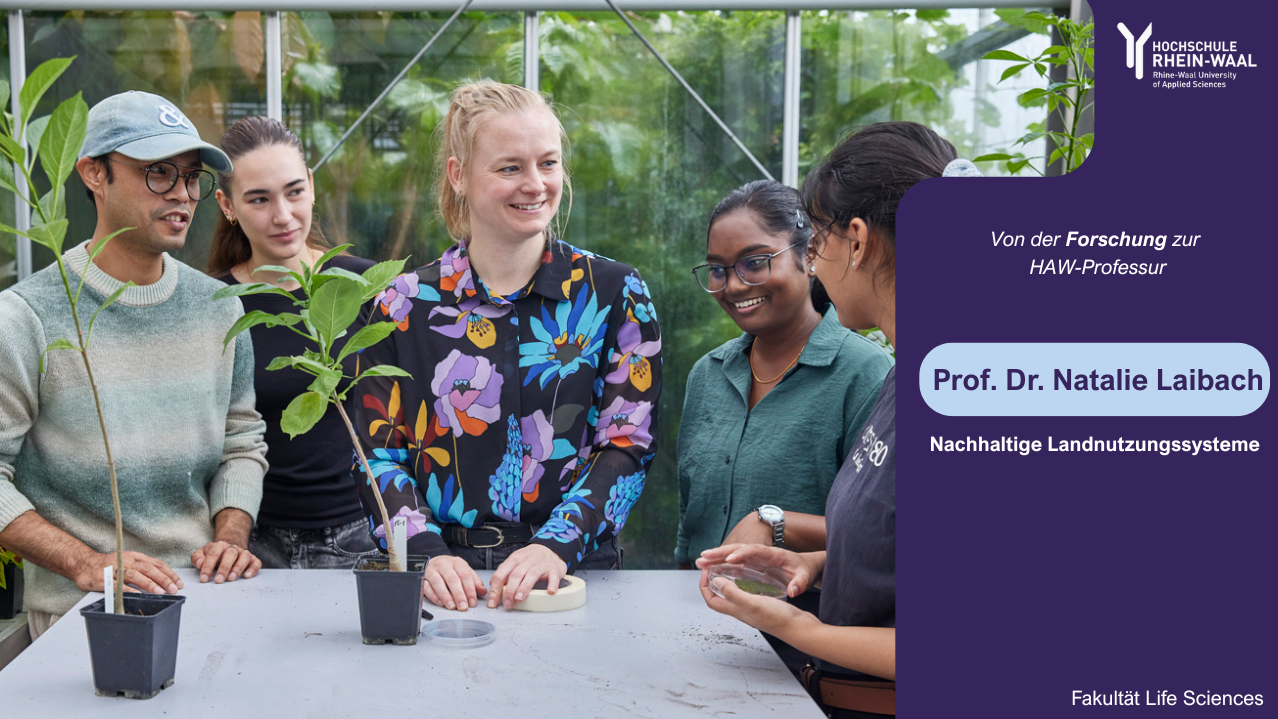
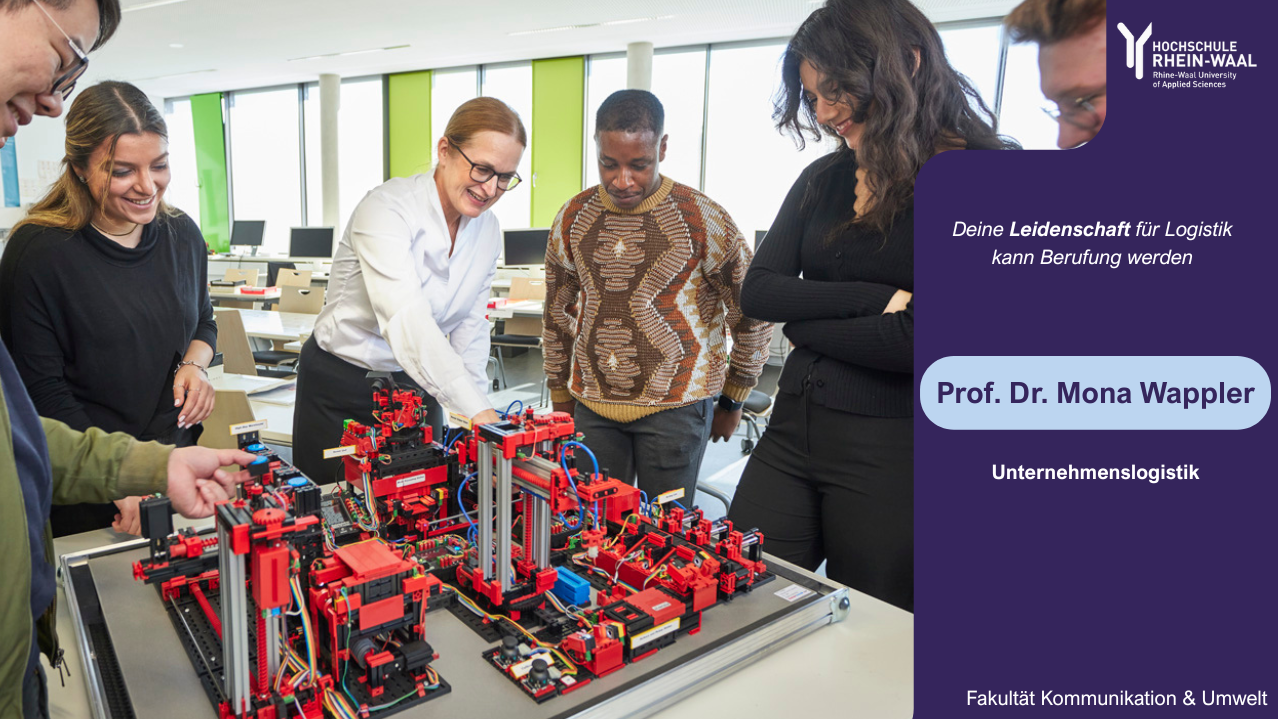
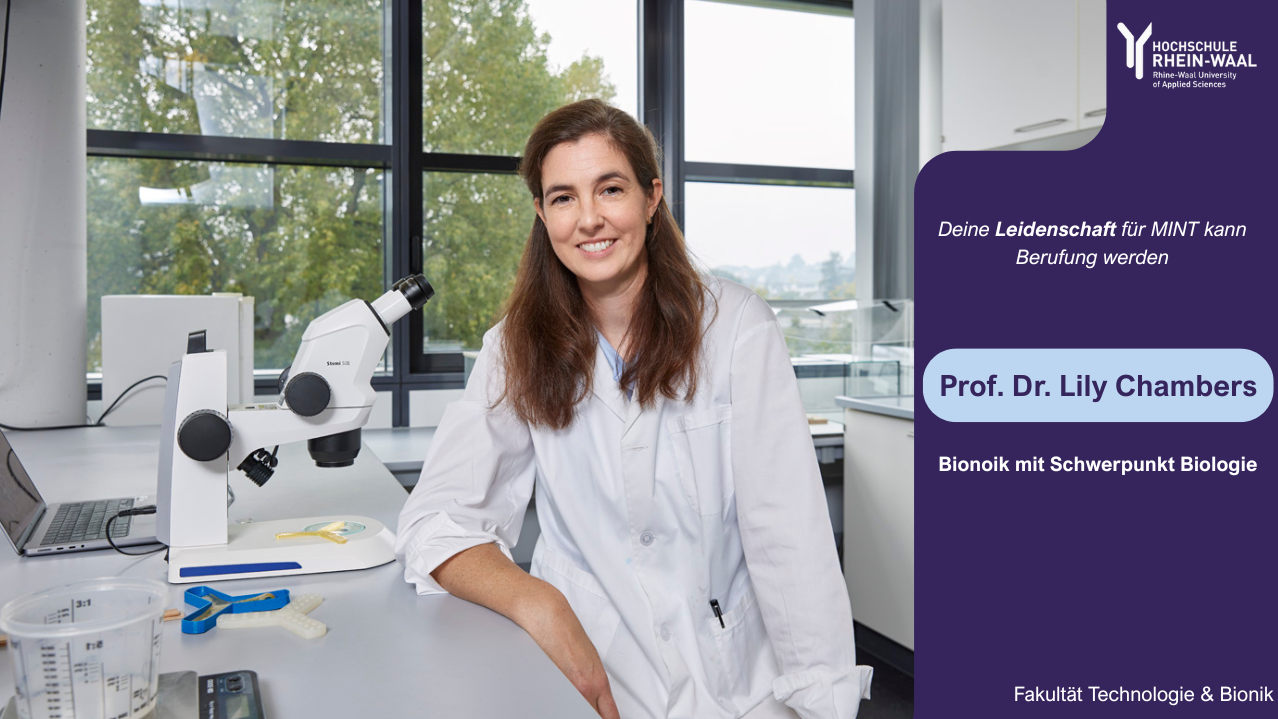
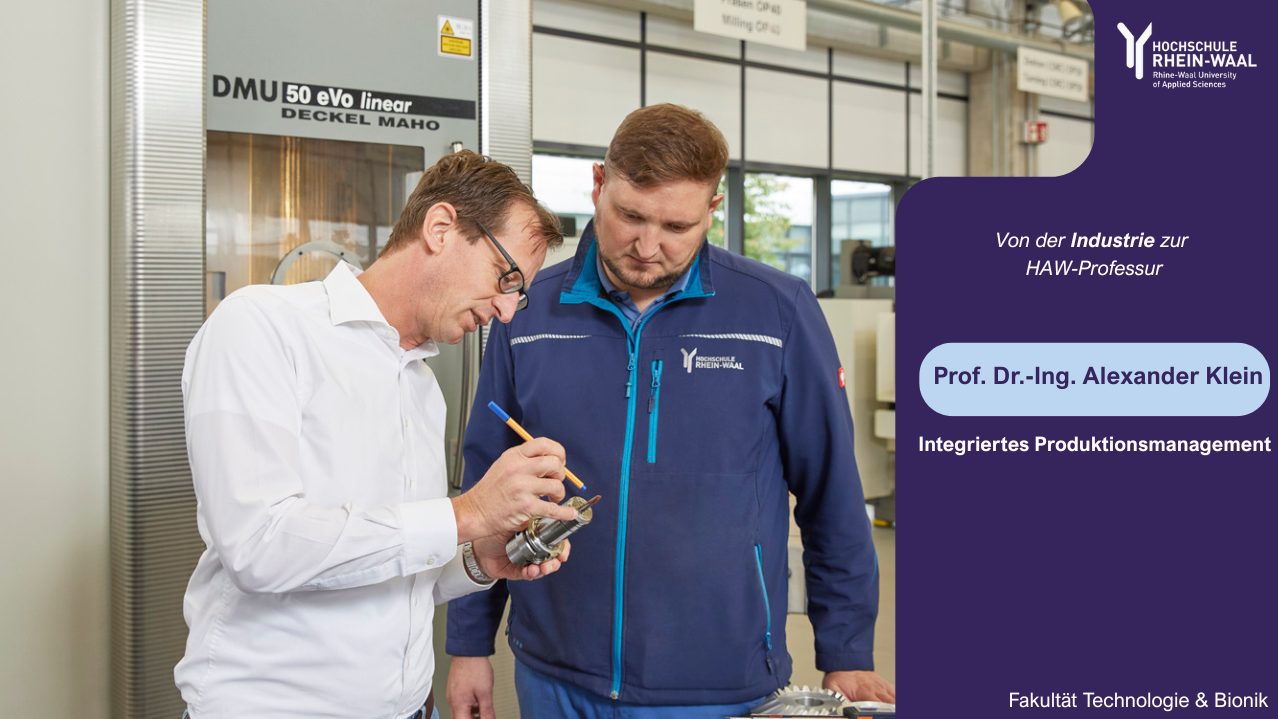
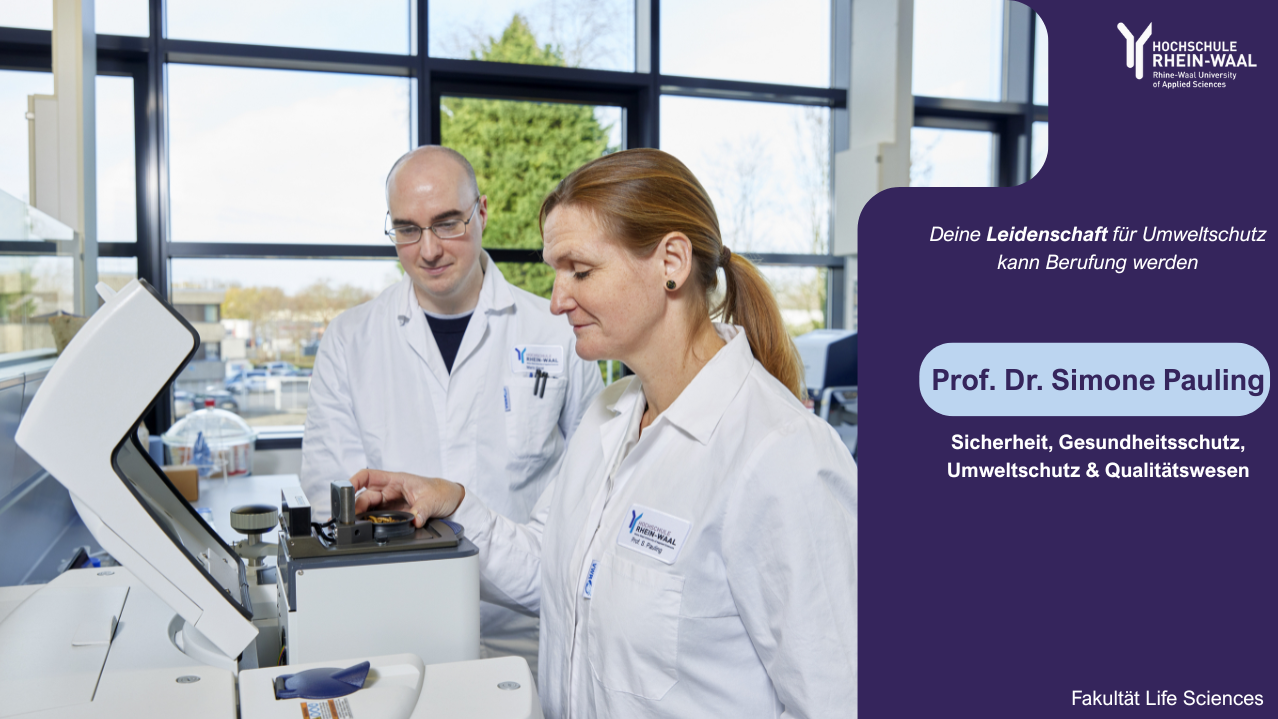
Would you like to know how varied the paths to a professorship at a university of applied sciences are, and what day-to-day life is like as a professor at the HSRW?
Some of our lecturers share their experiences and introduce themselves here.


What can you expect as a newly appointed professor at HSRW?
As a professor at Rhein-Waal University of Applied Sciences (HSRW), you will become part of an international, research-intensive and dynamic university with a clear focus on applied teaching, research and knowledge transfer. You can look forward to a varied working environment offering considerable creative freedom, inspiring interaction with enthusiastic students and an open, supportive team of colleagues. HSRW fosters a close-knit community and a personal working atmosphere. We won’t leave you to your own devices, especially during the initial phase: a structured, interdisciplinary onboarding programme featuring orientation meetings, networking events and bespoke professional development opportunities will help you settle into your new role. Your research projects will receive targeted support – including through collaborations with regional partners and close cooperation with the NRW Doctoral College. Flexible working arrangements, childcare support and a wide range of opportunities for personal and professional development round off the attractive overall package of your professorship at the HSRW.
Discover the opportunities offered by a professorship at HSRW – with scope for ideas, active involvement and personal growth.
Your benefits
You are currently working in a company, a government department or at a university – why should you choose a professorship at HSRW? Like no other profession, a professorship offers the opportunity to combine self-directed knowledge transfer with applied research. The benefits include:
- Autonomy in your work: As a professor, you will organise your teaching, research and projects independently, with a high degree of freedom in how you carry out your daily work.
- Ample scope for creativity: You have the opportunity to play an active role in shaping innovative teaching formats, research approaches and collaborations, and to set your own priorities.
- Job security: A professorship offers you long-term career stability through civil service status or permanent employment.
- Flexible working hours: A healthy work-life balance is particularly encouraged and facilitated through flexible working arrangements and the ability to work independently.
- Supporting young people in their studies and academic careers: You will guide and inspire students on their path into professional practice or research – a meaningful and impactful role.
- Interdisciplinary and international work: Through a wide range of projects and collaborations, you’ll work with colleagues from a diverse range of disciplines as well as international partners.
- Combining theory with practical application: You will apply academic findings to practical contexts and work closely with businesses, institutions and society.
FAQ
The remuneration for a professorship comprises several components and is governed by Section 32 et seq. of the North Rhine-Westphalia State Remuneration Act. In addition to the basic salary, individual performance-related and role-related payments may be agreed:
- The basic salary (W2) and, where applicable, family allowances (depending on factors such as marital status and place of residence) form the basis of the remuneration.
- Performance-related allowances are agreed upon during the appointment negotiations.
- Special performance-related allowances recognise achievements in research, teaching or the promotion of early-career researchers.
- Functional allowances are awarded for additional duties within the university, e.g. in a managerial role.
Further information on remuneration can be found in the salary tables published by the State Office for Remuneration and Pensions of North Rhine-Westphalia.
No, according to Section 36(1)(5) of the Higher Education Act of North Rhine-Westphalia, a habilitation is not required for a professorship at a university of applied sciences.
In accordance with the North Rhine-Westphalia Teaching Obligations Regulations (LVV), the teaching load is generally 18 teaching hours. One teaching hour comprises a minimum of 45 minutes of teaching per week (LVV NRW § 1a, § 3).
Good to know: Under certain circumstances (e.g. for research activities, in particular tasks relating to self-governance or the assumption of specific roles), there are options for reducing the teaching load.
The appointment process for a professorship at HSRW usually takes several months. Following the publication of the vacancy and the submission of applications, the process involves the screening of applications, the delivery of trial lectures, the drawing up of a shortlist by the appointments committee, and the final appointment interview. The entire duration of this process can take several months, although, depending on the university and the specific procedure, the whole process may take up to a year or longer.
Appointments committees are generally composed of members from the ranks of professors, academic staff and students, all of whom have voting rights.
Information on the composition of appointment committees at HSRW can be found in the Appointment Regulations of Rhein-Waal University of Applied Sciences.
Even if you do not yet have the three years of professional experience outside higher education required by law (out of a total of five years’ required practical experience), there are already ways to prepare specifically for a professorship at a University of Applied Sciences (HAW) – particularly through new structural developments such as the junior professorship.
The early-career professorship offers academically qualified individuals with an interest in teaching and research the opportunity to gradually develop into the role of a UAS professor at an early stage – even without having fully met the professional experience requirements. The aim is to gain practical experience outside the university alongside academic work, whilst at the same time gaining initial teaching, research and knowledge transfer experience at the university. This facilitates a structured career path towards a professorship at a University of Applied Sciences. In addition, work on third-party-funded projects with industry partners, fixed-term positions in the private sector or roles within applied research institutes can be utilised to gradually acquire the required professional experience.
If you are interested in a professorship at the University of Applied Sciences but are still in the qualification phase, we would be happy to advise you personally on the various entry opportunities and funding programmes. Please feel free to contact the staff at the Department of Academic Staff Development & Continuing Professional Development (proactive(at)
The maximum age limit for appointment as a civil servant is set out in Section 39a of the Higher Education Act of North Rhine-Westphalia. Professors at universities in North Rhine-Westphalia may be appointed as civil servants provided they have not yet reached the age of 50 – alternatively, if the age limit is exceeded or upon request, employment under a private-law contract is also possible.
Under certain conditions, this age limit may be raised – for example, in the case of caring for a minor child or actually providing care for a close relative who has been certified as requiring care (Section 39a(2)). Furthermore, in justified exceptional cases, deviations from the maximum age limit are possible (Section 39a(5)).
Teaching aptitude generally involves experience in delivering courses and relevant prior training. Do you not yet have any teaching experience and would like to gain some initial experience? Perhaps a suitable teaching assignment would be the right way for you to start.
The Executive Board’s guidelines on the allocation of teaching and examination duties at Rhine-Waal University of Applied Sciences provide an overview of the legal framework and requirements for a teaching post.
We only accept applications for advertised professorial posts. Are you interested in a career as a professor at the University of Applied Sciences? If so, please feel free to contact the staff at the Department of Academic Staff Development & Continuing Professional Development (proactive(at)