
E-Government, BSc
For IT all-rounders who want to help shape the smart government of tomorrow.
Renew your ID card from the sofa? Apply for parental allowance from home? Submit a planning application digitally – or even vote online?
E-Government specialists develop innovative, user-friendly software solutions, products and services for public administration, businesses and civil society. Alongside specialist knowledge of public administration and computer science, you’ll develop key skills such as project management and teamwork – preparing you to play an active role in shaping the digital transformation of our society.
At a glance
Bachelor of Science
Full-time
7 semesters
Unrestricted admission (no Numerus Clausus)
Kamp-Lintfort
German
1 September
Why study E-Government, BSc at Rhine-Waal?

What makes this degree programme special?
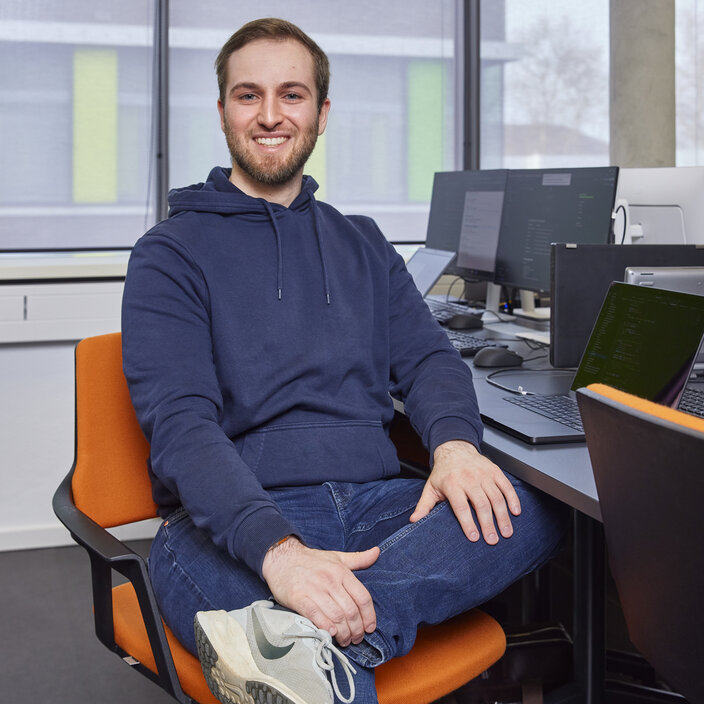
Michael Wedel shares his experiences.


Programme structure and content
With your interdisciplinary skill set, a wide range of career paths will be open to you. You’ll learn how to combine technology with innovative approaches to organisation and communication – whether in local government, state or federal authorities, EU institutions or the private sector. From E-Government and project management to IT departments, specialist teams, controlling, procurement or consulting, the choice is yours.
As a graduate, you’ll be ready to drive digital transformation in public administration and become part of a field that is shaping the future. Exciting career opportunities include:
- Digital Transformation Officer in public authorities and organisations
- IT Project Manager for E-Government solutions
- Digital Transformation Consultant
- Developer of GovTech solutions
- Founder of a GovTech start-up
Demand for skilled professionals in this area continues to grow. The Online Access Act requires public services at federal, state and local level to be available digitally, creating a strong need for experts who can help turn this vision into reality. With your knowledge and skills, you’ll be ready to make a real impact.
In your first few semesters, you’ll dive into the world of E-Government and discover the challenges and opportunities it has to offer. You’ll build a strong foundation in IT, public administration and business. In your fifth semester, you’ll put your knowledge into practice by working on real digitalisation projects from the public sector, tackling current challenges and developing practical solutions.
In your sixth semester, the choice is yours: gain hands-on experience with an exciting employer or spend a semester abroad at one of our partner universities.
You’ll complete your degree in the seventh semester with your Bachelor’s thesis, either in public administration or with a company.
Yes, both options are available in the standard full-time programme. In your sixth semester, you can choose between an internship semester and a semester abroad. You’ll gain valuable hands-on experience, make your first professional connections and learn how to apply your knowledge to real-world projects.
A semester abroad also gives you the chance to gain international experience, discover new perspectives and develop your intercultural skills.
Which programming languages will I learn?
The programming languages taught during the programme are chosen by the lecturers for each individual course.
Which books or materials should I read?
You’ll find recommended reading in the Module Catalogue or directly in your lectures.
Where can I find more information about learning materials?
This depends on the lecturer. You’ll usually receive more information at the beginning of each course. You can also find important details in the Module Catalogue and often in the Moodle course for the respective module.
Which tools are used for online seminars?
The university mainly uses Cisco Webex for online seminars. You can register free of charge through the university. Lecturers may occasionally use other platforms, most of which are freely accessible.
Will I have assignments during the semester break?
Usually not. However, deadlines for projects or term papers may sometimes fall within the lecture-free period.
What are the laptop requirements?
For your studies – particularly for the Web Development module – your laptop should meet the following specifications:
- Operating system: Windows, macOS and/or Linux (Linux is preferable, e.g. as a dual-boot system or virtual machine)
- Processor: Intel Core i7 or AMD Ryzen 7 (or equivalent)
- Storage: 1 TB SSD
- RAM: 32 GB
- Ports: USB-C and HDMI (HDMI via an adapter is also fine)
- Camera and microphone are required
You won’t need a touchscreen, digital pen, fingerprint scanner, dedicated graphics card or CD/DVD drive. These requirements apply up to and including the winter semester 2026/27.
To start your studies with us, you’ll need one of the following:
- a German university entrance qualification (Allgemeine Hochschulreife or Fachhochschulreife)
- an equivalent recognised qualification
- or a vocational qualification, for example a Meister qualification or a qualification from a Fachschule
We welcome applications from nationals of all countries. Please check here for general admission requirements.
For the E-Government programme, you’ll also need:
- German language skills at B2 level (Common European Framework of Reference for Languages – CEFR)
You should also bring:
- an interest in digital technologies and their practical applications
- analytical thinking and a passion for solving problems
- motivation to help shape the future of public administration
- strong teamwork and communication skills
- a basic understanding of mathematics
- English language skills are an advantage
Don’t worry: you don’t need to be a programming pro to get started. We’ll teach you all the essential foundations during your studies. A basic understanding of maths is important, though – there’s no getting around it completely.
If you’re simply missing some prior knowledge but have the interest and motivation, you’ll be in the right place. We’ll help you build the foundation
Application process
This degree programme has open admission, which means you will automatically be admitted once you have submitted your online application. Your Letter of Admission and all the important information regarding Enrolment will be available to you on Rhine-Waal University of Applied Sciences Application portal.
You only accept your place on the course once you have officially completed enrolment following your admission. As soon as you have been successfully enrolled, you will be notified by email.
Did you complete your school-leaving qualifications outside of Germany? If so, you’ll need to apply via uni-assist. The platform will guide you step by step through the application process. Your documents will then be checked by uni-assist and, provided you meet the admission requirements, forwarded to Rhine-Waal University of Applied Sciences for a final decision and the issuance of a decision letter. You will then be informed by email.
Insights



Campus
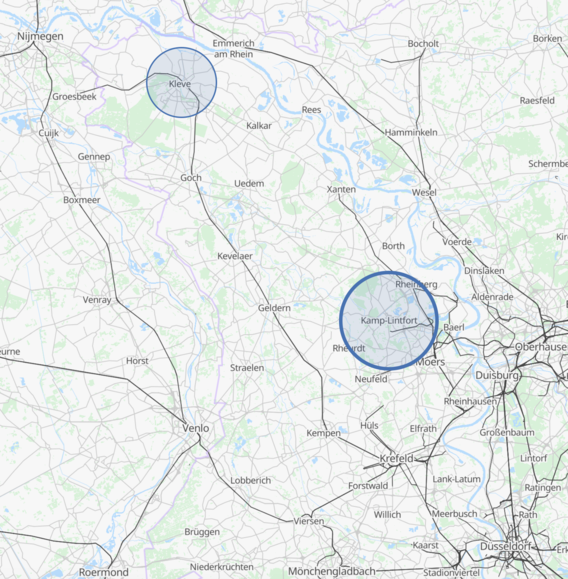
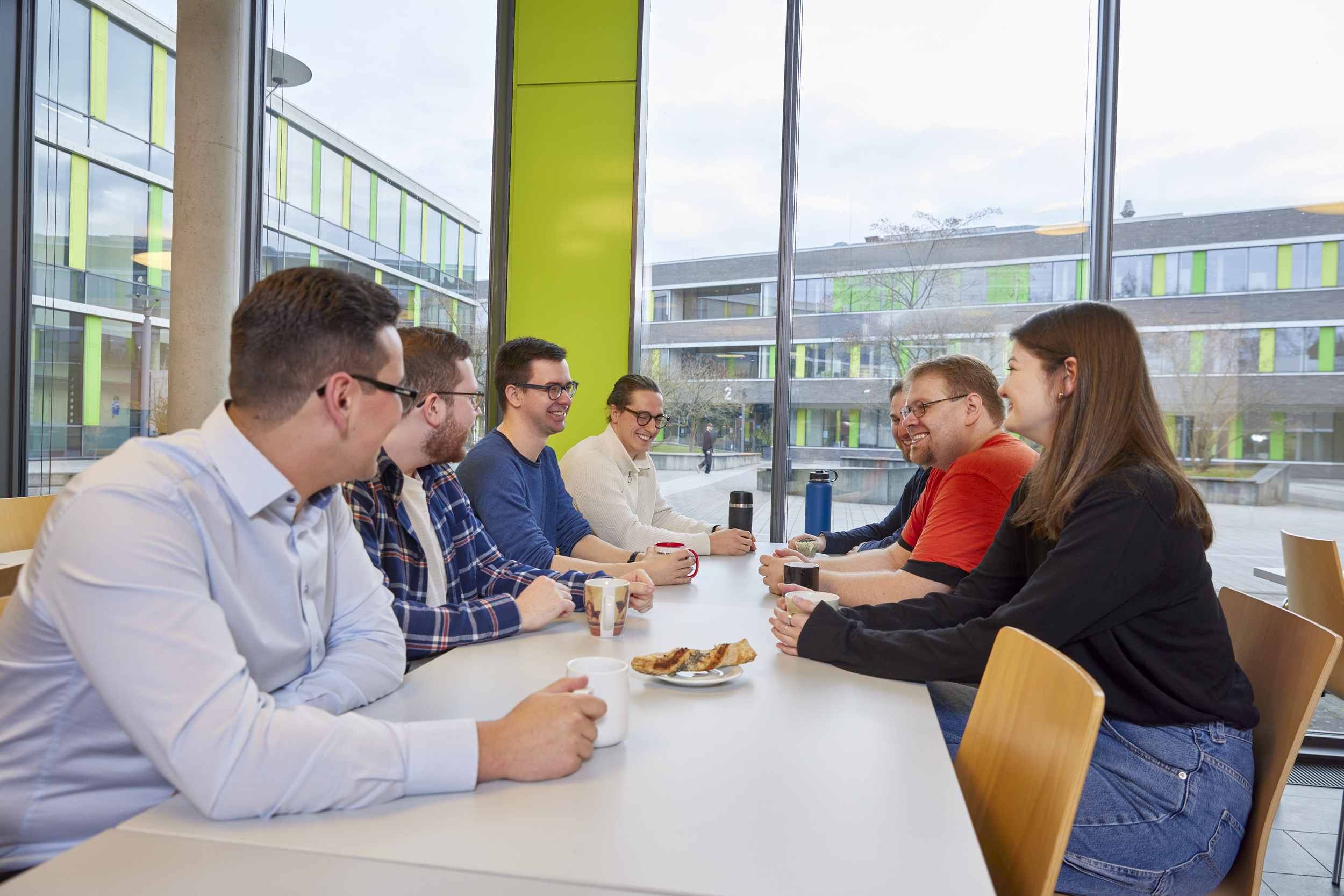
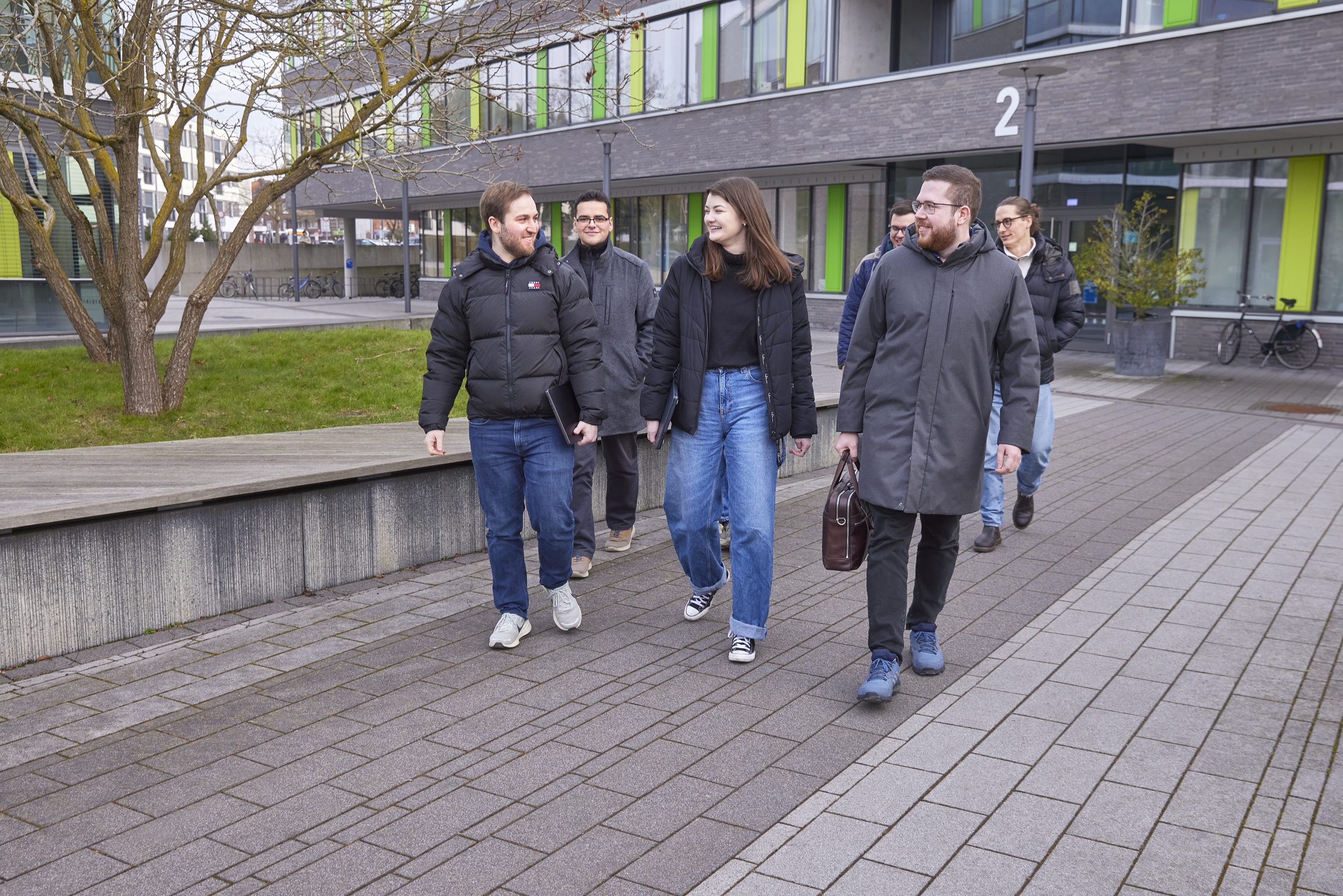
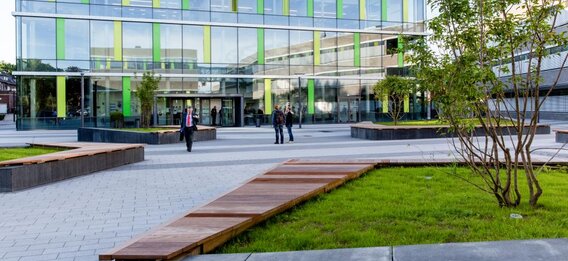
Kamp-Lintfort Campus
Related degree programmes

Student information

All about your studies
Bridging courses are intensive courses designed to help you prepare for your degree before your studies begin. Participation is voluntary and no credit points are awarded. You can use the courses to refresh your existing knowledge and fill in any small gaps before starting your studies.
The courses are held before the start of the winter semester, usually in September. The upcoming course programme will be available at the link below in due course.
The office of the examination board is the central point of contact for all questions and inquiries regarding examinations at your Faculty (Faculty of Communication and Environment).
Office of the Examination Board
On their website you will also find an overview of your first points of contact for various examination-related matters.
Overview
There is also a central Examinations Service for the entire University. It handles the administrative implementation of decisions made by the Examination Board and manages examination-related processes.
Examination Service
Your Faculty of Communication and Environment and the University’s central services offer advice and support throughout your studies – whether you need help with academic matters or personal challenges.
Advice and support services offered by the Faculty
Do you have any questions about your degree programme or exam-related matters? Are you experiencing issues with lecturers, or are you looking for personalised advice? Here you’ll find an overview of the key points of contact within the Faculty of Communication and Environment.
Services offered by the Faculty
Central advisory services
The university’s central advisory services are here to support you with a wide range of topics during your studies and beyond. Whether you need help with finding academic literature, developing a business idea, dealing with mental health challenges, studying with children or a disability, or have questions about anti-discrimination, you’ll find the right contacts and support for different situations in your studies and everyday life.
Central student services
The Central Student Services team is your main point of contact for organisational and administrative questions about your studies. They can help you with applications and admission, enrolment and deregistration, re-registration and leaves of absence, changing degree programmes, as well as questions about semester fees, certificates or health insurance notifications.
Contact
Programme Assistant
Ms Petra Kastowsky
Tel: 02842/908259821
petra.kastowsky(at)
Office hours (room number 02 00 455)
Monday–Thursday: 10.00–12.15 and by appointment
Monday, Tuesday, Thursday: 13.30–15.00 and by appointment