Programme for 18 January
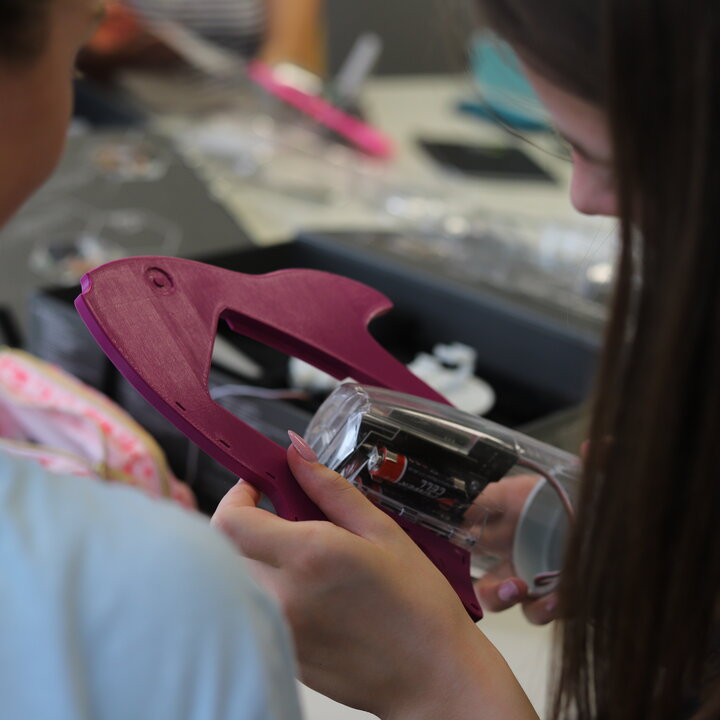
Come and explore our electrical engineering lab and build your very own mini electric piano alongside staff from the degree programme. You’ll learn the basics of soldering and electrical engineering.
When? The workshop is open from 3 pm to 6 pm – just pop in!
Where? Building 5, ground floor, Room 006
Mechanical engineering isn’t just about getting your hands dirty – nor is it just an office job. Mechanical engineering is diverse and exciting. It thrives on the interplay of different disciplines. Mechanical engineering shapes the future. So: Mechanical engineering needs you! We’ll show you how a Stirling engine works and how the strength of a ‘Caramac’ is tested in a tensile test. And, of course, you’ll also learn everything you need to know about our degree programme. We look forward to seeing you! We are: Prof. Joachim Gebel and Prof. Kai Masuch, and of course our Mechanical Engineering team.
When? The lab is open from 3.00 pm to 5.00 pm. Just pop in and find out more about the degree programme.
Where? Right in the entrance hall of Building 5
What? Electrical and Electronics Engineering
Come and see our laboratories, which are primarily used for the Electrical and Electronics Engineering degree programme. During the lab tour, you’ll learn everything you need to know about this degree programme and, of course, you’ll be able to ask questions.
When? 3.00 pm to 4.00 pm
Where? Meet in the entrance hall of Building 5.
What? Biomaterials Science
Prof. Dr Raimund Sicking will guide you through the laboratories used in the Biomaterials Science degree programme. During the lab tour, you’ll learn everything you need to know about this degree programme, the course content and the structure of the programme. Questions are, of course, very welcome.
When? 3.00 pm to 4.00 pm
Where? Meet in the entrance hall of Building 6.
What? Mechanical Engineering
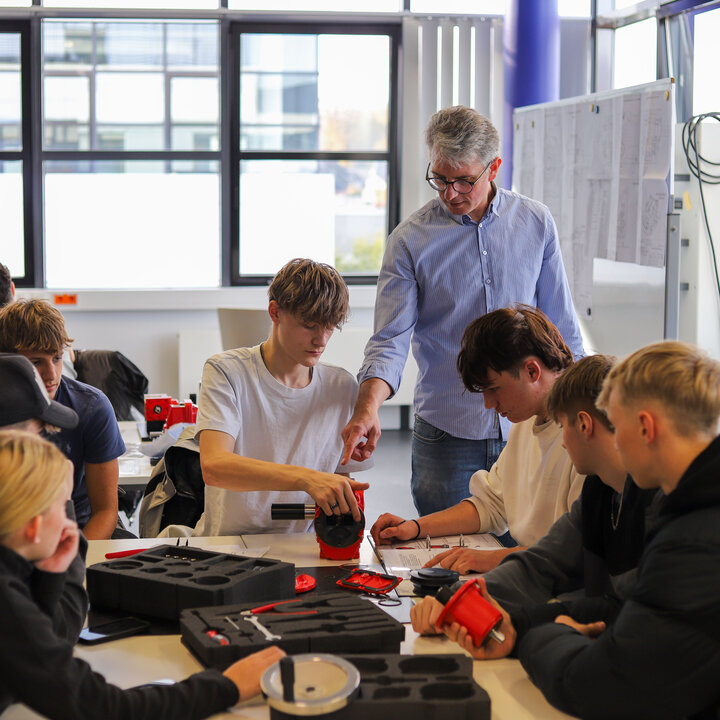
We’ll take you on a tour of the thermodynamics laboratory and the engineering hall, showing you how a Stirling engine works and how the strength of a ‘Caramac’ is tested in a tensile test. And, of course, you’ll also learn everything you need to know about the Mechanical Engineering degree programme.
When? 3.30 pm to 4.30 pm
Where? Meet in the entrance hall of Building 5
What? Industrial Engineering
Prof. Dr Dirk Untiedt will show you the faculty’s model factory, which is used in the Industrial Engineering degree programme. You’ll learn everything you need to know about this degree programme and its curriculum. Questions are, of course, welcome!
When? 4.00 pm to 5.00 pm
Where? Meet in the entrance hall of Building 6.
What? Mechanical Engineering
We’ll take you on a tour of the thermodynamics laboratory and the engineering hall, show you how a Stirling engine works and how the strength of a ‘Caramac’ is tested in a tensile test. And, of course, you’ll also learn everything you need to know about the Mechanical Engineering degree programme.
When? 4.30 pm to 5.30 pm
Where? Meet in the entrance hall of Building 5
What? Electrical and Electronics Engineering
Prof. Dr Andy Stamm will provide information about the Electrical and Electronics Engineering degree programme.
When? 3.00 pm to 4.00 pm
Where? hsrw.webex.com/meet/andy.stamm
What? Biomaterials Science
Prof. Dr Neil Shirtcliffe will be providing information about the Biomaterials Science degree programme.
When? 4.30 pm to 5.30 pm
Where? hsrw.webex.com/meet/neil.shirtcliffe
What? Mechatronic Systems Engineering
Prof. Dr Henning Schütte will be providing information about the Mechatronic Systems Engineering degree programme.
When? 5.00 pm to 6.00 pm
Where? hsrw.webex.com/meet/henning.schuette