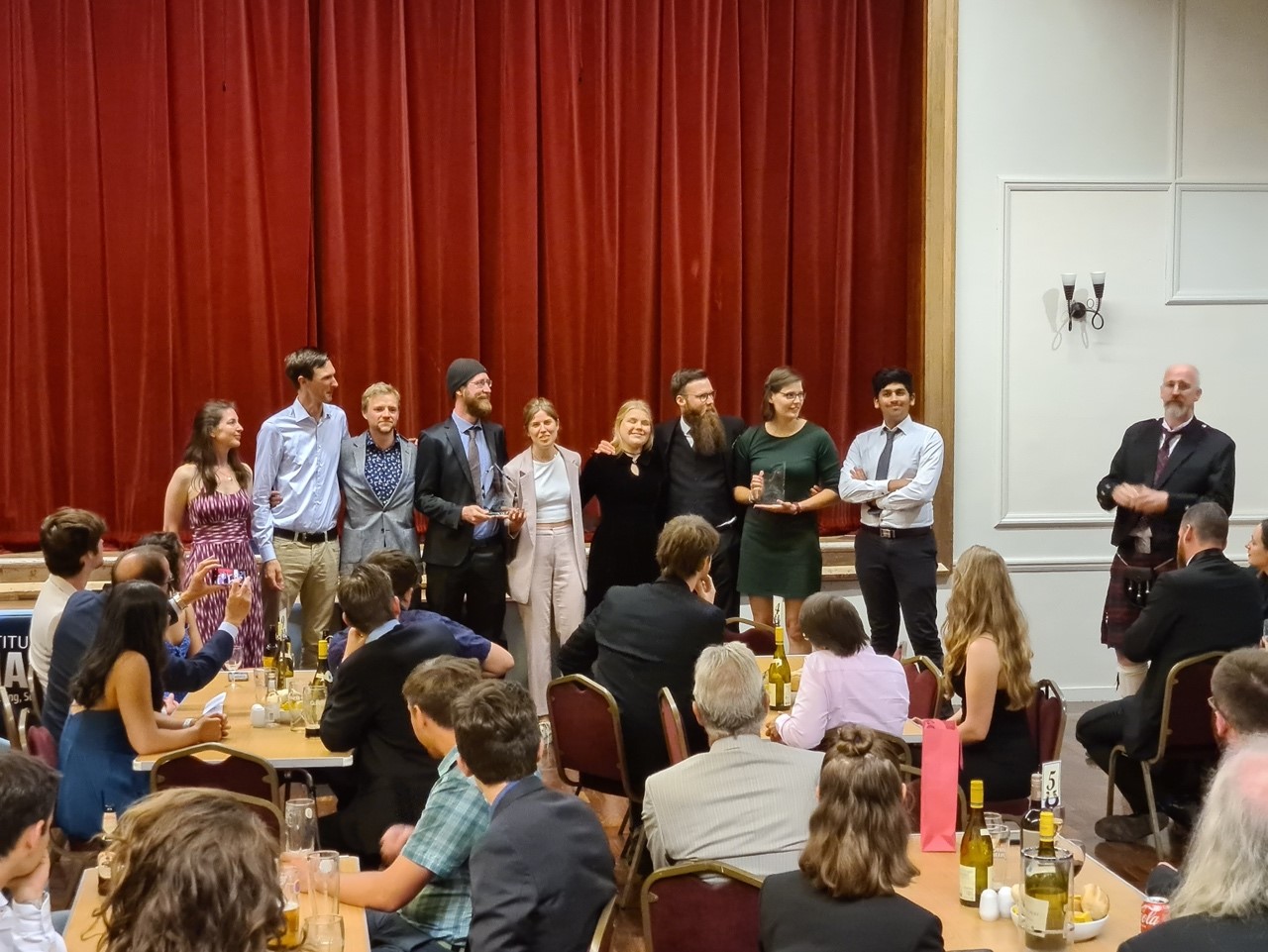
Frauke Waßmuth, captain of the Rhein-Waal University of Applied Sciences’ submarine team, took to the stage on more than one occasion in Gosport, England. The Master’s student in bionics accepted awards on behalf of her team and in recognition of their achievements on no fewer than six occasions. The team from Kleve won the top prizes in almost every category, including the coveted European International Submarine Races trophy, which depicts Alexander the Great’s first underwater voyage into the Bosphorus in 332 BC and is awarded for a team’s overall performance.
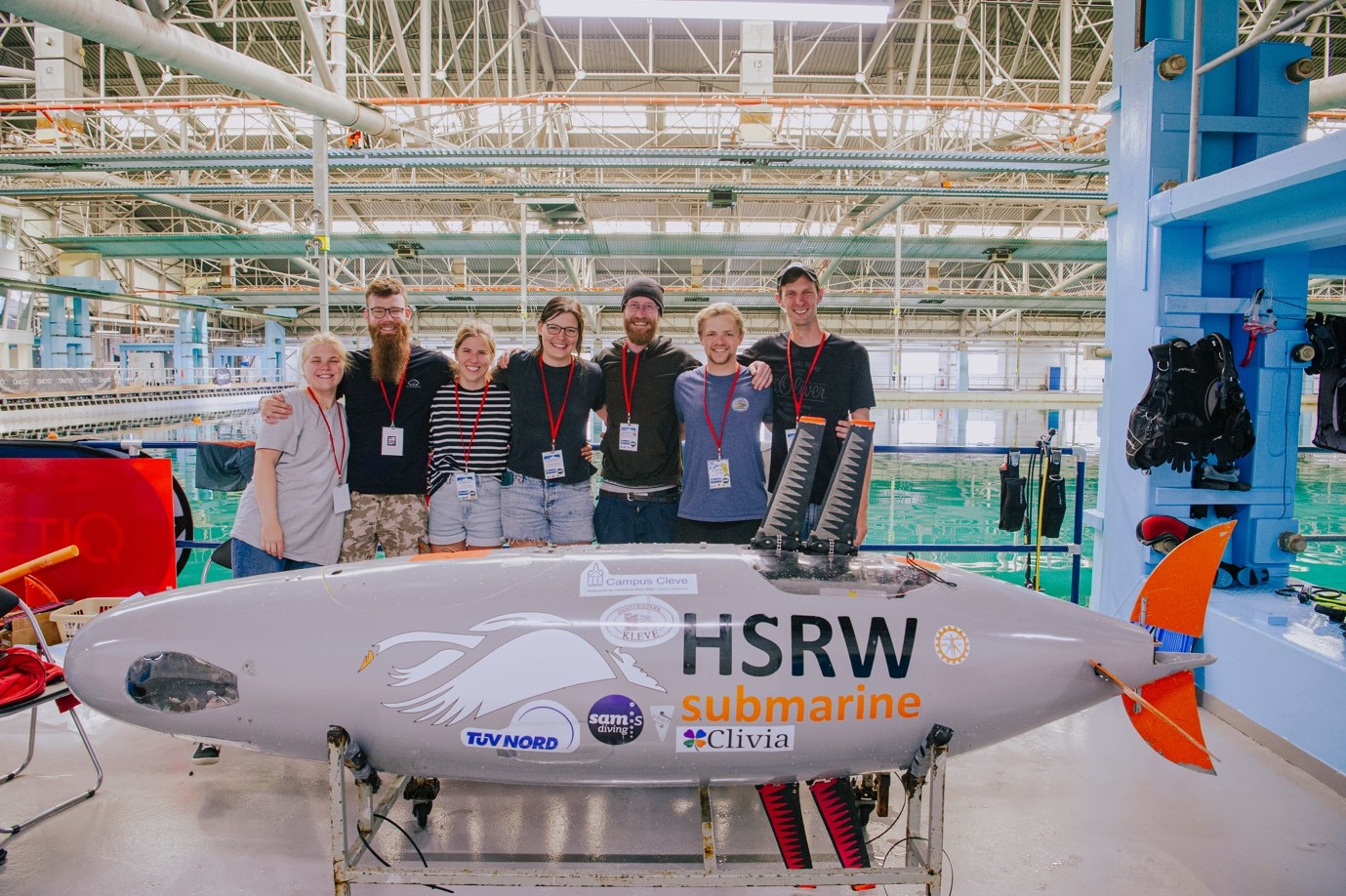
During the multi-day competition in England, the team clearly dominated the field with their submarine ‘Rivershark’. The seven-strong team, led by captain Frauke Waßmuth – who took turns piloting the submarine with Joshua Bien – won three of the four slalom courses, took gold in the 500-metre agility competition and won the design award for the ‘Rivershark’s’ sustainability concept.
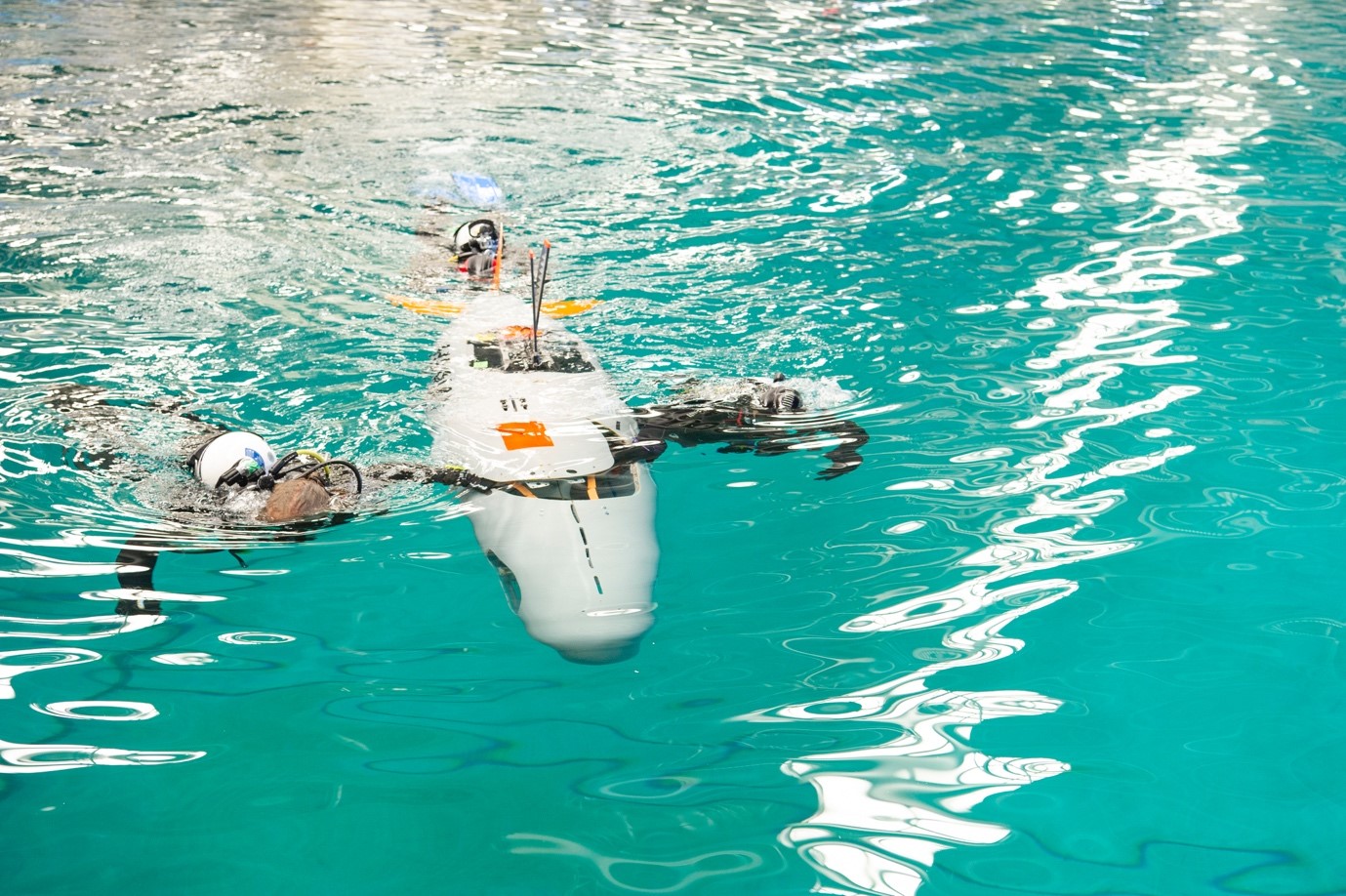
The submarine competition takes place every two years at the Haslar Marine Technology Park in Gosport, England, home to Europe’s largest freshwater basin. The competition brings together teams of students from universities around the world, who design and build their pedal-powered submarines and then race against the clock through various courses. What makes this unique is that the submarines are fully submerged; the pilots, wearing diving gear, squeeze into the cramped underwater vessels and propel them using their own physical strength. The challenge in the design phase is therefore to construct the submarine in such a way that physical strength is transferred most efficiently to the propulsion system.
Before they get that far, however, the competitors must first overcome a major hurdle, as only those teams that present a convincing safety concept and construction process are permitted to take part at all. This year, nine teams were allowed to take part, including teams from the USA, Canada, Taiwan and the UK. These teams then had to demonstrate on site that their safety systems and supporting teams of divers worked not only in theory but also in practice underwater; apart from the ‘Rivershark’ team, only four other teams were able to impress from the outset. During the first week of the race, the teams that had not been immediately approved were able to make improvements, meaning that all nine teams were ultimately allowed to compete in the races.
The 2022 HSRW submarine team comprised: Frauke Waßmuth (captain and pilot), Joshua Biehn (pilot), Sophia Döring, Martha Grupp, Lysander Trapp, Aaron Hinkle, Hannes Jaschinski and Karthick Onnu, all of whom took part in the races, as well as Ernest Malov, Marcello Tania, Ben Vafis, Leen Nijim and Manav Thakkar, who supported the team during the design and construction phase.
The Rivershark submersible has already taken part in six international submersible races in the USA, the UK and France. As part of its sustainability goal, the HSRW Submersible Team recycles the hull and rebuilds the propulsion and control systems from scratch for each competition. And after a short summer break, the team will get straight back to work on the new design; at the same time, some team members are finalising their diving training so that they can accompany the new boat underwater next time.
From left to right: jury member Liz Whitrow, the “Rivershark” team: Lysander Trapp, Joshua Biehn, Aaron Hinkle, Martha Grupp, Sophia Döring, Hannes Jaschinski, Frauke Waßmuth, Karthick Onnu, Race Director Prof. Dr William Megill