Kleve/Kamp-Lintfort, 30 October 2015: “We have plenty of product ideas, but how do we find out whether they are actually relevant ‘out there’?” This is a key question in the development of innovative products. This question will be explored in this Studium Generale lecture by consumer researcher and sociologist Prof. Dr Thomas Heun, Professor of Consumer Behaviour and Market Research at Rhine-Waal University of Applied Sciences.
At the heart of his lecture, therefore, are ‘classical’ and more recent social science and psychological techniques and methods of consumer research in the innovation development process, as the consumer’s perspective has continued to gain importance in marketing science. Striking evidence of this, alongside the ‘psychologisation of the brand concept’ since the 1930s, includes recent attempts to involve consumers in innovation processes (‘co-creation’). Companies possess expertise and know-how, and customers are looking for solutions, but new ideas only emerge through intensive dialogue between both sides. On closer inspection, this simple approach turns out to be a dilemma: does the customer even realise that they have a problem for which the company has a ready-made solution? By paying greater attention to the everyday lives of ‘real people’, companies generally hope to achieve a higher degree of relevance and market success for their products and innovations. A key obstacle to developing more relevant products for consumers is usually a lack of methodological knowledge and skills.
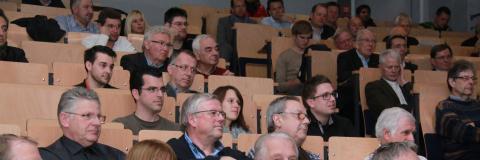
The lecture forms part of the Studium Generale. The lecture programme is aimed at the general public, as well as students, lecturers and staff at Rhein-Waal University of Applied Sciences, and presents current topics in a way that is relevant to everyday life and informative. The lecture series also offers the chance to engage with current issues. “We invite everyone, regardless of age, to attend these fascinating lectures,” says the University’s President, Dr Heide Naderer. At the same time, she sees the programme as an opportunity to visit the University’s two sites and the facilities on both campuses.
The Studium Generale lectures at Rhine-Waal University of Applied Sciences are free of charge for members of the public.