Regular physical activity strengthens the body, mind and spirit. Regular exercise and sport help to prevent lifestyle-related diseases, such as diabetes or cardiovascular disease, relieve stress, enhance personal well-being and improve quality of life. To stay physically active, many people make use of the exercise and sport facilities provided by their towns and local authorities.
Due to social changes and demographic trends, patterns of sport and physical activity have changed significantly, particularly in recent years. Whilst in the past a large proportion of these activities were organised by clubs, sport today is increasingly self-organised and takes place in the natural environment. This shift in citizens’ exercise habits is currently presenting towns and local authorities with new challenges and is fundamentally changing the range of sport and exercise opportunities available to everyone. At the same time, the needs of all age groups must be taken into account.
This is a complex task which the Schaephuysen working group ‘Experiencing Nature and Outdoor Sport’ is tackling as part of village development, in collaboration with two Master’s students from Rhine-Waal University of Applied Sciences: How can incentives be created to encourage all residents and visitors to the municipality of Schaephuysen to be more active in the surrounding natural environment and to make space for outdoor sports in Schaephuysen?
Together with the students Nicole Bünger and Johanna Potthast from the Master’s programme in ‘Health Sciences and Management’, the working group has now developed the concept for a fitness circuit, thereby taking a major step towards its goal. Fitness circuits, combining elements of a fitness trail with exercise equipment, enable people of all ages to exercise in the great outdoors.
The students designed the exercise programme as part of their research project in collaboration with members of the local community and the working group. The students were supervised by the programme director, Prof. Dr Robert Renner, and Heike Holtappel, a research assistant at the Faculty of Life Sciences.
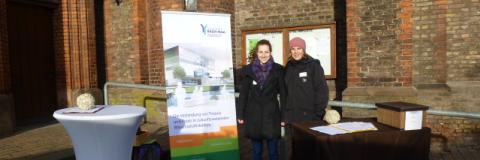
The design of the exercise trail was preceded by an in-depth analysis by the students of the location and the interests of the local community. The students familiarised themselves with the surroundings during an extensive cycle tour and made contact with the working group before conducting a comprehensive survey of local residents to identify their wishes, needs and requirements for an exercise programme.
The students presented their findings, along with initial ideas for implementing an exercise programme, to the working group and subsequently discussed these in depth with its members. The idea of an exercise trail met with particular interest from the working group, thereby providing the impetus for the development of the concept.