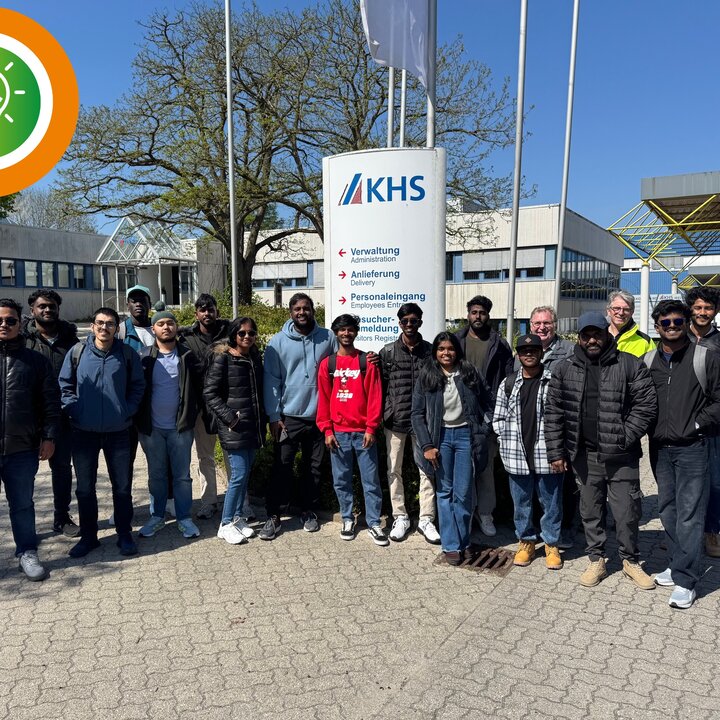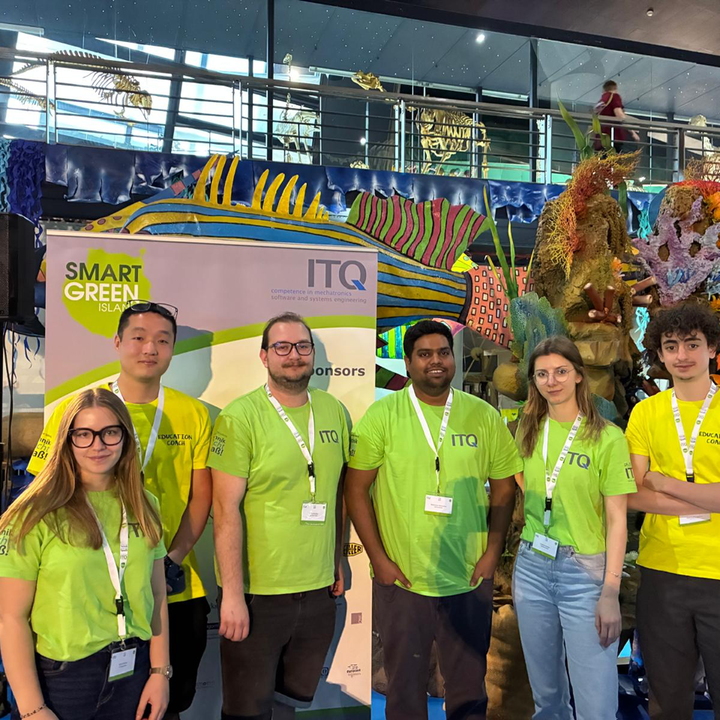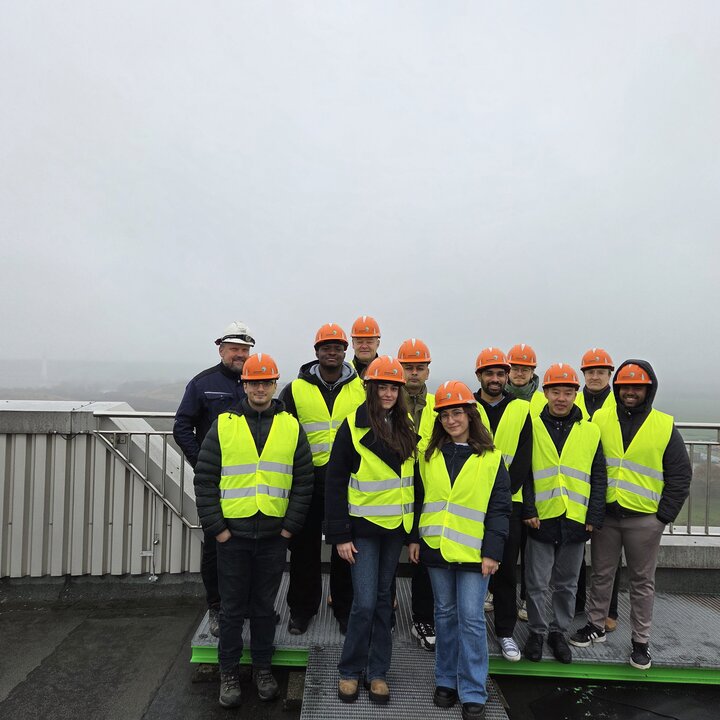

Rhein-Waal University of Applied Sciences hosted a pupils’ parliament on the topic of energy.
HSRW
Parliamentary debate by school pupils on the topic of energy (press release)
Rhein-Waal University of Applied Sciences hosted a pupils’ parliament on the topic of energy.
Will we still need large power stations to generate electricity in the future? Do we need more electric vehicles? How does energy reach our homes? At the invitation of Rhine-Waal University of Applied Sciences, secondary school pupils discussed these and other questions relating to energy, and were able to feel like real MPs in the process. The town of Kleve made its large council chamber available for their parliamentary debate. Mayor Sonja Northing welcomed the young parliamentarians. She encouraged the participants to work together to find constructive solutions, to be open to other perspectives, and to remain objective and fair throughout the debate.
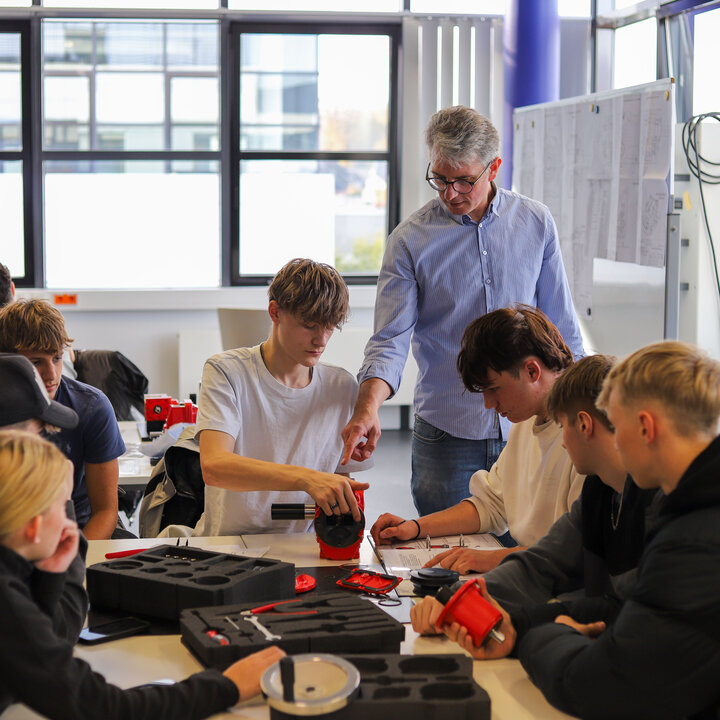
To prepare for the debate, the young people, aged between 16 and 18, spent two days on the Kleve campus working alongside experts from the university to examine three specific aspects in particular. Professor Dr Kai Tiedemann and Professor Dr Andy Stamm led the discussions on ‘infrastructure construction’ and ‘smart grids’. Professor Dr Irmgard Buder, an expert on ‘mobility’, supported the preparatory work. Although all the topics were of local relevance, the participants were free to choose which area they wished to focus on in their discussions. The pupils also took part in lively discussions on the content of the lecture on ‘biogas’ given by Professor Dr Joachim Gebel.
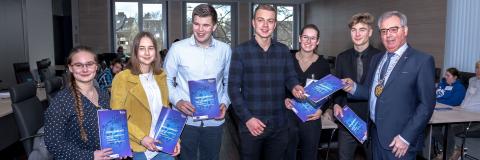
The event was facilitated by a team of moderators from the Young European Federalists (JEF) NRW. Working alongside this team and the experts, the young people divided into three groups, each tackling a specific topic. Based on a thorough exchange of views and in-depth discussions, the pupils were able to form their own opinions and thus develop a corresponding parliamentary debate. This involved drafting resolutions, which were then discussed and adopted in the concluding debate. The young people summarised their decisions in a booklet of resolutions and presented it to the deputy mayor, Josef Gietemann.
In its resolution, the ‘Mobility’ committee set out no fewer than ten key demands: the integration of alternative propulsion methods in freight transport; reducing the proportion of lorries in freight transport from the current 70 per cent to 50 per cent by 2030; a shift in transport from conventional propulsion systems to electric propulsion systems; increasing the appeal of electric cars whilst simultaneously reducing the appeal of internal combustion engines; shifting car traffic in the city centre and inner city to other modes of transport; making public transport more attractive and, in return, implementing measures that make car use in city centres less appealing; improved state oversight of the use of funds allocated to public transport; and the promotion of car-sharing so that car ownership is no longer necessary.
In its resolution, the ‘Power Line Construction’ Committee called for the expansion of power line routes to be pursued with the utmost urgency, for the state to subsidise the construction of extra-high-voltage power lines, and for compensation payments to be laid down by law, giving the highest priority to environmental protection during the construction of transmission lines, minimising bureaucratic hurdles and ensuring more effective oversight, conducting long-term studies on health risks, ecological and agricultural consequences, as well as increasing research into new energy sources and methods of storing electrical energy.
The ‘Smart Grids’ Committee set out the following demands in its resolution: state-subsidised expansion of the smart grid throughout Germany by 2033; binding private companies to legal frameworks to ensure data protection and the expansion of the smart grid; and the promotion of research in the fields of data encryption, storage technologies, more consistent renewable energy sources and control concepts for the smart grid. Furthermore, the parliamentarians called for European cooperation in order to make the best possible use of the different environmental conditions across countries, to guarantee the stability of the grid and to counter EU scepticism.
The Pupils’ Parliament
The idea for the ‘Lower Rhine Pupils’ Parliament’ originated as part of the NUCLEUS project at the Faculty of Technology and Bionics at Rhine-Waal University of Applied Sciences. The parliament aims to foster networking between young people aged 16 to 18, scientists and decision-makers in the Lower Rhine region, and to encourage young people from the region to take an interest in current issues, the future of their city and the innovative potential of scientific findings. Furthermore, through this initiative, NUCLEUS aims to help pupils develop an understanding of the realities of local decision-making processes and the interplay between science and society. The NUCLEUS project examines communication management within institutionalised science. It seeks to foster a new understanding within universities and other scientific institutions regarding communication, learning and exchange with social groups.