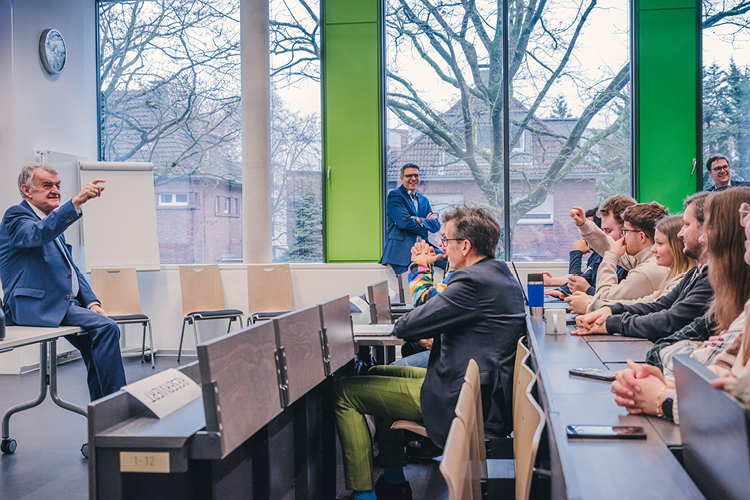
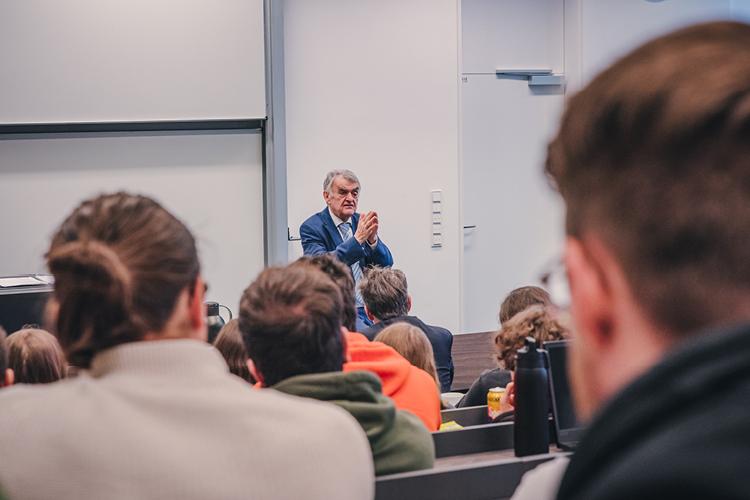
In his lecture at the Faculty of Communication and Environment at Rhein-Waal University of Applied Sciences, Reul highlighted the growing importance of cyber security for government action, focusing in particular on the changing operating environment for the police and law enforcement agencies. The ongoing digitalisation of government processes, the growing interconnectivity of critical infrastructure and the increasing sophistication of cybercriminals are presenting the state with new and complex challenges.
“Whilst digitalisation has many positive aspects, it naturally also means that criminals are increasingly shifting their activities to the internet. We must, of course, respond to this. That is why we have police officers on the streets and have also been training cybercops in North Rhine-Westphalia for some time now,” said Reul. At the same time, the Minister for the Interior emphasised that the implications of digital threats extend far beyond the realm of internal security; they also threaten the economy and open society as a whole.
A key focus of the presentation was the need to integrate technological, organisational and legal expertise more closely. Future professionals will bear a particular responsibility, especially at the interface between administration, IT and law. The state relies on well-trained specialists, such as the administrative IT specialists at Rhine-Waal University of Applied Sciences.
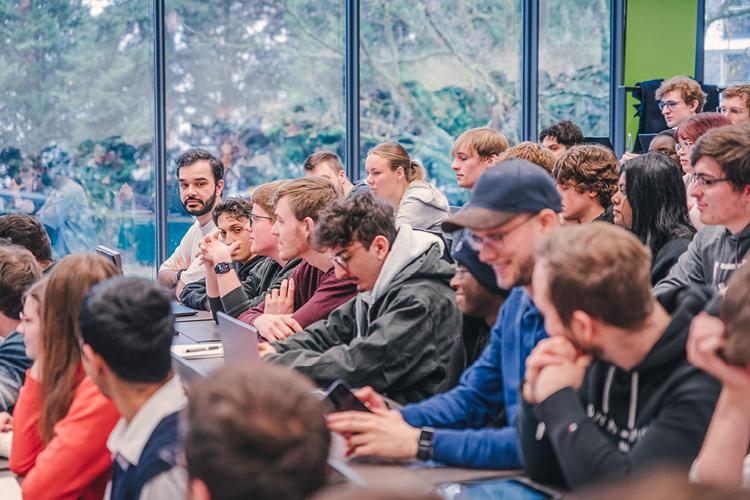
Following the lecture, Herbert Reul spent around 45 minutes answering questions and engaging with the students’ contributions to the discussion. In a lively debate, numerous topics were addressed, including the state’s role in countering hybrid threats, the use of new technologies in police work, data protection issues and the balance between security and civil liberties. The in-depth question-and-answer session highlighted the students’ keen interest in issues relating to security and digital policy, whilst also providing a forum for direct dialogue between politicians and the next generation of academics.
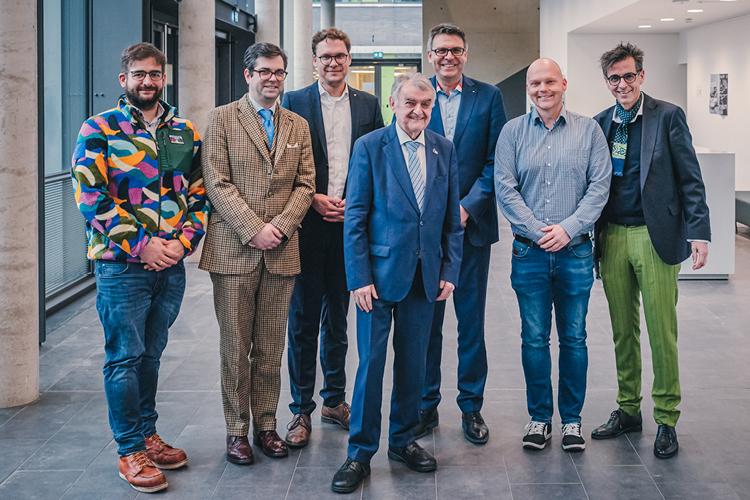
The university’s president, Prof. Dr Oliver Locker-Grütjen, thanked the Minister for the Interior for the opportunity to meet and exchange views. The visit made an important contribution to bridging the gap between academia, professional practice and political decision-making. At the same time, dialogue between political decision-makers and students reinforces the social relevance of university teaching.
The ‘Administrative Informatics – E-Government’ BSc programme is a dual study programme organised in blocks. E-government involves developing innovative IT solutions for public administration and the private sector. In addition to specialist knowledge in information and communication technology, students also acquire social, communication and organisational skills. They become familiar with the specific requirements of public administration, gain the necessary expertise to find business-oriented solutions, and are made aware of the legal framework within which they will be working. This interdisciplinary programme trains experts who are qualified for careers in virtually all sectors. It equips graduates to apply new technologies in local authorities, at regional and national levels, within European institutions and in the private sector.