According to the World Health Organisation (WHO), osteoporosis is one of the ten most common diseases worldwide and is therefore regarded as a widespread condition. In Germany, around six million people are now affected by it and, as a result, suffer from bone loss.
Scientists at the Faculty of Technology and Bionics are now working on new treatment approaches for this disease as part of the newly established IP-OSTEO RISE network. In this consortium, funded by a Marie Skłodowska-Curie programme under the EU’s Horizon 2020 framework programme, seven universities and seven industry partners from a total of seven EU countries are collaborating closely to find new treatment methods for osteoporosis. Alongside Rhein-Waal University of Applied Sciences, participants include University College London, the Hungarian Szecheny István University in Győr and the Fraunhofer Society for the Promotion of Applied Research in Munich.
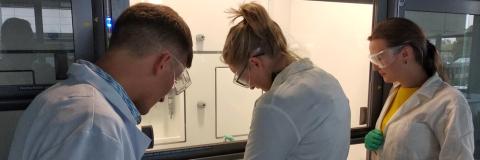
“All participants are researching entirely new and innovative methods, for example to accelerate the healing process following bone fractures or to enable bone tissue to regenerate more quickly,” explains Professor Dr Amir Fahmi, Professor of Materials Science, who heads the research group at Rhein-Waal University of Applied Sciences. The research focuses on hybrid nanofibres. These fibres are manufactured artificially and inserted into the affected areas of patients to support the fragile bone tissue. The bone-like material is implanted and directly stimulates cell growth in the affected bone. Over time, the artificial material breaks down on its own and the bone regains its strength naturally.
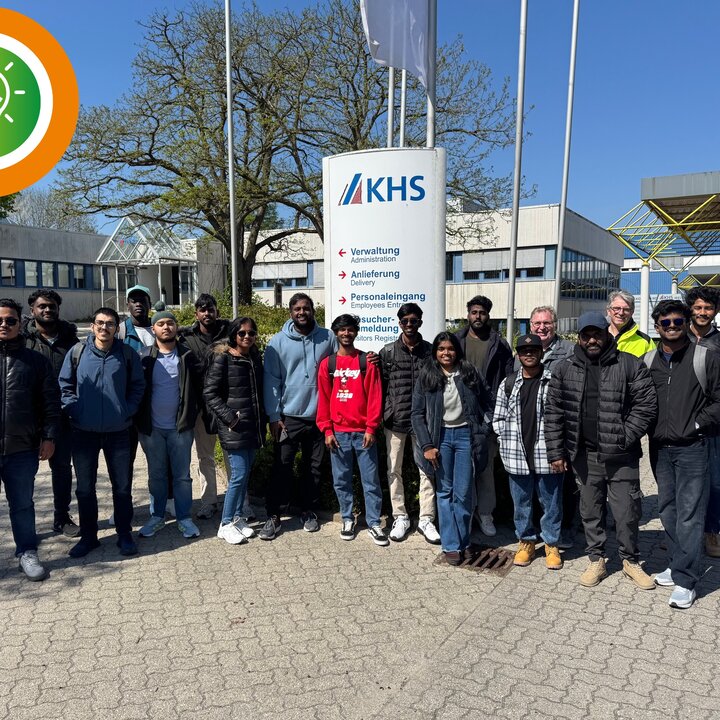
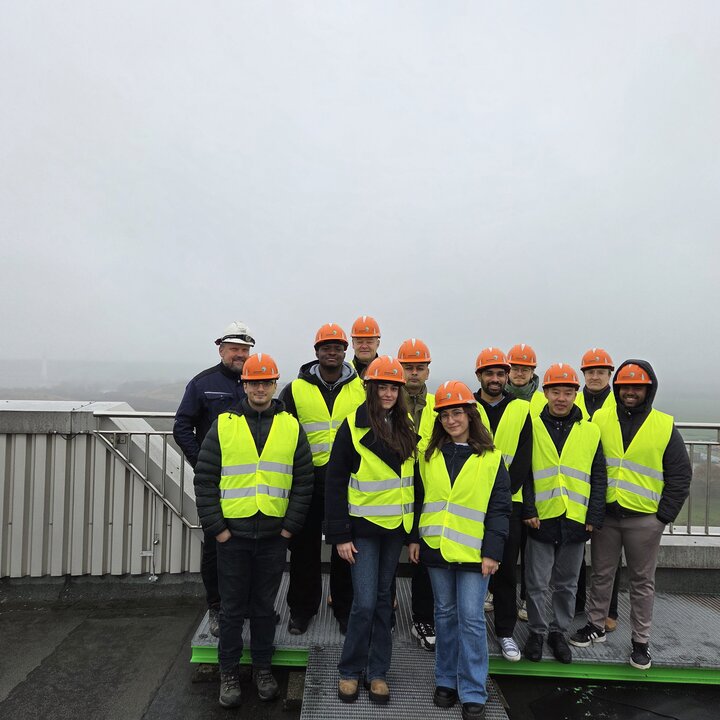
The external funding secured primarily facilitates vital and regular dialogue between the participating institutions; for example, industry partners recently visited the researchers at Rhein-Waal University of Applied Sciences. Future joint meetings will therefore serve to share individual research findings. “Together, we can achieve far more than any single institution could on its own,” emphasises Professor Fahmi. In March 2020, the members of the research project will meet at Rhine-Waal University of Applied Sciences to discuss the initial findings.