The university’s president outlined Rhein-Waal University of Applied Sciences’ interdisciplinary approach and its regional integration, which, through applied research, can make an important contribution to tackling the challenges of our time. The impact of the coronavirus pandemic on universities across the country was also discussed. Rhein-Waal University of Applied Sciences, with its particularly international focus, found itself in a unique situation, as many international students were severely affected by travel restrictions and were unable to enter the country. In this context, Locker-Grütjen emphasised the importance of digitalisation: “After four more or less digital semesters, it has once again been proven that face-to-face teaching is indispensable. Digitalisation certainly offers opportunities in this regard and can usefully complement teaching.”
Research was a key focus of the exchange. Here, Dr Oliver Locker-Grütjen emphasised the importance of start-ups, particularly for the region, and presented the two main research priorities of Rhein-Waal University of Applied Sciences. The first research priority, ‘Sustainable Food Systems’, aims to promote applied interdisciplinary research into aspects of the sustainable production and utilisation of biogenic raw materials, the protection and conservation of natural resources, and the safeguarding of human nutrition and health at the interface between the life sciences, engineering and social sciences. Working conditions in agriculture, food processing, the utilisation of waste materials, innovative production systems such as ‘edible forests’ and 3D-printed food, etc. – the ‘scope’ of this research focus (FSP) is diverse.
Leading a self-determined life – this lies at the heart of the second research priority, ‘Assistance and Participation’, which, since early 2022, has been bringing together all relevant research activities from the various academic disciplines. The potential for social participation and the support required for it are thus examined in an inter- and transdisciplinary manner, i.e. through exchange and joint analysis across the various scientific disciplines. The focus here is on areas of life such as work, education, leisure, housing, care and mobility. In an increasingly digitalised society, this involves, on the one hand, access to knowledge and, on the other, the optimal use of technical possibilities, such as research into technical assistance systems. State Secretary Dr Dirk Günnewig showed great interest in both research priorities: “Bringing together areas of research strength – that is exactly the right approach. In this way, Rhine-Waal University of Applied Sciences is able to make an important contribution to current societal issues.”
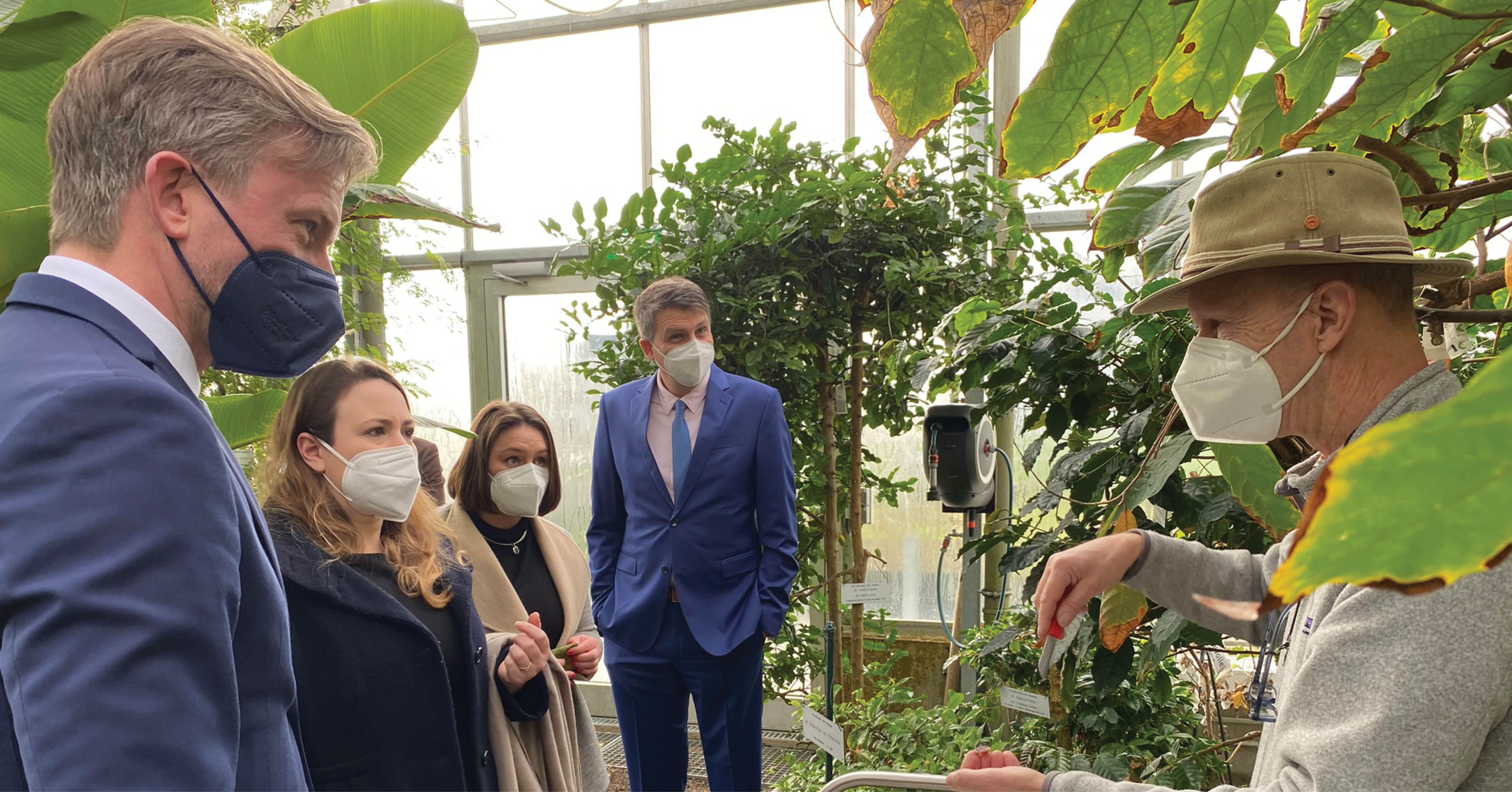
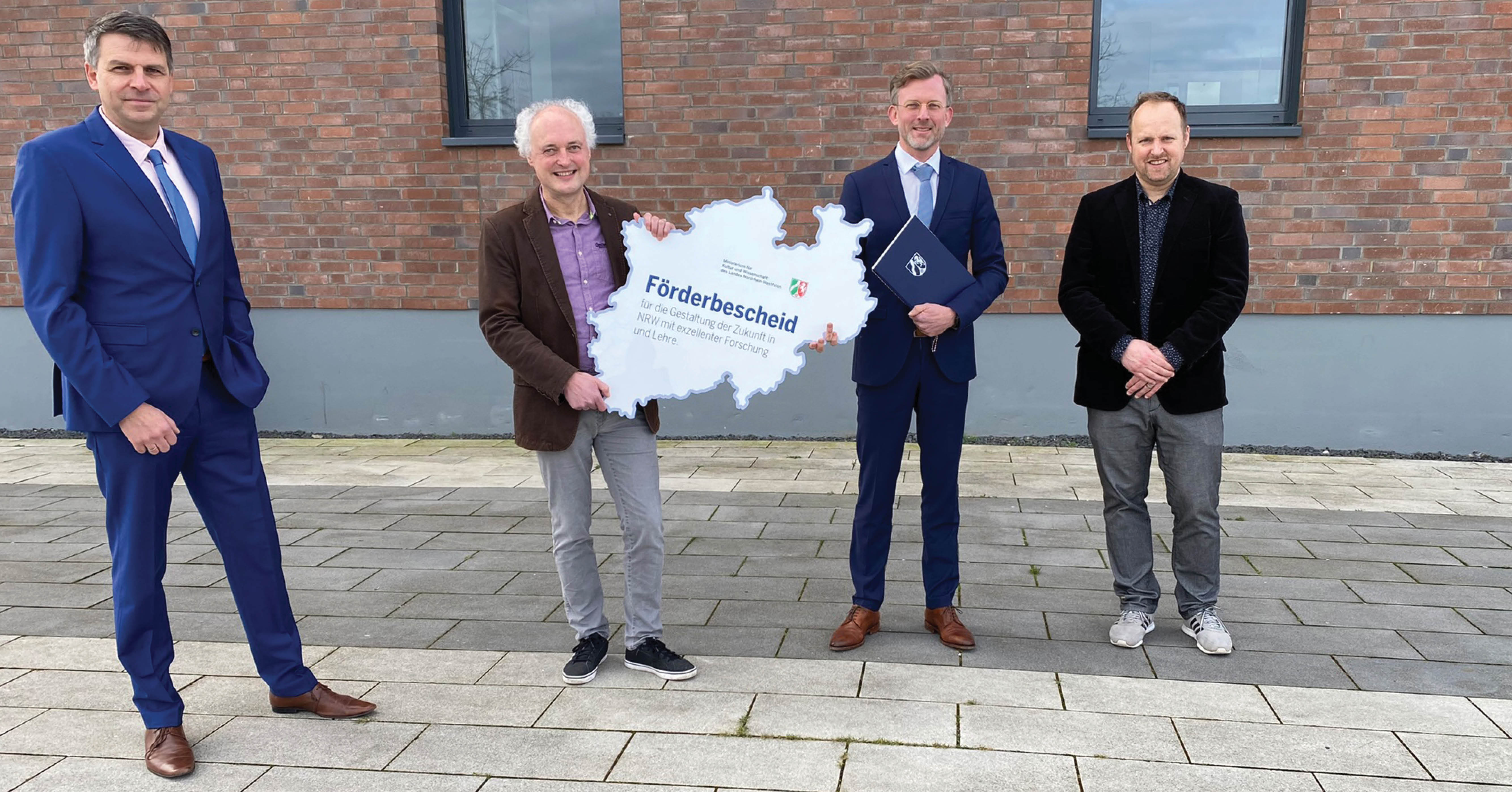
This became clear during the subsequent campus tour, which included a visit to the tropical greenhouse. Master gardener Franz-Josef Kuhnigk guided the group through the greenhouse, explained some student projects and was even able to showcase tropical fruits, despite it being winter. State Secretary Dr Günnewig then presented the grant notification for the ‘OERContent.nrw’ funding programme, amounting to around 500,000 euros.
Rhein-Waal University of Applied Sciences is receiving this funding for the project ‘Insight into the Laboratory: Real-time OER Content in Practical Training’, in which the university is taking the lead. The project focuses on improving the framework conditions for students’ laboratory practicals. ‘OERContent’ stands for ‘Open Educational Resources’, i.e. freely accessible digital teaching and learning formats. These may include, for example, online courses, educational videos or virtual laboratories. In addition, the university is also involved in the ‘BioLabSim – Biological Laboratory Simulations for Data Analysis in Biotechnology’ project, led by RWTH Aachen University. State Secretary Dr Günnewig said: “It is the state government’s aim to continuously drive forward and support the development of digital teaching and learning materials. This should benefit both students and teaching staff. The response to the OERContent.nrw funding programme was excellent: I am delighted that, out of a total of 18 funded projects, Rhein-Waal University of Applied Sciences is leading one project and is involved in another. Both projects are intended to further strengthen digital teaching within the framework of laboratory practicals for students.”
Photo credits
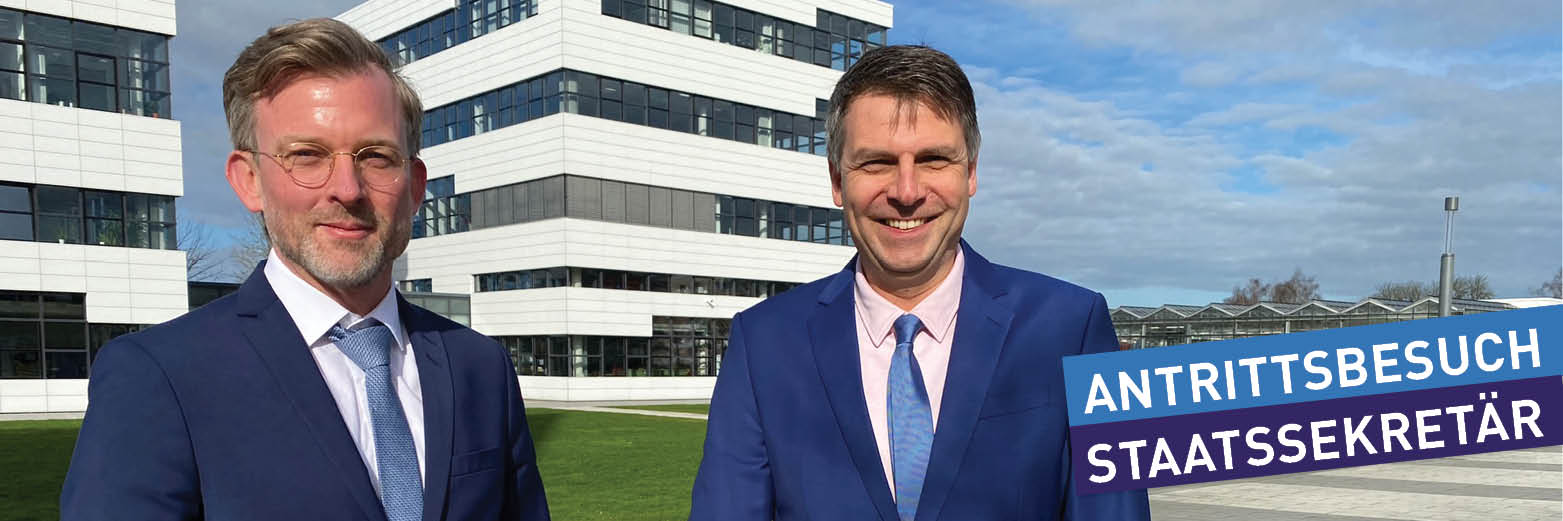
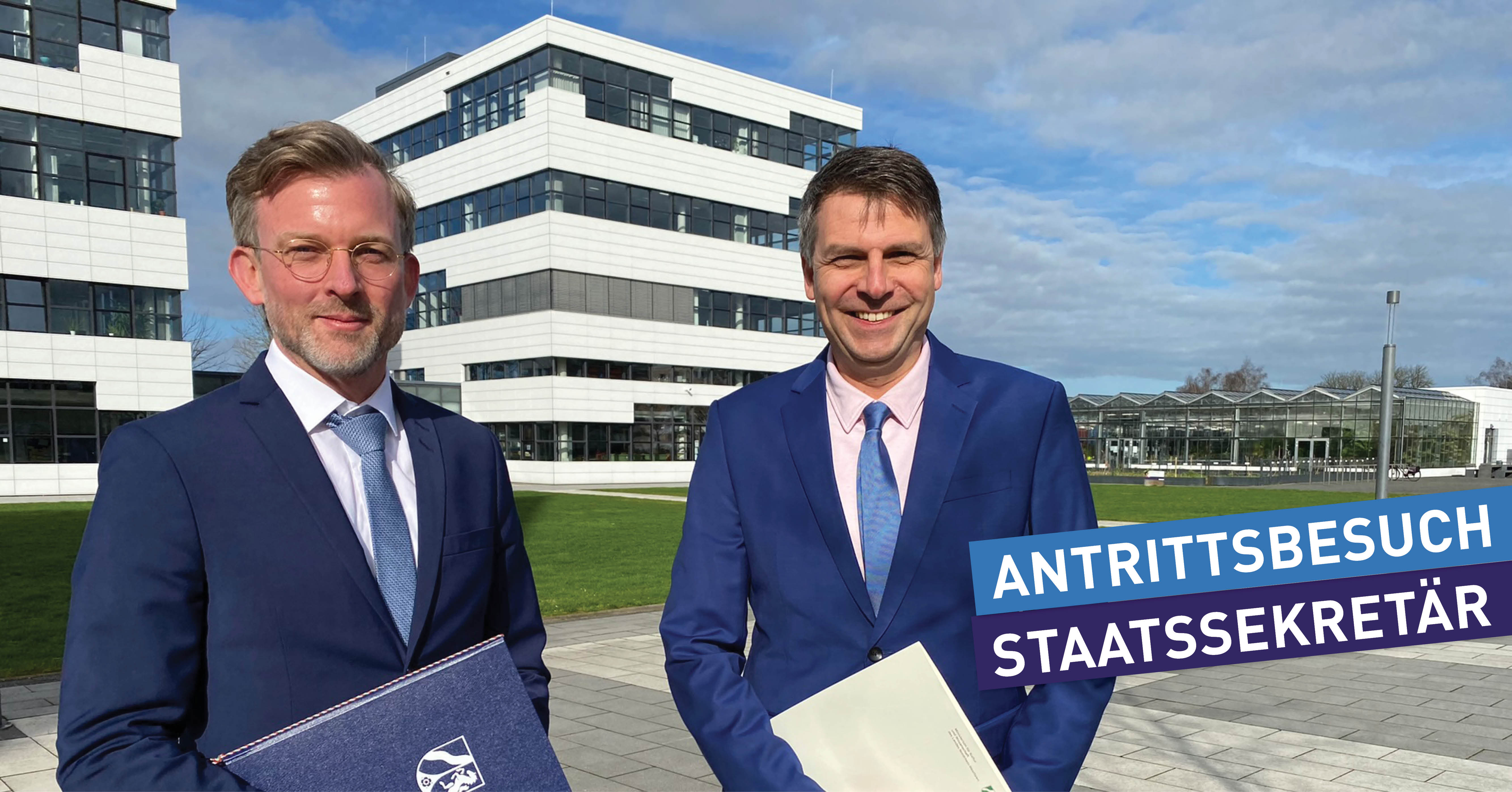
1_Dr Oliver Locker-Grütjen (right) and State Secretary Dr Dirk Günnewig on the university campus in Kleve
2_Visit to the Tropical Greenhouse: Master Gardener Franz-Josef Kuhnigk (right) with State Secretary Dr Dirk Günnewig (left) and ministry staff, Dr Oliver Locker-Grütjen, President of the University (2nd from right)
3_Presentation of the funding decision (from left): Dr Oliver Locker-Grütjen (University President), Prof. Dr Joachim Fensterle (project leader for OER, Professor of Biotechnology/Bioengineering, Faculty of Life Sciences, University e-learning officer), State Secretary Dr Dirk Günnewig and Prof. Dr Jörg Petri, Vice-President for Student Affairs, Teaching and Continuing Professional Development
All images: © Victoria Grimm / HSRW