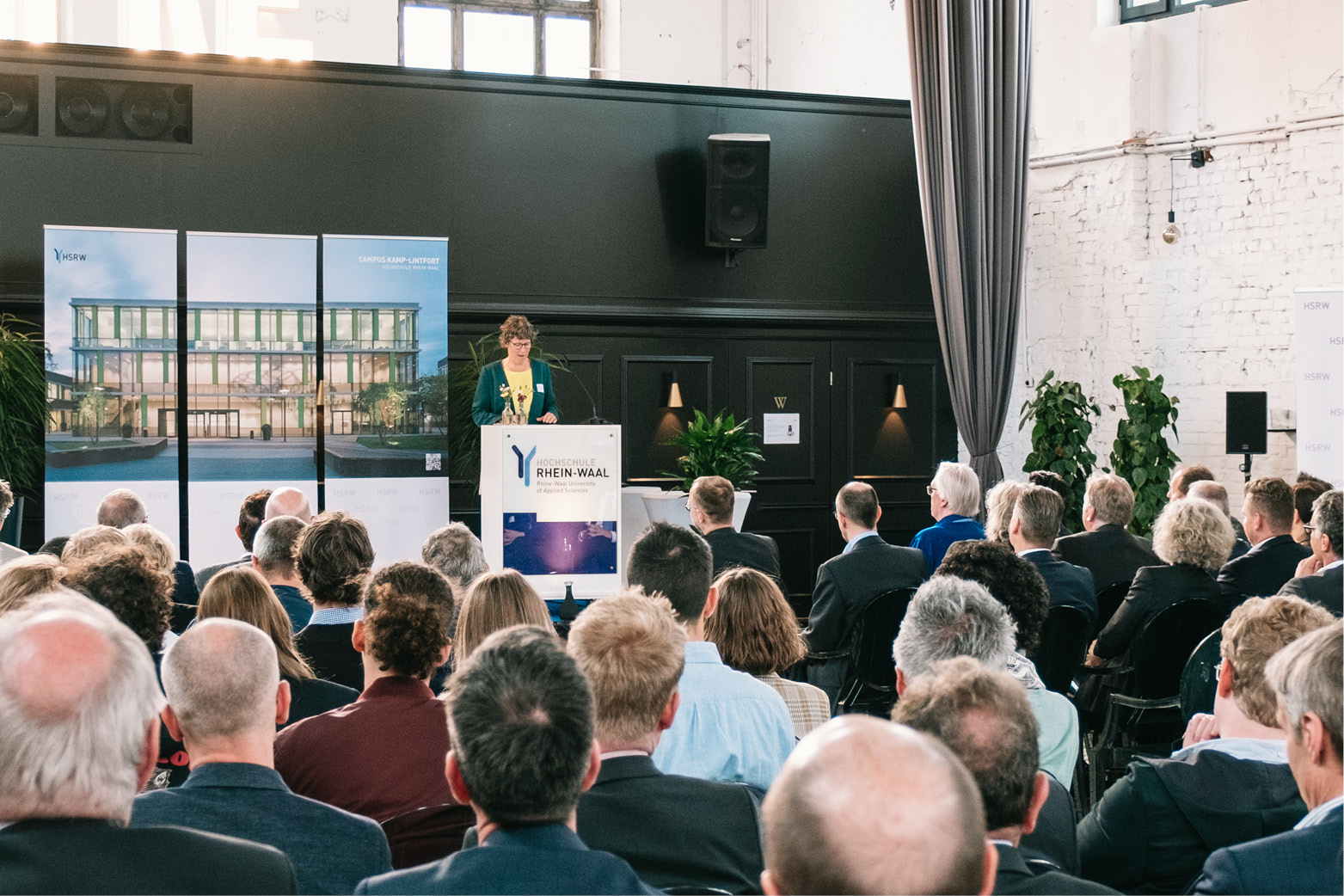
In her keynote address, ‘The Young Wild Ones – 15 Years of Start-ups in North Rhine-Westphalia’, the President of Ruhr West University of Applied Sciences, Prof. Dr.-Ing. Susanne Staude, took an outside perspective not only on HSRW and noted: “Universities of Applied Sciences in particular, with their close ties to businesses and societal stakeholders, demonstrate time and again that they can be drivers of regional development if – as in the case of HSRW – they respond to the specific needs of their region.” Prof. Dr Oliver Locker-Grütjen, President of Rhein-Waal University of Applied Sciences, also emphasised the importance of universities of applied sciences within the higher education landscape in his welcoming address, in which he reflected on the past whilst also looking to the future: “Building a bridge between theory and practice was the founding vision of HSRW. Since then, the university has developed rapidly and made a name for itself not only through the training of skilled professionals, but also through research and knowledge transfer activities in the region.”
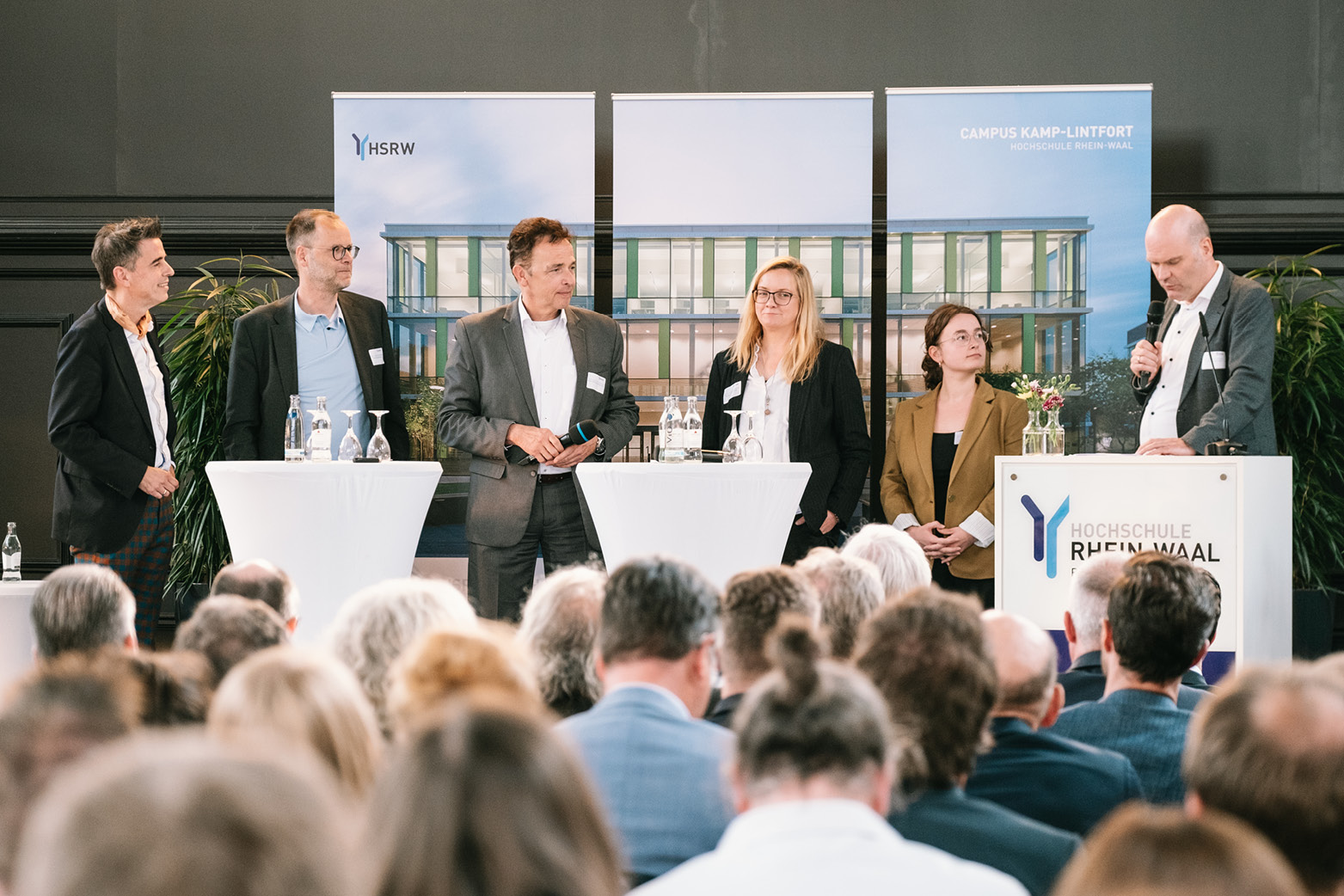
During the panel discussion on the topic ‘The significance of universities of applied sciences, specifically Rhein-Waal University of Applied Sciences – international and diverse, in the region and for the region’, a range of perspectives were discussed. Prof. Dr Christoph Landscheidt, Mayor of Kamp-Lintfort, recalled just how significant the university’s founding was for the town – particularly during times of structural change. Following the closure of the coal mine and the decline of the mining industry, the university’s founding opened up new prospects. Today, the university, with its largely international student body, is an integral part of the town’s landscape.
Prof. Dr Bernd Kriegesmann, Chair of the State Rectors’ Conference of Universities of Applied Sciences e.V., easily refuted the notion that universities of applied sciences are primarily responsible for providing skilled workers. Instead, he places the interests of students at the centre: “The primary mission is always to educate young people.” In this sense, universities of applied sciences act as magnets for young people, from which the respective regions also benefit in the long term.
Other participants in the panel discussion included, from the HSRW, Prof. Dr Klaus Hegemann, Dean of the Faculty of Communication and Environment; Prof. Dr Tatiana Zimenkova, Vice-President for International Affairs and Diversity; and Johanna Seegers, a student on the English-taught International Relations programme. Ms Seegers emphasised that whilst she considers the use of English and the international character of the HSRW to be a wonderful thing, German-language programmes for international students are important for cultural integration and should be expanded. From a student’s perspective in particular, she also sees significant room for improvement in public transport at both university campuses. Vice-President Zimenkova placed equal opportunities for all students at the centre of the discussion: “At the HSRW, we strive to prioritise participation.” This also includes a good gender balance. The aim is, for example, to encourage more women and transgender people to enrol on engineering degree programmes, and to attract more men to the Early Years Education programme. Dean Hegemann advocates for needs-based education that ensures a balance between theory and practice. At the HSRW, this is ensured, for example, by the practical semester, which forms an integral part of the curriculum.
DAAD Prize
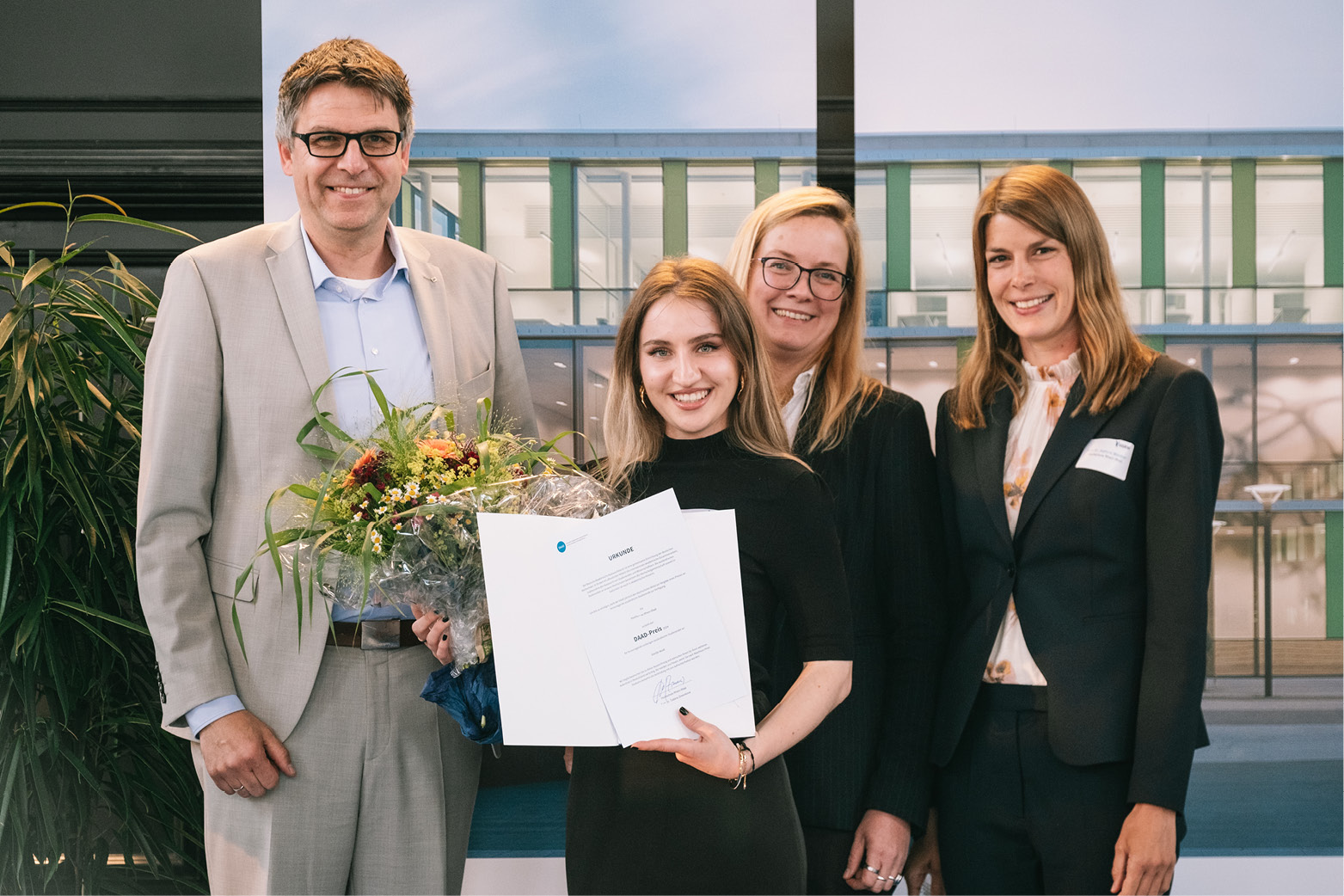
This year’s DAAD Prize, worth 1,000 euros, was awarded to Sanda Iacub, a fifth-semester student on the International Business Administration programme in the Faculty of Communication and Environment. The DAAD Prize recognises outstanding academic achievement by international students studying in Germany. In her laudatory speech, Prof. Dr Kathrin Weidner, Professor of Operations and Innovation Management, pointed out that the prize-winner is by far one of the best students on her course, both in terms of her theoretical and practical achievements. “In addition to her outstanding academic performance, Ms Iacub has made a significant contribution to student self-governance and has also been actively involved in other areas,” said Weidner, who was responsible for nominating the student.
ZONTA Club Niederrhein Award
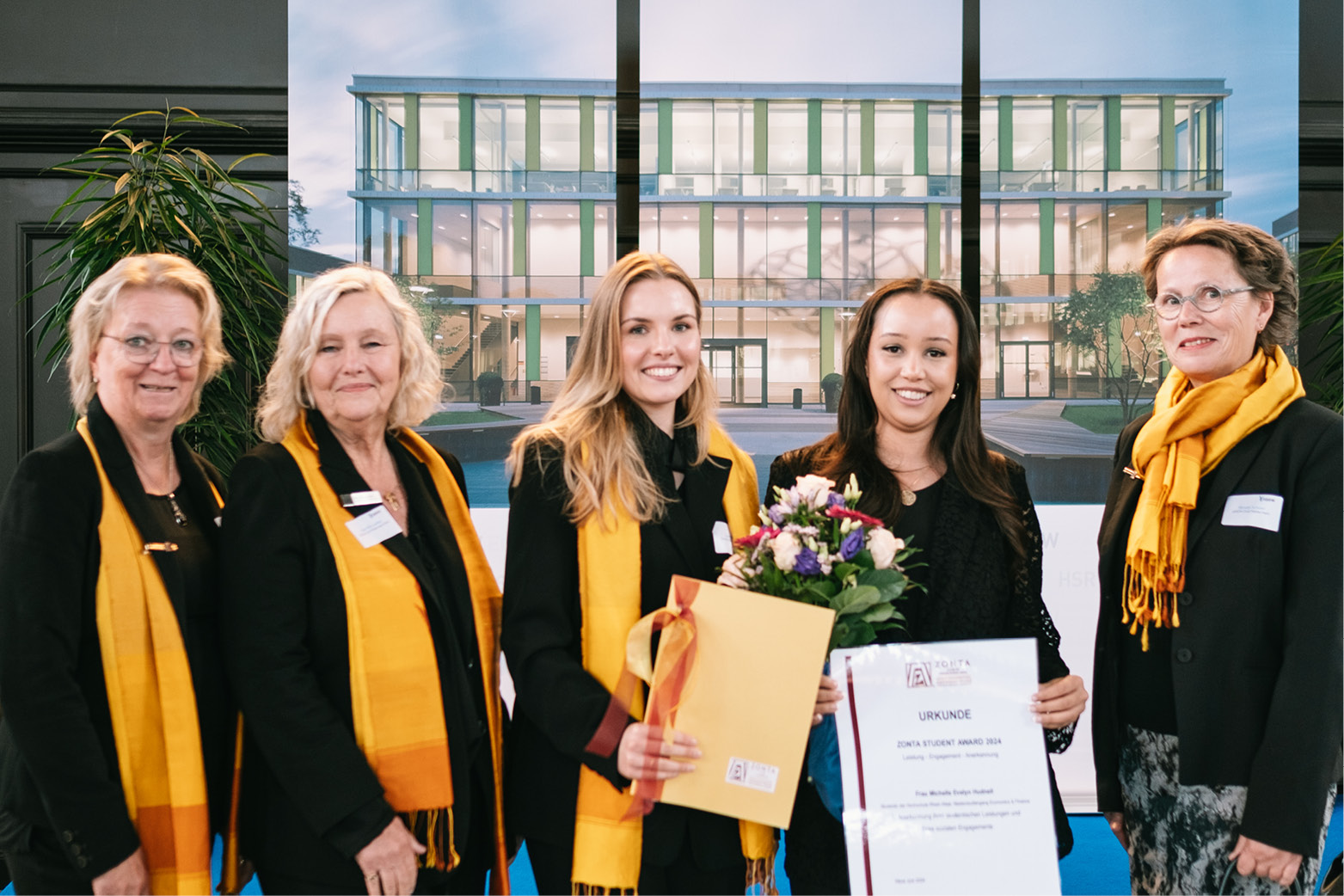
The ZONTA Club Niederrhein Award, worth 1,000 euros, was presented for the twelfth time. This prize honours female students at the university who have shown exceptional commitment to Rhein-Waal University of Applied Sciences and their fellow students and/or who are involved in voluntary work outside the university. This year’s winner is Michelle Evelyn Hudnell, a second-semester Master’s student on the Economics and Finance (M.Sc.) programme, who was nominated by Prof. Dr. habil. Gregor van der Beek. In his laudatory speech, he emphasised that Hudnell is a staunch advocate of international exchange and possesses intercultural skills which she applies in a variety of ways, including supporting fellow students and contributing to internationalisation projects. This makes her a more than worthy recipient of this year’s award, added Sarah Krom, President of the ZONTA Club, who presented the award and welcomed the winner into the Zonta community.
Teaching Award
No fewer than two teaching prizes were awarded at this year’s annual ceremony: one for 2023 and one for 2024. By presenting the Teaching Award, Rhein-Waal University of Applied Sciences demonstrates the high priority it places on the quality of teaching within the university and recognises the commitment of its teaching staff. It is awarded under a theme that changes annually and carries a prize of 10,000 euros in each instance.
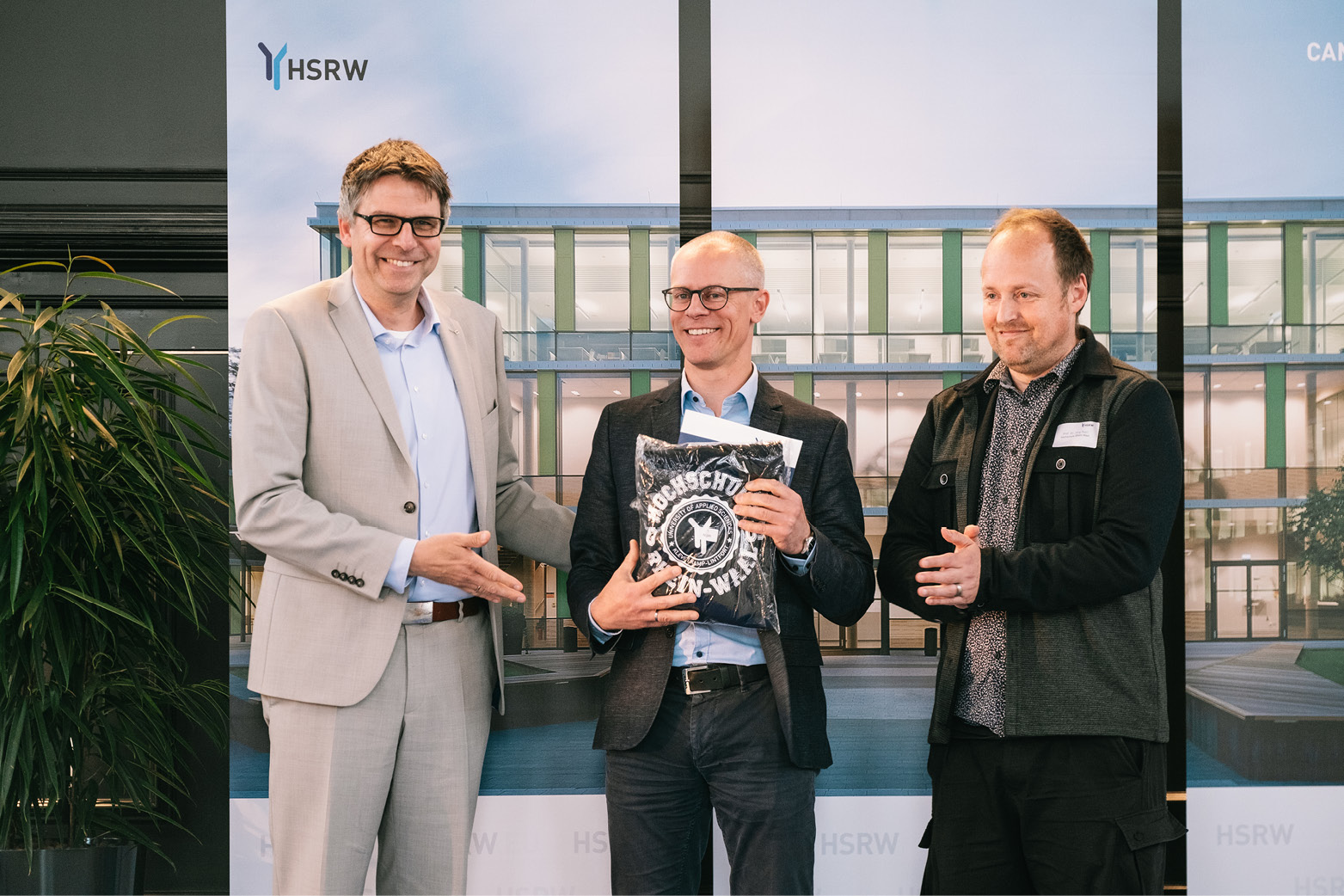
The 2023 Teaching Award, on the theme of ‘Good Examination Practice’, was received by Prof. Dr Daniel H. Scheible, Professor of Business Administration and Intercultural Competence at the Kamp-Lintfort Campus. Prof. Dr Jörg Petri, Vice-President for Studies, Teaching and Academic Continuing Education, who presented the award, echoed the jury’s sentiments in his laudatory speech: “Prof. Scheible impresses with his diverse range of examination options and choices, which are tailored to his teaching objectives. Furthermore, he clearly sees himself as a learning mentor, which is also evident in the many support and advisory services he offers his students.”
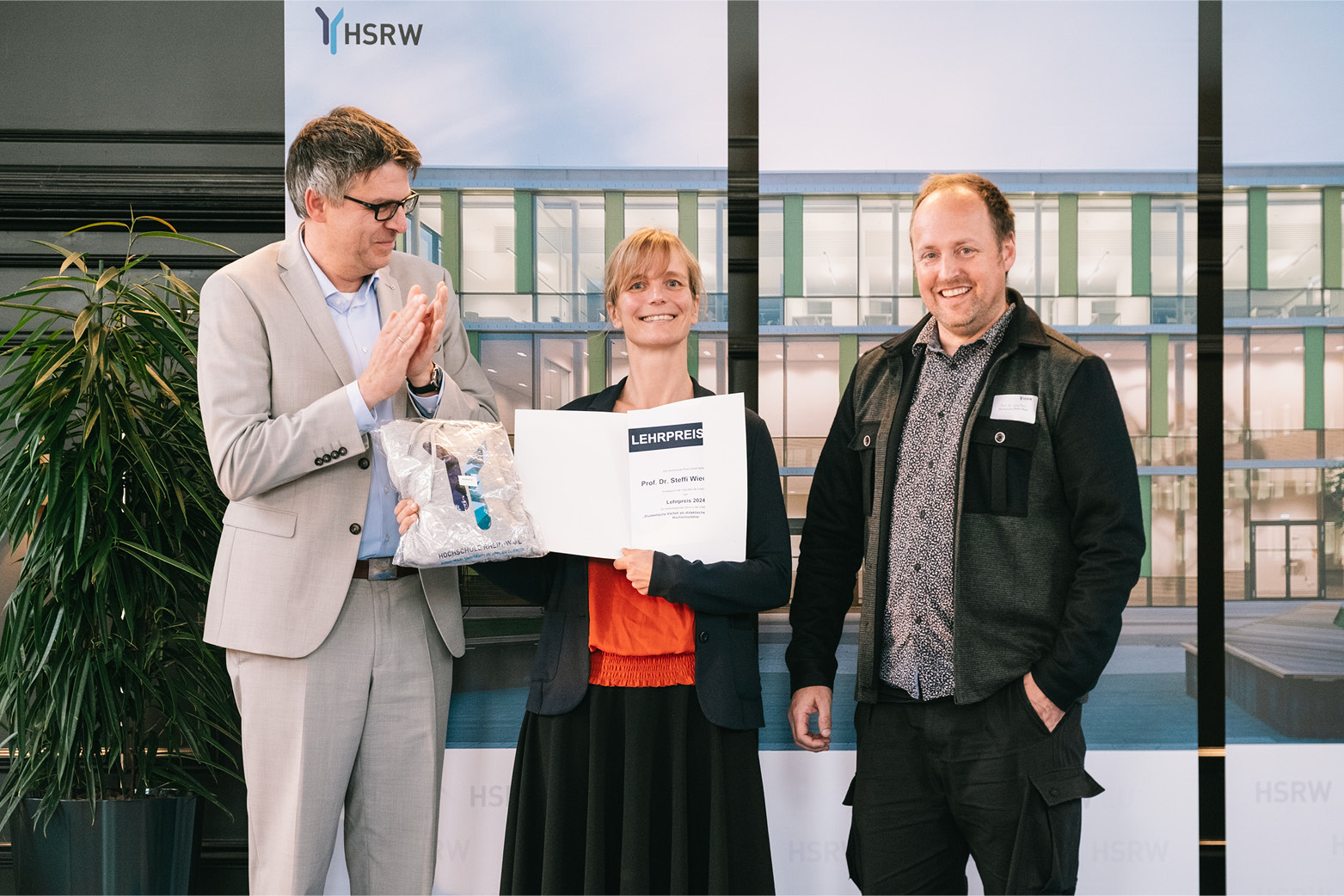
The winner of the 2024 Teaching Prize is Prof. Dr Steffi Wiedemann, Professor of Livestock Science and Environmental Impacts at the Faculty of Life Sciences on the Kleve Campus. The theme of this year’s prize was ‘Student diversity as a didactic element in higher education’. Prof. Wiedemann was selected by the jury because she explores this theme in her teaching in a variety of ways. For example, she systematically incorporates elements into her teaching on animal husbandry that enable students to share experiences from their home countries and engage in in-depth discussions through project work.
Around 200 members of the university community, friends and supporters, as well as regional representatives from business, politics and society, attended the evening’s academic annual celebration. It marked the ceremonial conclusion of Dies Academicus, an academic festival celebrated annually at the university. The evening’s host was the author and journalist Dr Jan-Martin Wiarda, who skilfully guided the proceedings and drove the panel discussion forward with incisive questions. During the day, the new University Development Plan 2030 (HEP 2030) was the focus of various events. This plan was developed over an extended period as the result of a participatory process and finalised in recent months. The HEP 2030 was presented to the university community for the first time. It will be published in the coming weeks and thus made available to the wider public.
Image credits: © HSRW/Torsten Barthel