

Mobility and Logistics, BSc
For those wanting to optimise transport and production processes.
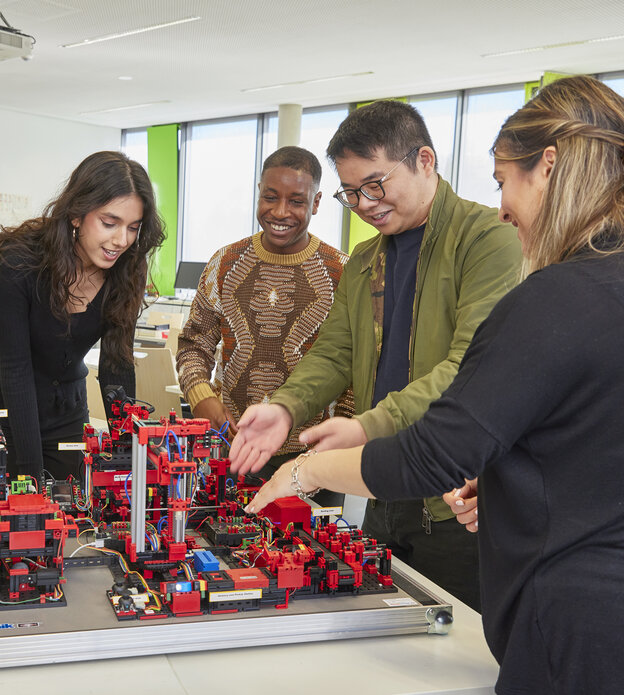
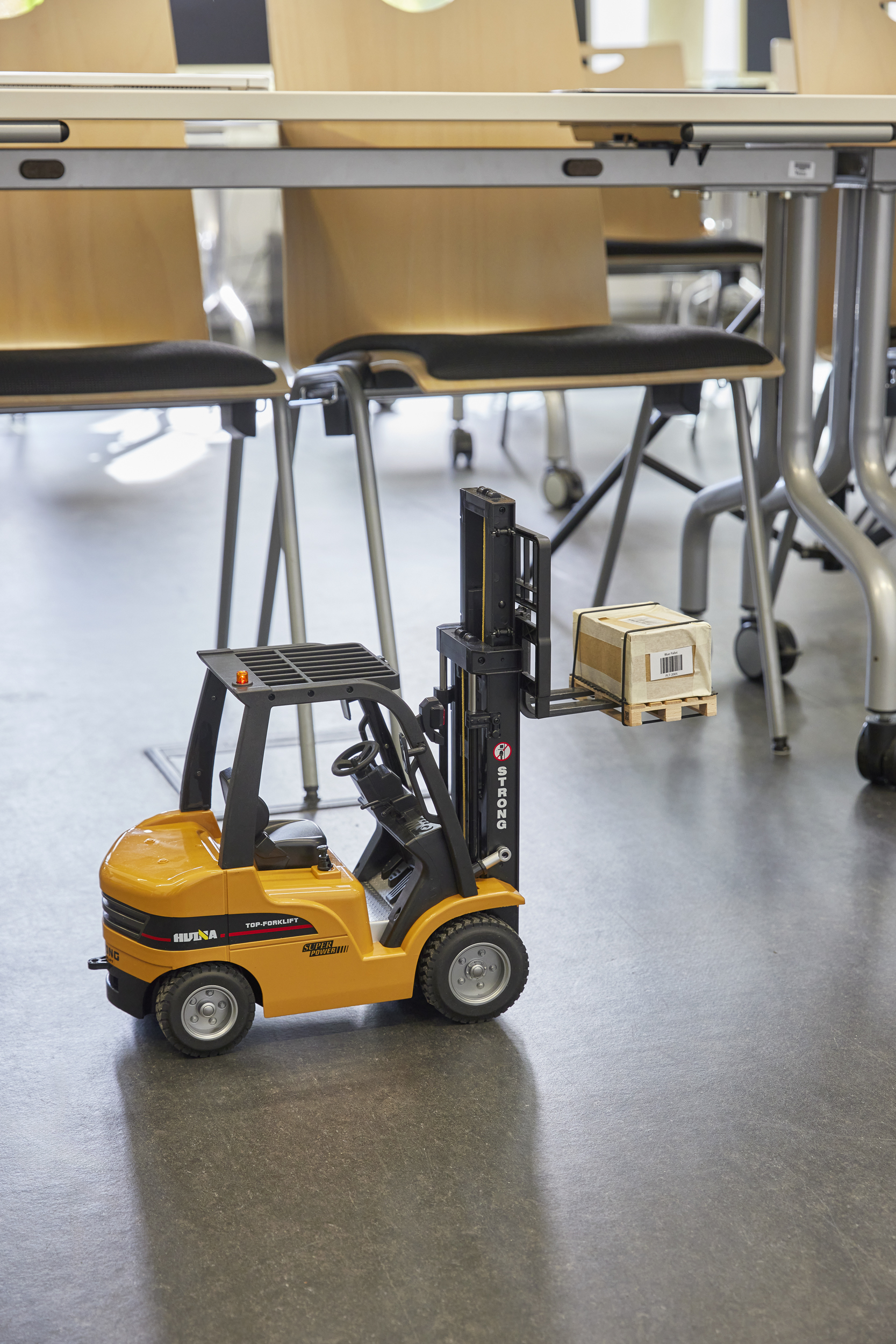
Are you the kind of person who wants to move not just the little things around, but the big things, too? Then study Mobility and Logistics. Learn how to improve the transport of freight and people and explore innovative ways to enhance production and distribution processes! Imagine using the latest, sustainable technologies to make travel easier and more comfortable or manufacturing and transportation processes more robust and resilient. We’ll teach you how to plan and manage modern logistics systems, supply chains, and transportation effectively so that, as a graduate, you can not only help ensure regional logistics centres thrive in the future, but also contribute to solving thrilling and complex logistical puzzles of global importance.
At a glance
Bachelor of Science
Full-time
7 semesters
Restricted
Kamp-Lintfort
English
1 September
Why study Mobility and Logistics, BSc at Rhine-Waal?

What makes this degree programme special?
Tin Long Ko shares his experiences.



Programme structure and content
After graduation, you’ll be well prepared for a career in logistics management as well as for a wide range of roles in public and private mobility. You could work on the planning, implementation, economic evaluation or optimisation of existing and new logistics processes and mobility concepts.
Whether you choose logistics or mobility, career opportunities range from planning, consulting and development to process optimisation – for example in sales, procurement, production or management. Companies are looking for skilled graduates like you!
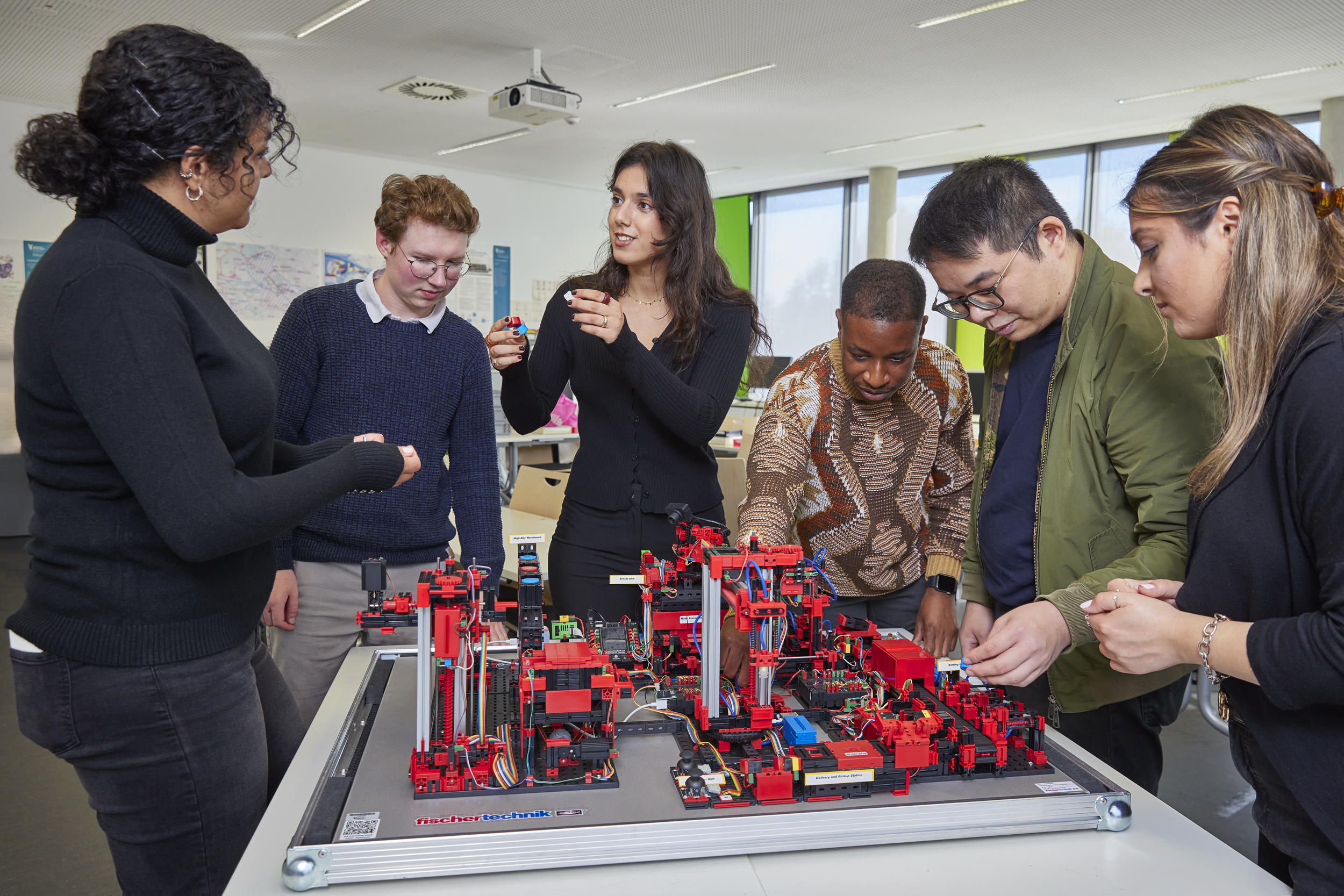
In the first three semesters, you’ll gain a broad understanding of logistics systems, planning and smart solutions to real-world challenges. You’ll explore business administration, computer science and electrical engineering and learn how automation and identification systems are used in logistics.
In the fourth and fifth semesters, you can focus on what interests you most: logistics, technology or business. You’ll choose your specialisation and work with others on your own research or development project.
In the sixth semester, it’s time to gain practical experience: you can either complete an internship with a company or spend a semester abroad.
In the seventh semester, you’ll write your Bachelor’s thesis and complete your degree with a colloquium.
Practical experience or a semester abroad – the choice is yours
The sixth semester is all about gaining new experience: you can complete an internship and discover how logistics and mobility work in the real world. Or you can spend a semester abroad, gain new perspectives and improve your language and teamwork skills along the way. Either way, you’ll grow both professionally and personally – and boost your CV at the same time.
You’ll study entirely in English, preparing you for career opportunities around the world. And don’t worry if your English isn’t perfect yet – you’ll get plenty of support and naturally improve your language skills throughout your studies and by connecting with fellow students from all over the world.
We welcome applications from nationals of all countries. Please check here for general admission requirements.
For the Mobility and Logistics degree programme, the following additional requirements apply:
- Proof of an eight-week pre-study placement by the time of Re-registration for a new semester. Placement periods completed before the start of your studies may be credited by arrangement.
- An interest in technical, business and organisational tasks
- English language skills (certificate at level B2 according to the Common European Framework (CEF))
Application process
This degree programme has restricted admission. This means that there are only a limited number of places available. If the number of applications exceeds the number of places available, a selection process will take place. Places are allocated in accordance with the regulations of the federal state of North Rhine-Westphalia.
Following the selection process, you will receive either:
- a letter of admission or
- a letter of rejection.
If you are offered a place, you must enrol at Rhine-Waal University of Applied Sciences within the specified deadline (you will find instructions on how to do this in the letter of admission, which you can download from the university’s application portal). Only then is your place on the course secured.
Admission letters for degree programmes with restricted admission are usually sent out at the beginning of August.
Nummerus Clausus (NC)
For some degree programmes, admission is only possible with a specific (subject) A-level mark (Nummerus Clausus). The NC is set anew each year; figures from previous years serve as a guide.
Waiting list procedure
Sometimes, admitted applicants do not take up their place. In this case, the vacant places are allocated through the waiting list procedure.
This procedure usually begins in late August or early September. If you have applied by the deadline, you will automatically be included in the process.
Lottery
If places are still available after this, a lottery may also take place. The lottery procedure is used to allocate study places that remain available after the regular allocation process has been completed. Interested applicants can register for the lottery procedure via the university’s application portal by 1 September; places are then allocated by random selection from among all valid applications.
First, register on hochschulstart.de. There, you will be given an applicant ID (BID) and an applicant authentication number (BAN).
You can then use these details to apply via Rhine-Waal University of Applied Sciences’ Application portal.
First, register on hochschulstart.de. There, you will be given an applicant ID (BID) and an applicant authentication number (BAN).
You can then use these details to apply via uni-assist.
Insights



Campus
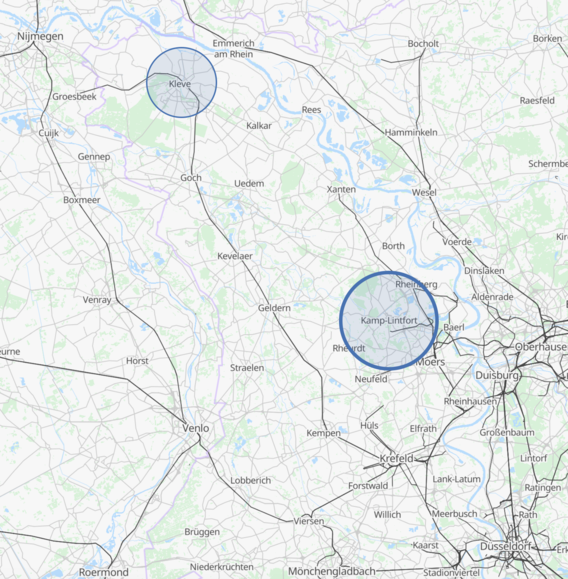
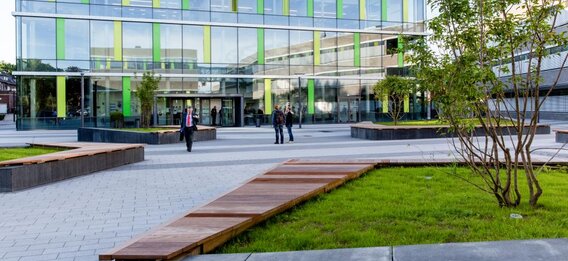
Kamp-Lintfort Campus
Student information

All about your studies
Bridging courses are intensive courses designed to help you prepare for your degree before your studies begin. Participation is voluntary and no credit points are awarded. You can use the courses to refresh your existing knowledge and fill in any small gaps before starting your studies.
The courses are held before the start of the winter semester, usually in September. The upcoming course programme will be available at the link below in due course.
The office of the examination board is the central point of contact for all questions and inquiries regarding examinations at your Faculty (Faculty of Communication and Environment).
Office of the Examination Board
On their website you will also find an overview of your first points of contact for various examination-related matters.
Overview
There is also a central Examinations Service for the entire University. It handles the administrative implementation of decisions made by the Examination Board and manages examination-related processes.
Examination Service
Your Faculty of Communication and Environment and the University’s central services offer advice and support throughout your studies – whether you need help with academic matters or personal challenges.
Advice and support services offered by the Faculty
Do you have any questions about your degree programme or exam-related matters? Are you experiencing issues with lecturers, or are you looking for personalised advice? Here you’ll find an overview of the key points of contact within the Faculty of Communication and Environment.
Services offered by the Faculty
Central advisory services
The university’s central advisory services are here to support you with a wide range of topics during your studies and beyond. Whether you need help with finding academic literature, developing a business idea, dealing with mental health challenges, studying with children or a disability, or have questions about anti-discrimination, you’ll find the right contacts and support for different situations in your studies and everyday life.
Central student services
The Central Student Services team is your main point of contact for organisational and administrative questions about your studies. They can help you with applications and admission, enrolment and deregistration, re-registration and leaves of absence, changing degree programmes, as well as questions about semester fees, certificates or health insurance notifications.
Contact
Programme Assistant
Ms Petra Kastowsky
Tel: 02842/908259821
petra.kastowsky(at)
Office hours (room number 02 00 455)
Monday–Thursday: 10.00–12.15 and by appointment
Monday, Tuesday, Thursday: 13.30–15.00 and by appointment