
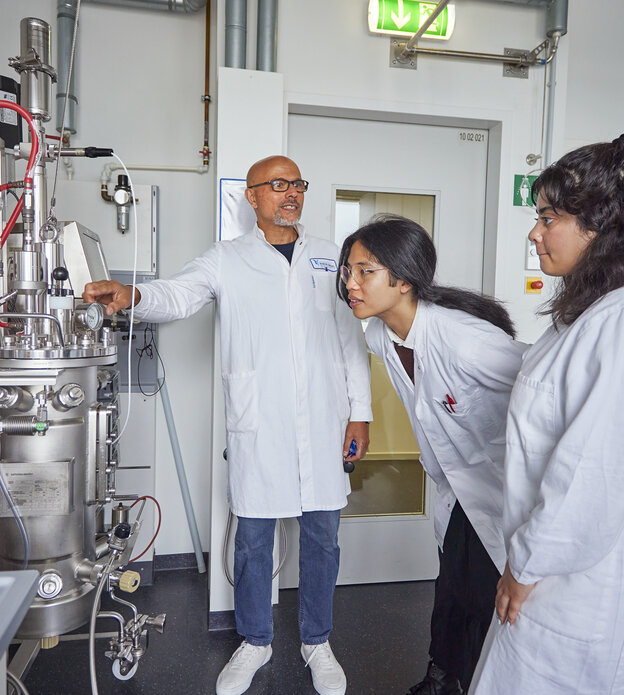
Are you interested in studying bioengineering and fascinated by the exciting intersection of the natural sciences and engineering? Biotechnology is present in countless aspects of our daily lives – from traditional products such as cheese, wine and bread to innovative detergents, cosmetics, biofuels and medicines. Those wishing to study bioengineering learn to understand precisely these biological processes and to apply them to the development of modern, forward-looking products.
Our English-taught Bachelor’s programme at the Kleve campus offers a strongly science-oriented education. From the very start, the programme closely integrates biological and chemical subjects with technical disciplines. You will gain an understanding of all areas of what is known as ‘biotechnological colour theory’: medical (red), agricultural (green) and industrial (white) biotechnology. As your studies progress, you will also have the opportunity to pursue individual areas of interest and specialise, for example, in plant biotechnology or industrial biotechnology.
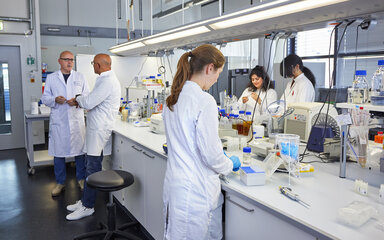
If you decide to study Bioengineering at Rhine-Waal University of Applied Sciences, you will benefit from intensive support in small study groups and the excellent facilities in our modern laboratories. With English as the language of instruction and fellow students from more than 60 countries, you will also be perfectly prepared for a career in an international environment from day one.
At a glance
Bachelor of Science
Full-time / Part-time / Work integrated
6 semesters
Restricted
Kleve
English
1 September
Why study Bioengineering, BSc at Rhine-Waal?

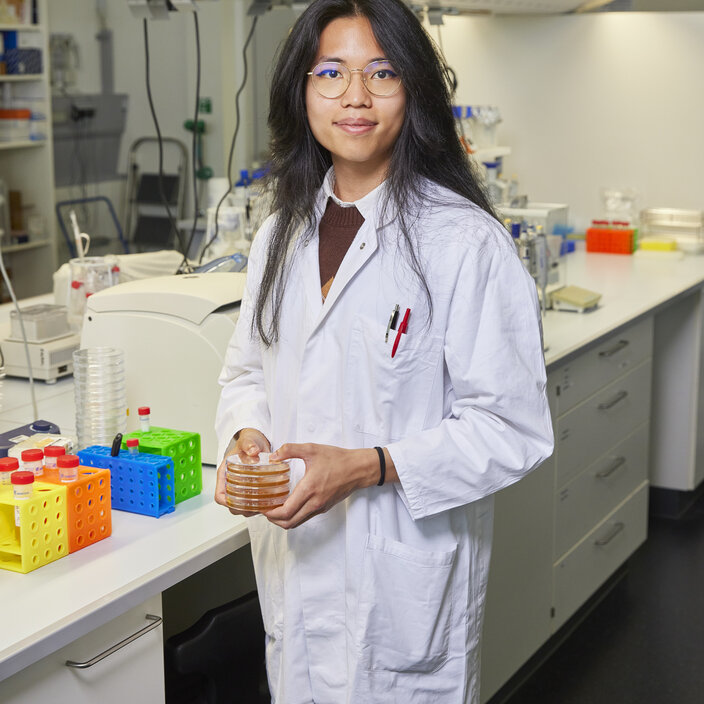
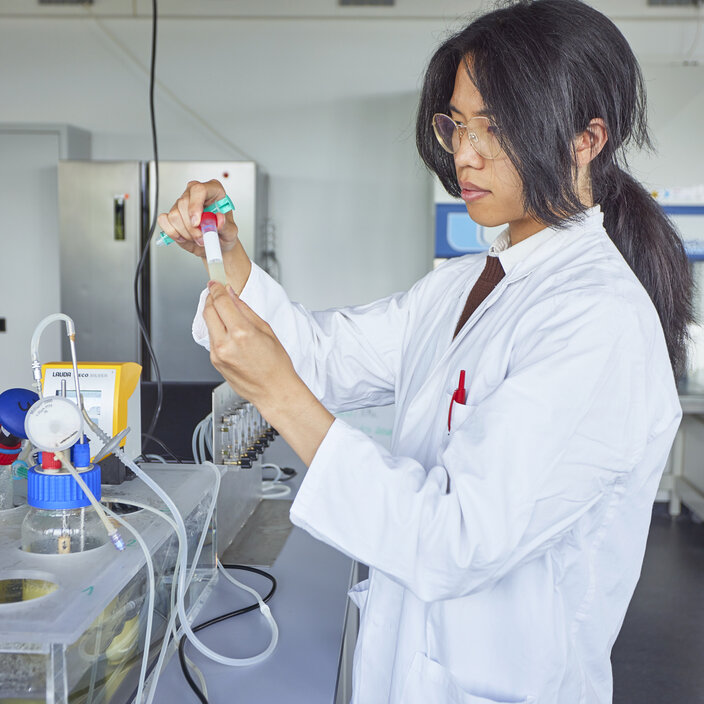
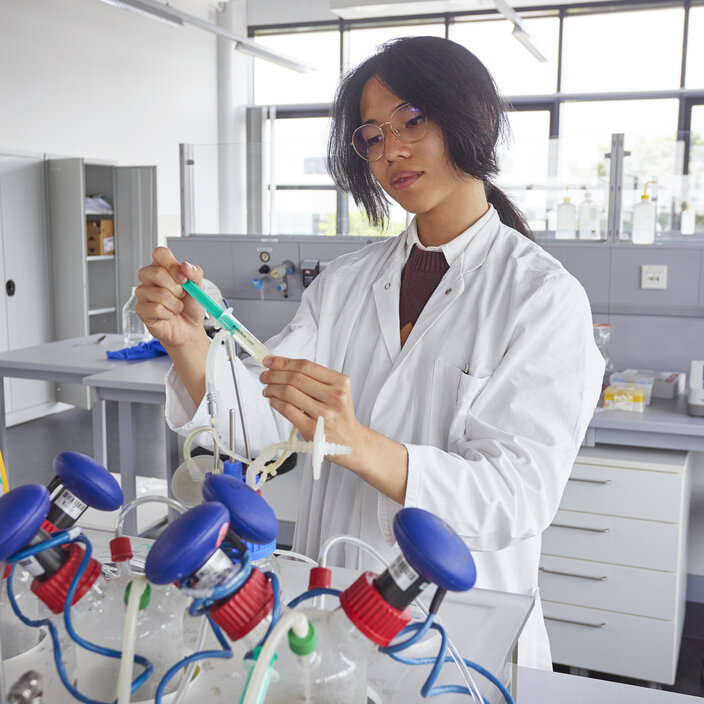
Career opportunities and prospects: Alumni share their stories


Programme structure and content
With a degree programme in Bioengineering (B.Sc.), you will have an interdisciplinary background and be ideally prepared to start your career in many forward-looking industries as well as in research.
Depending on the specialisations you choose during your studies, the following employers and career fields, amongst others, will be open to you:
- Industry: Careers in the chemical, pharmaceutical or biotechnology industries.
- Research & Development: Contributing to the development of new processes for the production of active ingredients, carrying out complex analyses and their scientific evaluation.
- Other forward-looking sectors: Agricultural technology, the food industry, and environmental and waste management.
- Public sector: Exciting areas of responsibility and roles within relevant government bodies.
In your day-to-day work, depending on the sector, you will take on a wide range of tasks and, for example, oversee and optimise industrial manufacturing processes.
Semesters 1–3: Biology meets technology
You will learn the key scientific fundamentals of biology, microbiology, chemistry and physics, and link these to engineering and mathematics.
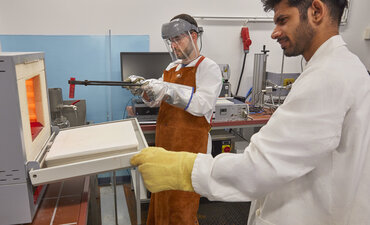
In modern laboratories and in small groups, you will apply theory in practice right from the start and develop key skills such as international project management.
4th – 5th semester: Your individual specialisation
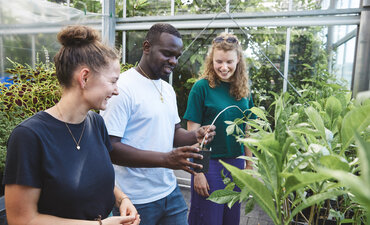
You will then delve deeper into the subject and choose exciting specialisations from the field of biotechnology, tailored to your interests (e.g. industrial biotechnology, pharmaceutical biotechnology or agricultural biotechnology).
You will work on application-oriented projects, which makes your studies particularly practical.
6th semester: Work placement or study abroad
The choice is yours: gain valuable experience in a company through an Internship, or spend an exciting semester studying abroad.
7th semester: Your degree
You will take your final elective modules and successfully complete your degree with your Bachelor’s thesis and a Colloquium.
Yes, work placement or a year abroad – the choice is yours!
The 6th semester is specifically set aside in your Degree programme for you to gain valuable practical or international experience. You have the choice between two exciting options:
Internship semester: You undertake an internship in a company – for example, in the chemical, pharmaceutical or biotechnology industry, whether here in the region or abroad. In doing so, you apply your theoretical knowledge directly in a professional setting, gain practical insight into economic, social and environmental contexts, and establish your first important contacts for your career.
Semester abroad: Alternatively, you can spend the semester at a university anywhere in the world to further deepen your theoretical and practical knowledge. There, you’ll take courses worth at least 15 ECTS credits, improve your language skills in an authentic environment and strengthen your intercultural competence. If you’re planning your stay within the European Union, you may be eligible for financial support through Erasmus+.
Whatever you decide, both options will help you develop professionally and personally and look great on your CV.
To start your degree with us, you must meet one of the following requirements:
- an Unrestricted university entrance qualification or an Entrance qualification for university of applied sciences
- a qualification recognised as equivalent
- or a vocational qualification, e.g. as a master craftsman or through technical college education
These prior knowledge and skills will help you get started:
- An interest in the exciting intersection of natural sciences, engineering and biotechnological processes
- A basic understanding of scientific subjects (important for modules such as cell biology, chemistry, physics and mathematics),
- An enjoyment of intercultural exchange and teamwork, as you will be studying alongside students from over 60 countries
The following additional requirements apply to the Bioengineering degree programme:
- Admission restrictions: Please note that this degree programme is subject to admission restrictions (NC).
- English language proficiency (Certificate of Level B2 according to the Common European Framework (CEF)), as the programme is taught entirely in English.
This corresponds to seven years of English at a German school. At enrolment, you can prove your English language proficiency using your Final grade certificate if it states that you have had seven consecutive years of English lessons with a grade of ‘sufficient’ or better. Some schools state the language level (such as ‘B2’) directly on the Final grade certificate. However, you can also submit several annual reports which, taken together, demonstrate seven years of English lessons.
Your entire degree programme is taught in English. This will prepare you perfectly for careers around the world.
- A solid foundation is all you need: your English doesn’t have to be perfect at the start – all you need to get started is a B2 certificate.
- Natural language development: By interacting with fellow students from all over the world (currently from over 60 countries), you’ll improve your language skills without even realising it.
- Additional support: If you’d like to practise your English in a more targeted way, our accompanying language courses are here to help.
Highlights
Application process
This degree programme has restricted admission. This means that there are only a limited number of places available. If the number of applications exceeds the number of places available, a selection process will take place. Places are allocated in accordance with the regulations of the federal state of North Rhine-Westphalia.
Following the selection process, you will receive either:
- a letter of admission or
- a letter of rejection.
If you are offered a place, you must enrol at Rhine-Waal University of Applied Sciences within the specified deadline (you will find instructions on how to do this in the letter of admission, which you can download from the university’s application portal). Only then is your place on the course secured.
Admission letters for degree programmes with restricted admission are usually sent out at the beginning of August.
Nummerus Clausus (NC)
For some degree programmes, admission is only possible with a specific (subject) A-level mark (Nummerus Clausus). The NC is set anew each year; figures from previous years serve as a guide.
Waiting list procedure
Sometimes, admitted applicants do not take up their place. In this case, the vacant places are allocated through the waiting list procedure.
This procedure usually begins in late August or early September. If you have applied by the deadline, you will automatically be included in the process.
Lottery
If places are still available after this, a lottery may also take place. The lottery procedure is used to allocate study places that remain available after the regular allocation process has been completed. Interested applicants can register for the lottery procedure via the university’s application portal by 1 September; places are then allocated by random selection from among all valid applications.
First, register on hochschulstart.de. There, you will be given an applicant ID (BID) and an applicant authentication number (BAN).
You can then use these details to apply via Rhine-Waal University of Applied Sciences’ Application portal.
First, register on hochschulstart.de. There, you will be given an applicant ID (BID) and an applicant authentication number (BAN).
You can then use these details to apply via uni-assist.
Questions und Contact

Campus
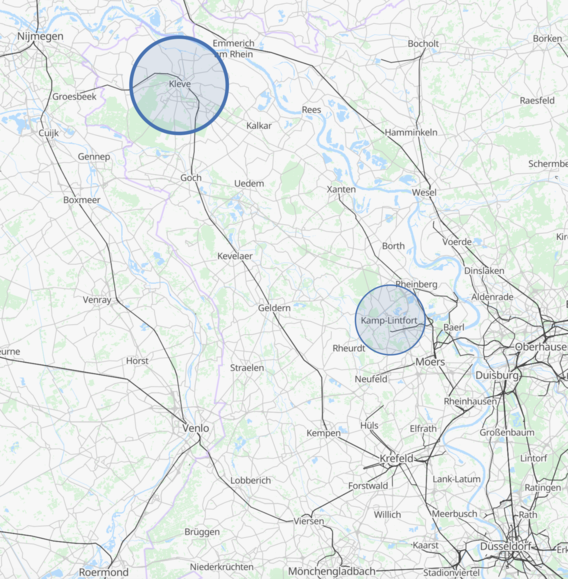
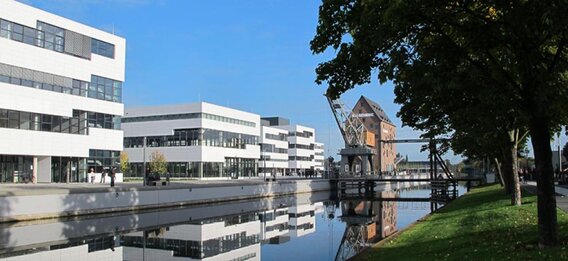
Kleve Campus
Related degree programmes

Student information

All about your studies
Have you just started your degree? On the following pages, you’ll find information about starting your degree.
- Information for all students: First day
- Information for students in your faculty: First-year students in the Faculty of Life Sciences
The Examination Service is here to help you with the following:
- the final processing of your recognised academic achievements and Examinations
- organising your examination registrations via HISinONE
- Certificates of achievement, diplomas, final grade certificates and the certification of the aforementioned documents
- applying for approval to undertake your Bachelor’s or Master's thesis
- applying for your work placement or semester abroad
- acceptance of your final thesis and forwarding it to the Examiners
- Issuing duplicate copies of your certificates and diplomas
Links and downloads
Examination directory/examination schedules
Examination regulations
page Examination Servicespage, including FAQs
Examination Board page
Rhine-Waal University of Applied Sciences offers advice and support not only regarding your studies but also on personal matters, e.g.:
- Literature research
- Starting a business
- Mental health
- Studying with a child
- Studying with a disability
- Anti-discrimination etc.
Here you will find an overview of all the support services available
In addition, your faculty offers support tailored to your Degree programme.
Here you will find an overview of the advisory services offered by your faculty
General Services
Student Services can help you with:
- your application and the admission and selection processes for Bachelor’s and Master’s degree programmes
- Enrolment and Deregistration
- Re-registration for a new semester, leave of absence or exemption from mobility requirements
- matters relating to guest student status, second-degree student status or early-entry programmes
- changing degree programmes or joining a Semester of study at a higher level
- the issuance of official documents, such as Proofs of enrolment
- all queries regarding semester fees and payments
- Notifications to health insurance providers in accordance with legal requirements
Library
, University
Sports,University
Music, Language Courses