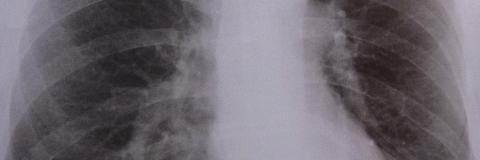
Kleve/Kamp-Lintfort, 20 April 2015: In November 1895, the physicist Wilhelm Conrad Röntgen discovered the rays that were later named after him, the so-called ‘X-rays’. It was a chance discovery whilst he was experimenting with vacuum glass tubes to study high-voltage electrical discharges.
Röntgen noticed that a fluorescent screen lit up in the process. The scientist quickly realised that this was a remarkable observation. He took a photograph of his wife’s hand and presented it during an anatomy lecture given by his colleague, Professor Albert von Kölliker, at the University of Würzburg. He, too, immediately recognised the potential that these new rays held for medicine. It was at that moment that the method—which was soon dubbed ‘X-rays’—began its triumphant march across the globe.
The ability to visualise all anatomical structures – particularly bones and soft tissues, which until then could only be examined directly in anatomical specimens or in pathology – whilst the subject was still alive has revolutionised medicine to this very day. The method, together with its derivatives – in particular computed tomography and, ultimately, magnetic resonance imaging – has become an indispensable part of everyday medical practice.
Röntgen himself was awarded the first Nobel Prize in Physics in 1901 for his discovery, for which he did not apply for a patent. He believed that this discovery should serve the whole of science and not a single scientist. The lecture aims to highlight what precise observation and personal integrity can achieve.
The lecture forms part of the Studium Generale programme. The lecture series is aimed at the general public as well as students, lecturers and staff at Rhine-Waal University of Applied Sciences, and presents current topics in an accessible and informative manner. The series also offers the opportunity to engage with topical issues. “We invite everyone, regardless of age, to attend these fascinating lectures,” says the University’s President, Prof. Dr Marie-Louise Klotz. At the same time, she sees the programme as an opportunity to visit the University’s two campuses and the new buildings on the new campuses.
The Studium Generale lectures at Rhine-Waal University of Applied Sciences are free of charge for members of the public.