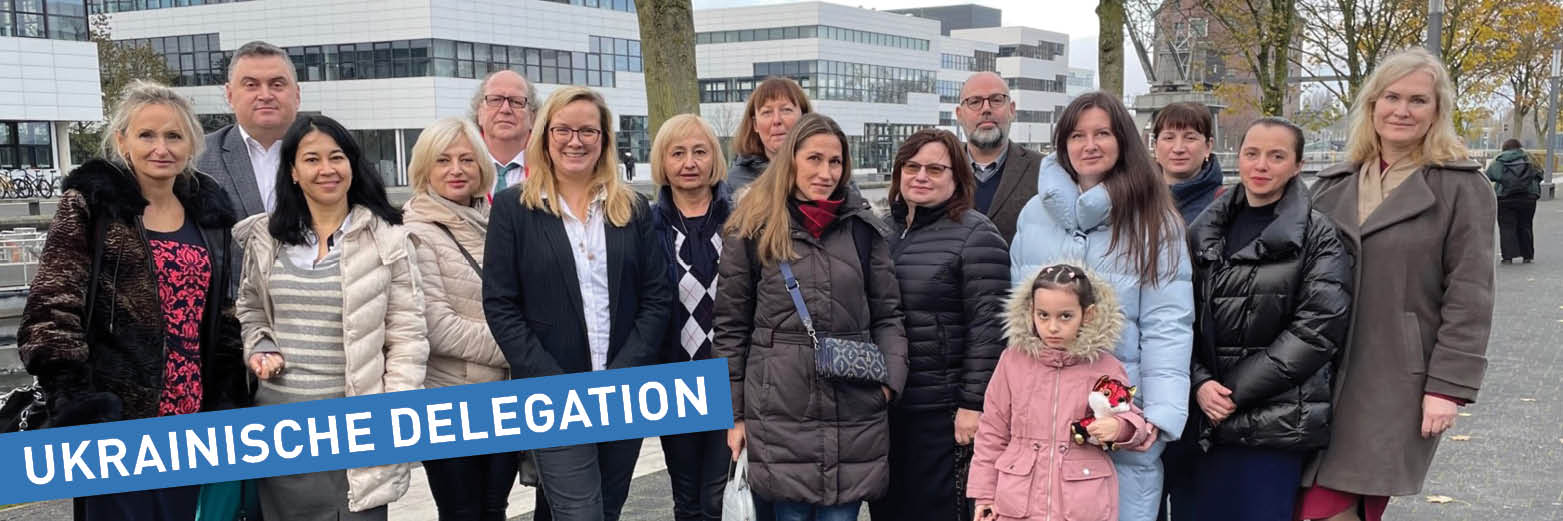
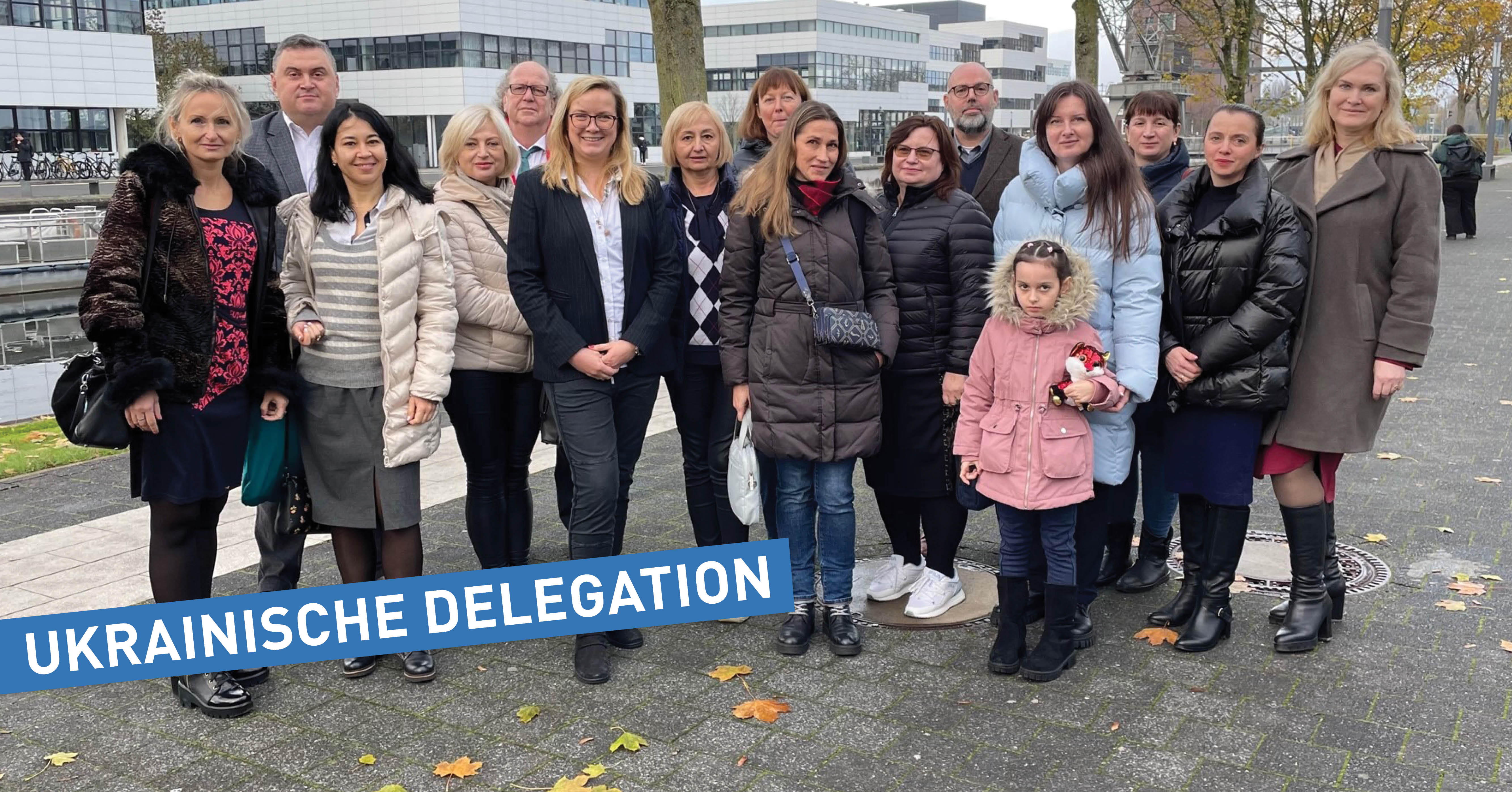
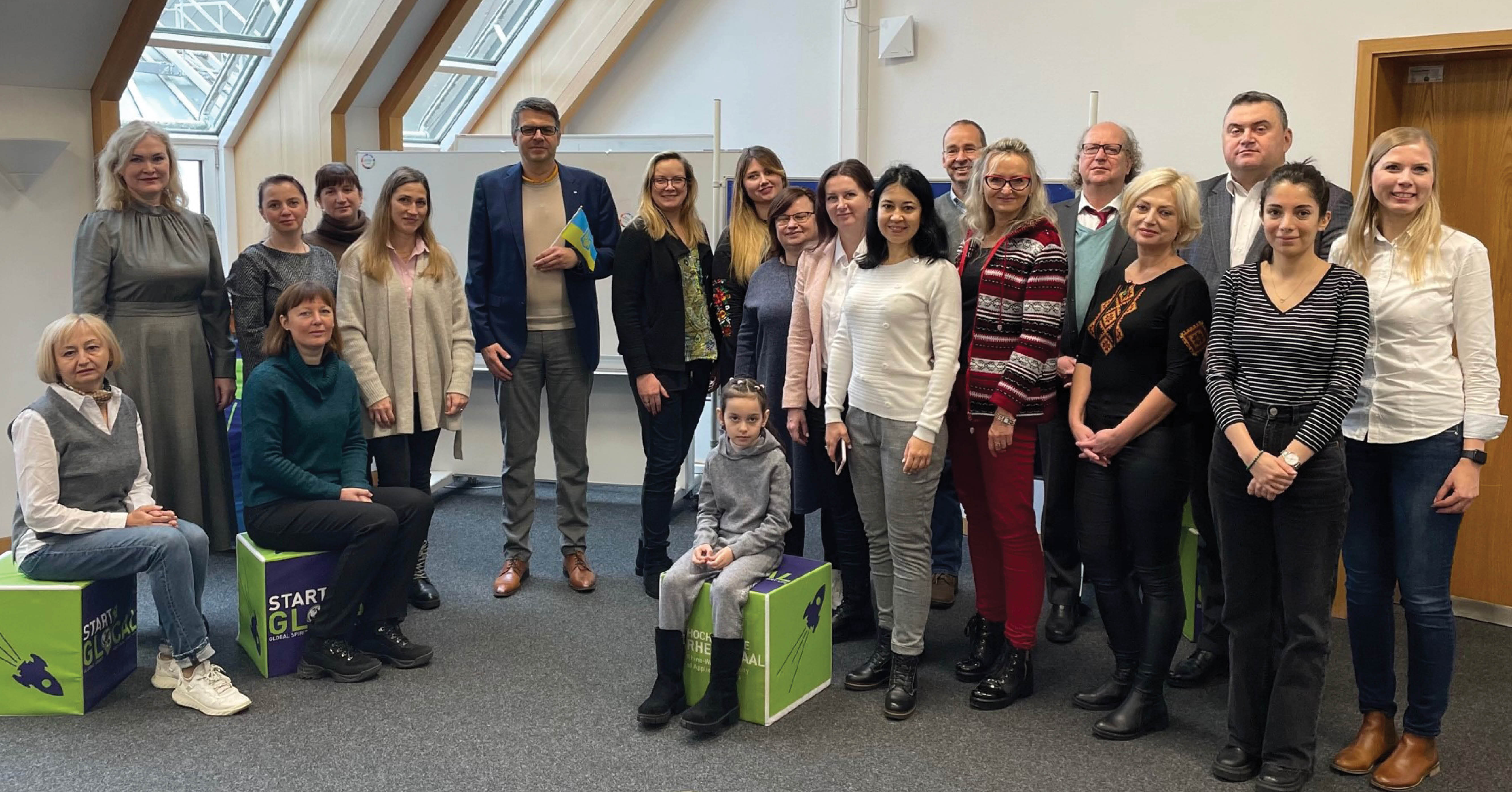
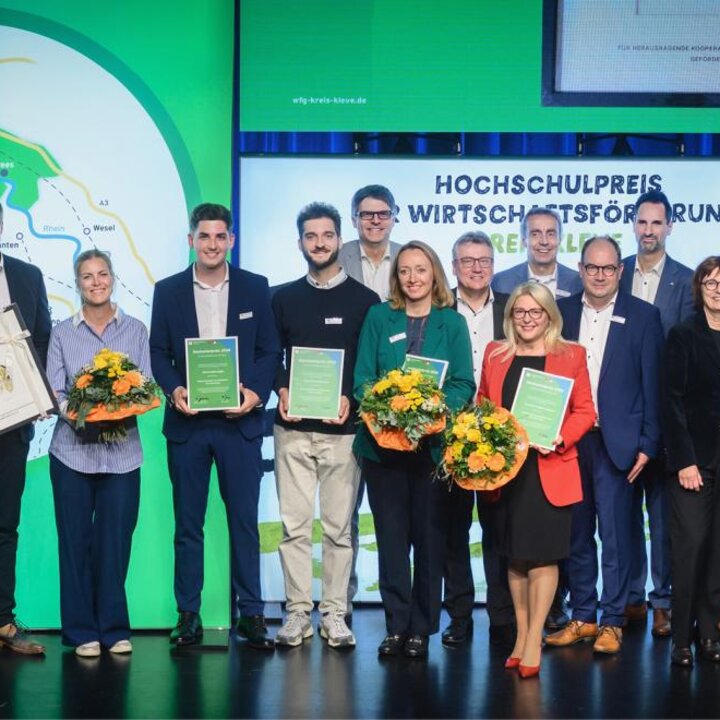
Earlier this week, the university’s President, Dr Oliver Locker-Grütjen, and the Vice-President for International Affairs and Diversity, Prof. Dr Tatiana Zimenkova, welcomed two Ukrainian delegations to the Kleve Campus. The guests, all academics – most of them professors – are from the National Technical University ‘Kharkiv Polytechnic Institute’ and the State Biotechnology University. Both are partner universities of Rhein-Waal University of Applied Sciences and have suffered severe damage during the ongoing war in Ukraine.
The university’s Vice-President for International Affairs and Diversity, Prof. Dr Tatiana Zimenkova, is impressed by the mutual commitment: “It is remarkable that, despite the ongoing crisis, our colleagues from Ukraine are doing everything they can to ensure that their students can continue their studies. In this context, I am also very grateful to our colleagues at Rhein-Waal University of Applied Sciences, particularly those from the Faculties of Life Sciences and Society and Economics, who are currently devoting a great deal of their time to supporting our guests.”
The aim of the visit to Kleve is, on the one hand, to familiarise themselves with Rhein-Waal University of Applied Sciences and its various facilities, and to utilise these to safeguard teaching in Ukraine; and, on the other hand, to discuss further plans for cooperation. The primary aim is to produce learning materials so that young people in Ukraine can continue their studies despite the war. To this end, Rhein-Waal University of Applied Sciences is also providing support in establishing links with other academics and university stakeholders: amongst other things, video conferences with other European universities are planned for the visit.
The “Capacity Building for Ukraine” project is due to conclude at the end of the year; a follow-up application has already been submitted. Dr Oliver Locker-Grütjen, President of Rhein-Waal University of Applied Sciences, commented: “Our university wishes to continue supporting and expanding its partnership and cooperation with both Ukrainian universities in the future, so that they can continue to fulfil their mission in research and teaching, and so that we can work together towards a sustainable future.” A common focus has already been identified: all three universities address issues relating to sustainability and are committed to implementing the United Nations’ Sustainable Development Goals.
Background
information The Kleve-based project ‘Capacity Building for Ukraine (CaBifU)’ is funded with approximately 140,000 euros as part of the DAAD’s special call for proposals titled ‘Ukraine digital: Ensuring academic success in times of crisis’ and will run until the end of December 2022. The faculties involved are Society and Economics, Life Sciences, and Technology and Bionics. Project partners in Ukraine are the National Technical University ‘Kharkiv Polytechnic Institute’ and the State Biotechnology University (both in Kharkiv). The project aims to help ensure continuity in (digital) higher education in Ukraine amidst the current conflict. In addition to collaborating with Ukrainian researchers – including on the joint development of digital courses – Ukrainian students are also taking part in selected online courses at HSRW, with some receiving (online) scholarships. The visit to Kleve was also linked to the ‘Eastern Partnerships’ project, which has been running since 2015, is also funded by the DAAD, and has already fostered a long-standing collaboration between the Faculty of Life Sciences and the State Biotechnology University. On this occasion, a guest from the Kyrgyz partner university, the American University of Central Asia, was also welcomed.