In the Euregio, many Germans commute to work in the Netherlands, mainly from North Rhine-Westphalia. Among these cross-border commuters are many migrant workers from Eastern Europe, who often live in precarious conditions in German border regions and work primarily in the Dutch meat industry. The employment contract is key to ensuring good working conditions and accommodation for these migrant workers. In many cases, however, people working across borders lack an understanding of the rights and obligations set out in this document. For advice centres offering support to transnational workers in the border region, their complex legal situation usually poses a challenge, as these centres specialise in the national law of their respective countries.
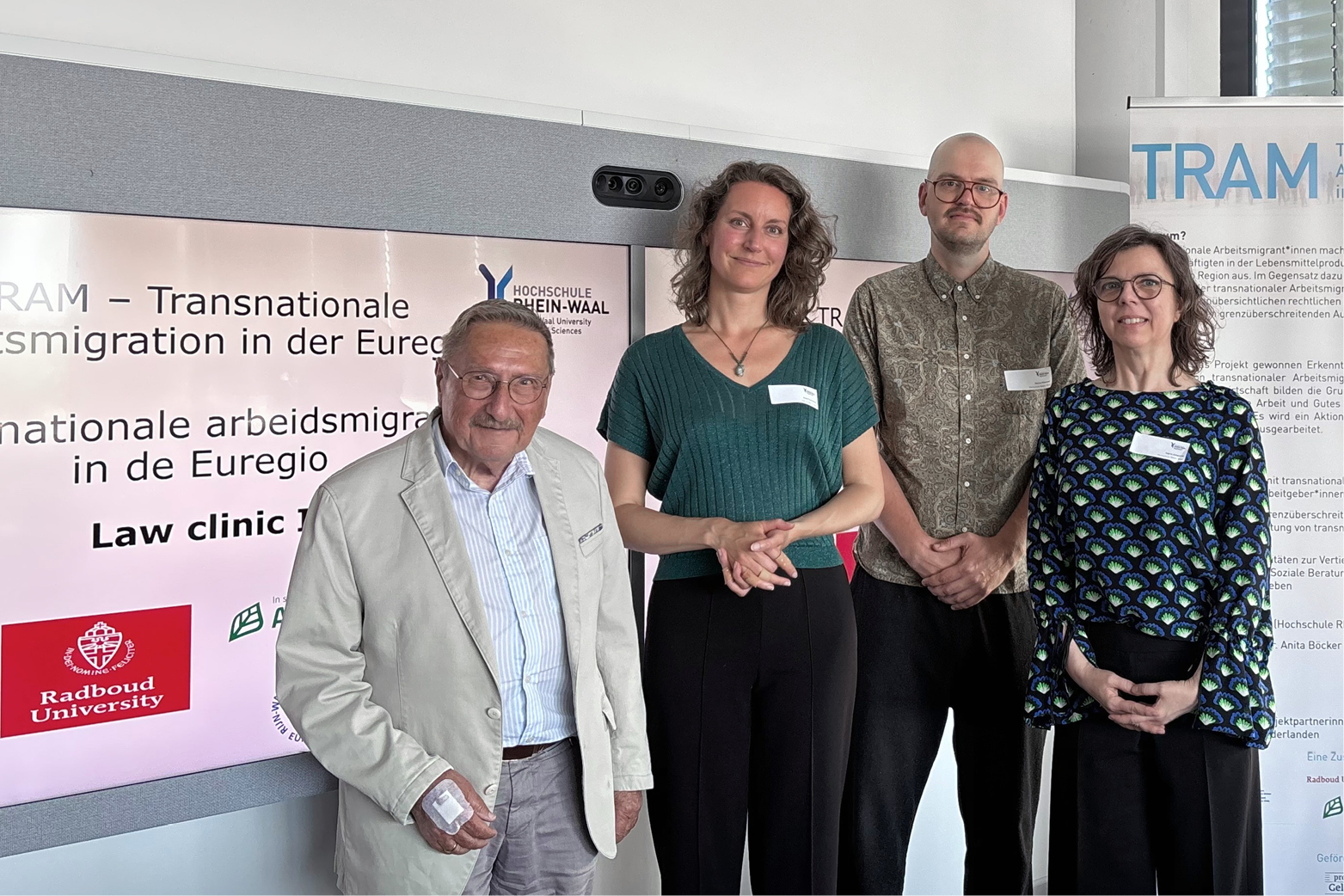
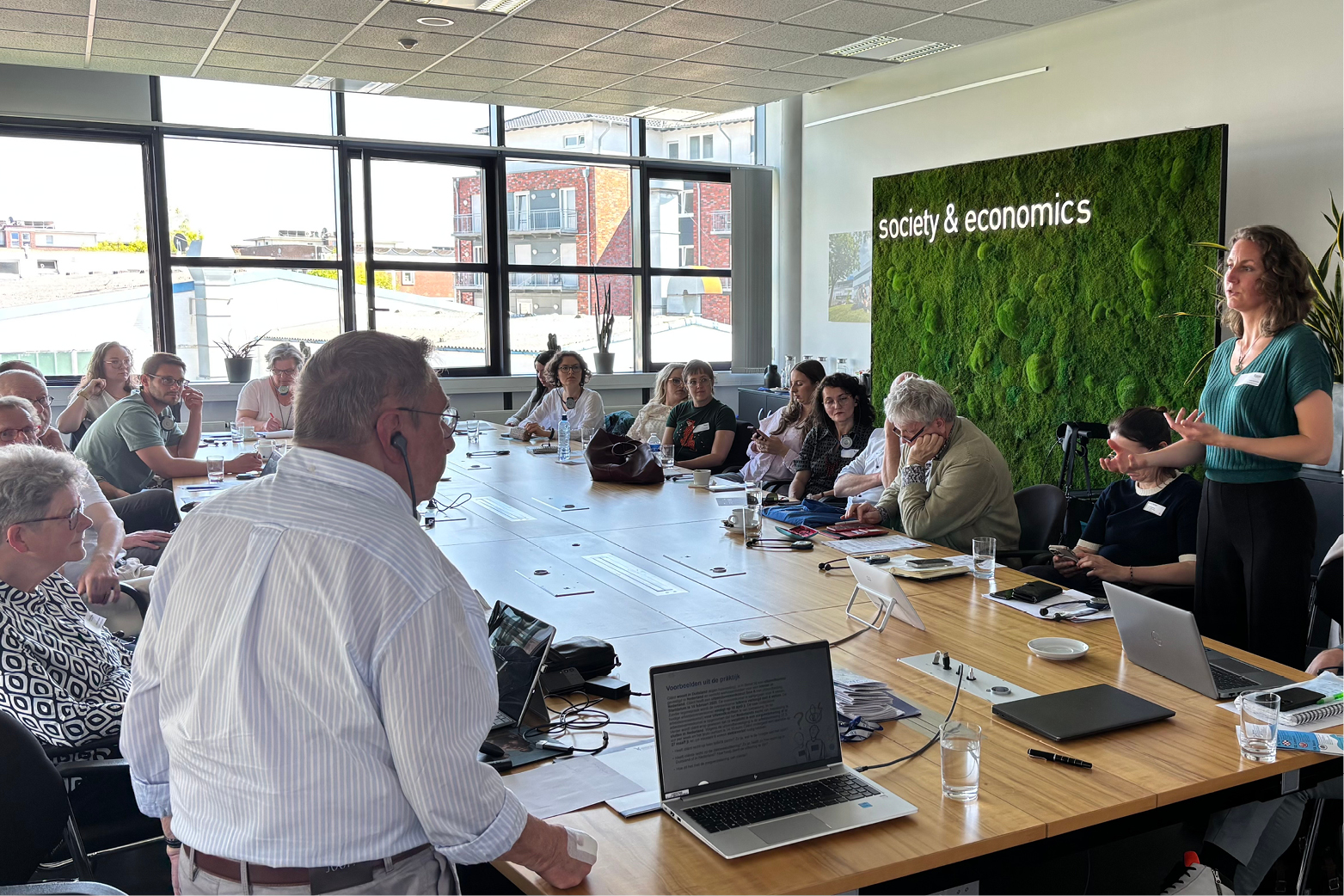
This is precisely where the ‘Law Clinic’ comes in. The TRAM project organised this practice-oriented workshop on legal advice for the first time in April. Thanks to the collaboration with lawyer Klaus Körner from ‘Aktion Würde und Gerechtigkeit, e. V.’ and the Dutch legal adviser Gosia Szymaniak from ‘Het Juridisch Loket’, an independent legal advice service based in the Netherlands, legal issues relating to employment contracts were explained and discussed in detail. Using specific case studies, staff from advice centres deepened their understanding of the fundamentals of employment law in both countries. For example, there are differences in which costs may be deducted directly from wages and to what extent. As, in some cases, too much is withheld for accommodation, this is of particular importance for migrant workers who are housed in the border region. The ‘Law Clinic’ addressed commonalities and specific differences in the regulation of employment relationships; it also examined case law in Germany and the Netherlands in detail.
As well as providing an insight into the legal framework, the event also facilitated further cross-border networking between advice centres for migrant workers on both sides of the border. In doing so, they laid the foundations for a ‘direct line of communication’, making it easier for the advice centres to engage in dialogue so that they can offer much-needed help and support to migrant workers in distress. Furthermore, the TRAM project is currently developing a so-called ‘Contact Map’, which is intended to provide an overview of existing advice centres for migrant workers in the border region.
The high level of participation from advice centres, local authorities, trade unions, the district police and other stakeholders highlights the need for cross-border legal expertise. At the same time, the lively discussions highlight the obstacles many migrant workers in precarious employment and living situations face when accessing legal support. As part of the TRAM project, two further legal clinics are planned for 2025 and 2026. As well as advice centres, these clinics will also be open to migrant workers and civil society organisations active in this field. Further information will be shared via the TRAM website and the quarterly TRAM newsletter.