The three transformation experts Frank Wistuba (Education Officer and Project Manager for ‘bne:digital.nrw’), Prof. Dr Christa Liedtke (Co-Chair of wpn2030, Head of the Department for Sustainable Production and Consumption at the Wuppertal Institute) and Prof. Dr Kora Kristof (Vice-President for Digitalisation and Sustainability at the Karlsruhe Institute of Technology (KIT)) drew on each other’s contributions to map out a path from individual transformation, through science and business, to societal transformation. They unanimously emphasised the need to develop key competencies in order to bring about change; this applies to today’s students as well as to the world of work and private life. A prerequisite for this is the right mindset – that is, values, attitudes and culture. After all, transformation requires courage, perseverance and determination, as well as the ability to overcome resistance.
The TransRegINT project (Transformation of the Lower Rhine Region: Innovation, Sustainability, Participation) was launched on 1 March 2023. Following the official opening in May 2023, the approximately 20 staff members began their substantive work. Their remit: to strengthen the university’s position in the region and to engage with business and society through a range of initiatives, so that, together and on the basis of science and research, they can shape processes of change in the Lower Rhine region. What does this mean in practical terms? Exciting insights into the project were gained on 8 October. Here are a few examples from the day-to-day work of the project:
- More than 40 children at Niersenberg Primary School in Kamp-Lintfort have improved their reading skills and understanding of technology in a fun way with the help of STREEN, a reading support app developed as part of the project.
- Over 40 laboratories at HSRW are to be linked internally and opened up to the outside world – to this end, the team responsible, LabLandschaften, has already walked some 130 km from laboratory to laboratory on the Kamp-Lintfort campus.
- Around 1,400 trees and shrubs were planted in collaboration with the Agroforestry Real-World Laboratory’s partners to establish new agroforestry systems.
- A good 2,900 people attended events featuring, amongst others, weather presenter Claudia Kleinert, Dipl.-Met. Sven Plöger, guest lecturers and researchers from the HSRW, and discussed sustainability topics such as resource use, housing for the common good and mobility.
TransRegINT is also driving initiatives within HSRW itself: the focus is on Education for Sustainable Development (ESD). Since the 2024/25 winter semester, Fellows have been successfully sharing their expertise in the areas of transformation, sustainability and participation with the project team, HSRW and the region. Fellows are visiting lecturers who have been awarded a teaching fellowship. They not only bring valuable expertise to the table but also help to establish partnerships with other educational institutions, as well as regional businesses and local authorities. The project also carries out important networking work for HSRW in the field of sustainable development with other universities, for example within the DG HOCHN, the German Society for Sustainability at Universities e.V.
“We recognise that we must continue to foster dialogue between academia, business and society in order to successfully shape change in the Lower Rhine region together,” said Prof. Dr.-Ing. Peter Kisters, Vice-President for Research, Innovation and Knowledge Transfer at HSRW and project leader of TransRegINT.
Gaining momentum
TransRegINT has moved beyond its early stages and is making its presence felt in the region in a variety of ways and across a range of topics. “It may seem confusing to many that such diverse topics are brought together under the umbrella of TransRegINT – ranging from assistive systems to promote reading amongst primary school children, agroforestry systems (i.e. agricultural topics), renewable energies, to the integration of teaching, research and knowledge transfer to form a ‘One Mission’, which is launching this winter term with the new project-based degree programme ‘Engineering for Sustainability, B.Sc.’”, says Prof. Dr.-Ing. Peter Kisters, listing some of the areas of work. “With its four faculties and a wide range of degree programmes in the natural sciences, economics and engineering, as well as the social sciences, social work and health sciences, Rhein-Waal University of Applied Sciences is active in many fields. As a university of applied sciences, we see it as our duty to contribute to developments that enable sustainable change.”
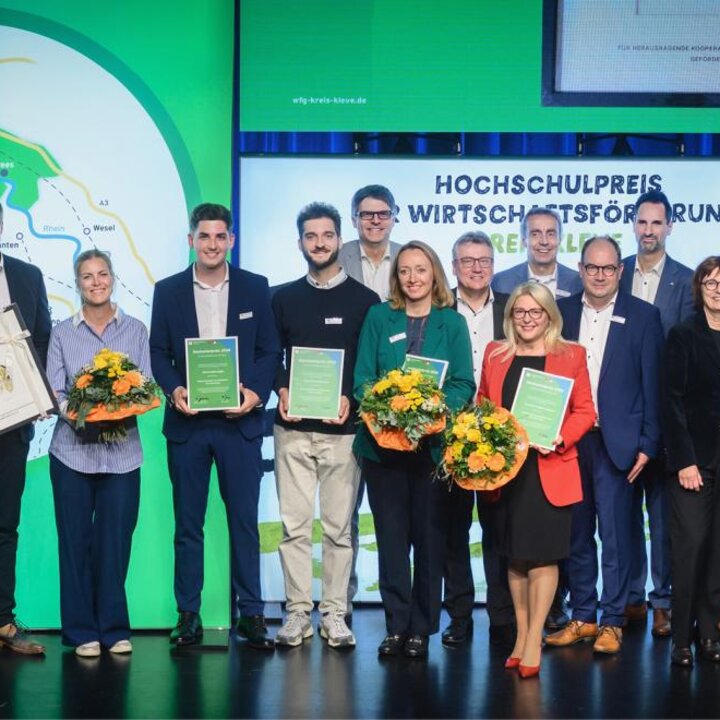
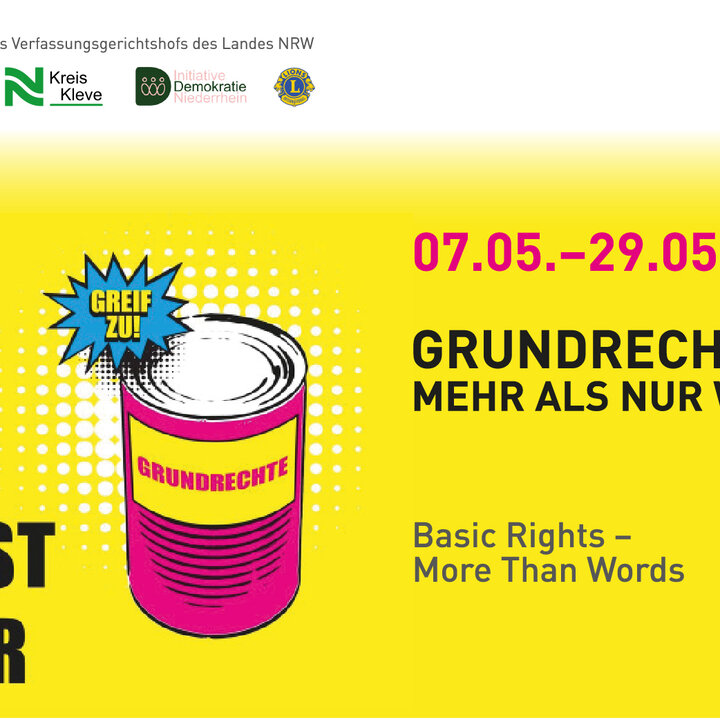
This requires the understanding and involvement of the people who call the Lower Rhine region home. One example is the ‘Klever Birne’ Sustainability Award, which the project, in collaboration with the City of Kleve, has now presented for the third time this year, with the aim of developing new ideas for sustainable measures together with the people of Kleve. Following last year’s launch of the regional offices known as ‘DialogPunkte’ in Kleve, the concept was further developed and successfully repeated in Kleve this year, whilst also being introduced for the first time in Xanten. Through the ‘DialogPunkt’ offices, knowledge and science are brought into the wider community via a variety of formats, ranging from hands-on activities to discussion groups, guided tours and lectures. Other local authorities have already expressed interest in this series of events and are currently in discussions with the relevant representatives at TransRegINT. Key challenges and opportunities for regional businesses are set to be addressed from autumn 2025 at the ‘DialogPunkt Wirtschaft’ in Kalkar.
Collaboration with regional businesses is another cornerstone of TransRegINT. Practical partnerships with agricultural holdings – which are converting their land into agroforestry systems and making it available for research and teaching purposes – facilitate knowledge transfer par excellence. At the Kamp-Lintfort campus, the business evenings are proving very popular with the local business community; the opportunity to take a behind-the-scenes look at laboratories that are normally off-limits paves the way for identifying further opportunities for collaboration between researchers, lecturers and/or students at the university and the business community. After all, collaboration with Rhein-Waal University of Applied Sciences opens up opportunities: from fresh ideas and creative impetus, through access to young talent, to joint research and development projects. “These examples, along with the many other activities undertaken by staff and the large number of active collaboration partners, show that things are happening at TransRegINT,” confirms PD Dr Gerhard Heusipp, deputy project manager at TransRegINT.
Transformation beyond TransRegINT
The inevitable conclusion of the TransRegINT project at the end of 2027 does not mean an end to the sustainability efforts of Rhein-Waal University of Applied Sciences and its partners. “We want to provide impetus, generate momentum and support the continuation of these initiatives. Agroforestry practitioners should continue to meet and exchange ideas at agroforestry roundtables even after the TransRegINT project has ended. Initiatives such as the ‘DialogPunkte’ can be carried forward by local authorities in collaboration with stakeholders from across society. There are many ways to continue on the path of transformation,” says Prof. Dr.-Ing. Peter Kisters with confidence. These efforts will be consolidated through the establishment of a European Centre for Sustainability Transformation and Participation (EUZENT). This centre will be dedicated to researching, facilitating and implementing sustainability transformation in the economy, politics and society, thereby continuing, in part, the work of TransRegINT.
The project website www.transregint.de provides regular updates on the project’s progress and invites visitors to attend upcoming public events. A follow-up report on the event ‘From Transfer to Transformation’, held on 8 October 2025, can also be found there.
Background information
Through the TransRegINT project (Transformation of the Lower Rhine Region: Innovation, Sustainability, Participation), Rhein-Waal University of Applied Sciences has set itself the goal of helping to shape sustainable change in the region on a science-based foundation. The project is funded by the ‘Innovative University’ programme of the Federal Ministry of Research, Technology and Space. This funding initiative supports universities in finding creative solutions to the pressing challenges of our time, based on research findings. Until the end of 2027, ‘TransRegINT’ will receive funding totalling just under ten million euros. This will enable the development of solutions to shape the region’s future in line with the United Nations’ 17 Sustainable Development Goals.