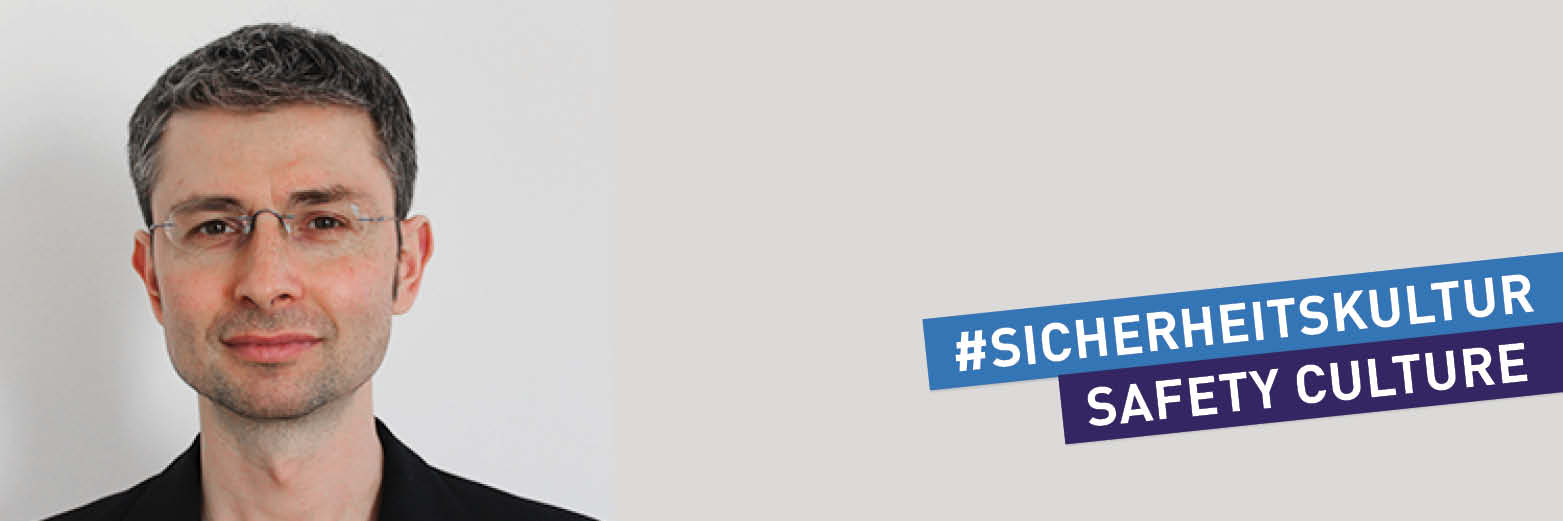
Marquardt’s research focuses on people, for it is they who, ultimately – whether on an aeroplane or in a chemical plant – ensure safety. Crucial to this are the so-called, mostly unconscious basic assumptions that people harbour and which influence their thoughts and actions. Dr Nicki Marquardt, Professor of Cognitive, Industrial and Organisational Psychology, has investigated in his latest research the extent to which these basic assumptions can be altered through traditional training programmes.
 By measuring reaction times – that is, by testing associations within milliseconds – he discovered that these basic assumptions cannot be altered through traditional training programmes. These findings have attracted interest in both academia and the professional world: at the end of October, the cognitive psychologist presented his research findings on the transformation of safety culture to the Safety Journal Club, whose members include the elite universities of Stanford, Berkeley and Yale. The Federal Association of German Employers is also interested in the findings of the Kamp-Lintfort-based professor: in October 2021, Marquardt presented his research to leading representatives of major German companies. The chemical industry, in particular, showed keen interest in relation to its own operational safety culture.
It is not only the results of the latest studies that are of interest to experts from academia and industry, but also the research methodology. The investigation of people’s underlying assumptions, which form the foundation of an organisation’s or company’s safety culture, represents a new development within organisational and cognitive psychology.