According to the World Health Organisation (WHO), at least four million people in Germany suffer from depression requiring treatment. Depression is therefore one of the most serious and most common mental health conditions. Yet, despite the high number of people affected, depression is still considered a taboo subject. Those affected are deeply afraid of being stigmatised, so they often conceal their condition for a long time and try to cope with their daily lives as best they can. Yet depression can be treated effectively – particularly if it is detected at an early stage. Those affected must therefore be given the information they need and the opportunity to talk about their condition.
This can be achieved if society addresses the issue openly. This requires greater awareness and comprehensive education about depression. For those not affected in particular, depression is often difficult to understand, as the emotional world of someone suffering from it is hard to fathom for someone who has not experienced depression themselves. Consequently, many people who are not affected find it difficult to know how best to interact with someone who is unwell.
To promote a more open approach to the condition and thereby contribute to social change, students on the Master’s programme in Health Sciences and Management at Rhine-Waal University of Applied Sciences organised the ‘Impression Depression’ exhibition by the Robert Enke Foundation as part of a research project. The students were supported in this endeavour by Prof. Dr Robert Renner and Heike Holtappel from the Faculty of Life Sciences.
The exhibition was aimed specifically at those not affected by the condition, with the aim of raising awareness of depression and fostering understanding for those affected. Staff and students from the university, as well as interested members of the public from the town of Kleve, attended the exhibition.
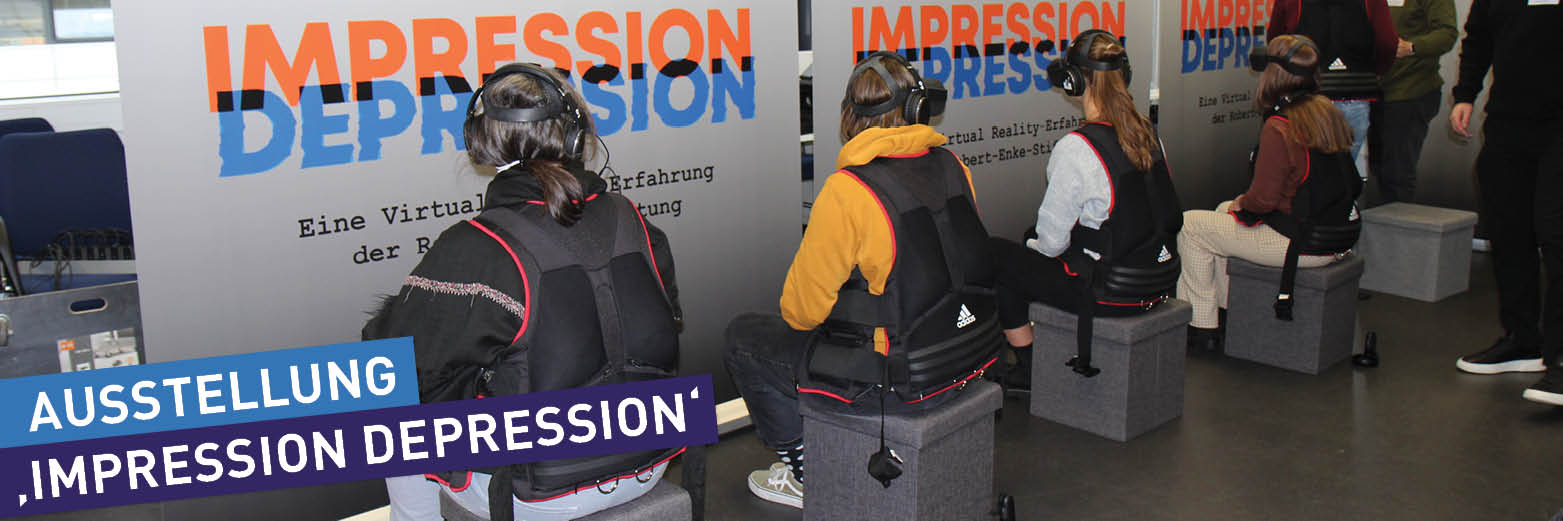
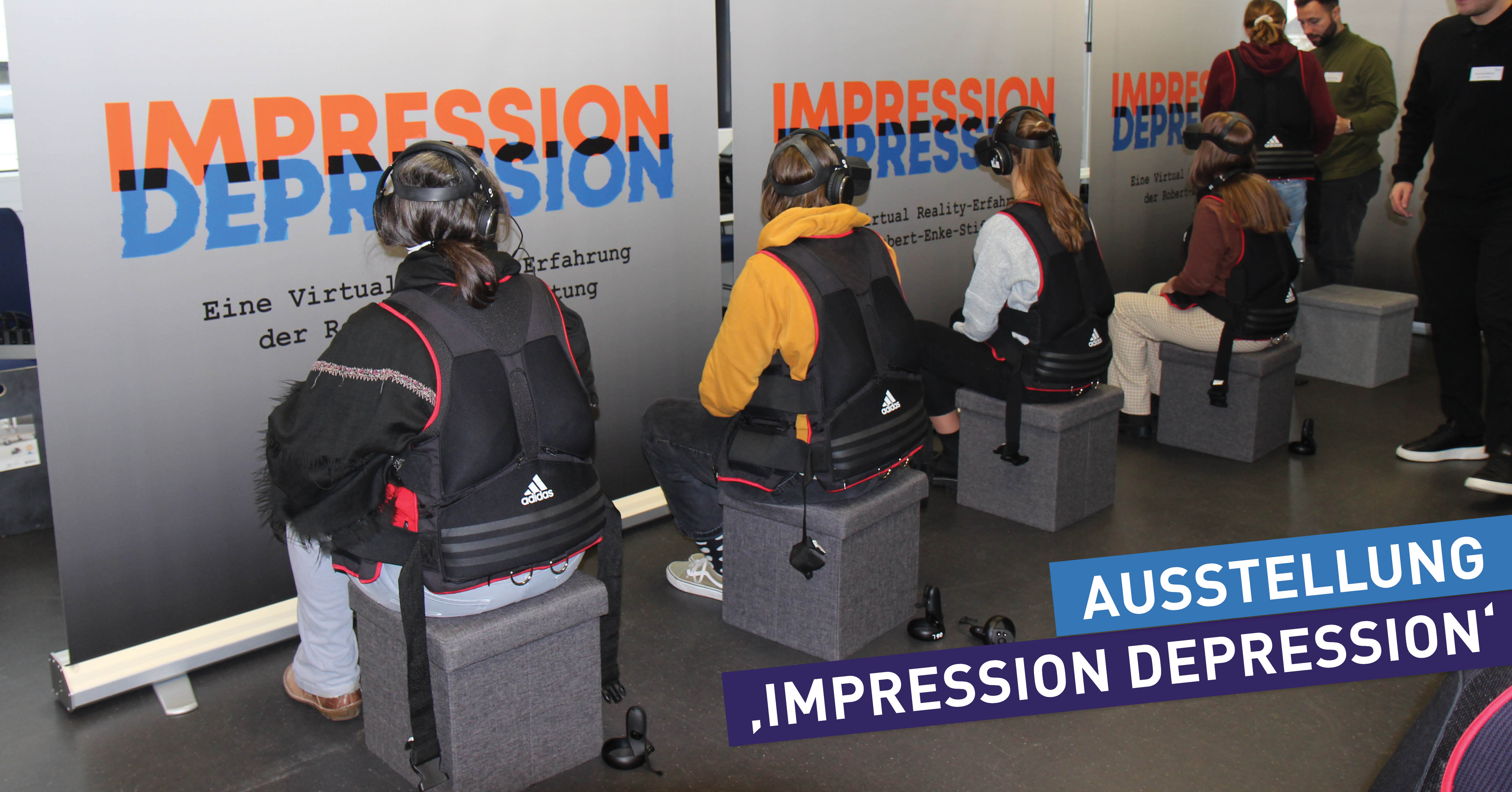
Following a brief introduction to the clinical presentation of depression, participants were able to gain an understanding of the condition by wearing virtual reality headsets, which were used to depict individual aspects of the thoughts and experiences of people living with depression. Symptoms such as a lack of motivation or hopelessness could thus be experienced realistically by those not affected through this hands-on activity. In a concluding reflection session, participants were able to share their impressions and feelings arising from their experience with the virtual reality headsets. They were also able to discuss their own experiences of interacting with people living with depression and have their questions about the condition answered. Throughout the exhibition, participants were supported by staff from the Robert Enke Foundation. “The exhibition has really helped me to better understand depression, and it will help me to respond more effectively to people with the condition in future,” explained one participant.
In addition, visitors to the exhibition had the opportunity to find out more about depression and discuss the condition at an information stand run by the students. The effectiveness of the exhibition was also assessed using a questionnaire. The feedback from participants was consistently positive. “We are delighted that we were able to help raise awareness of the condition and would like to thank the Robert Enke Foundation for making this exhibition possible,” said a student from the project group.