In the Anthropocene, the current geological epoch, our planet is characterised by constant human activity: cars, trains, aeroplanes, factories, jackhammers and many other sources of sound and noise together create a continuous ‘anthropophony’, as the sound ecologist Bernie Krause calls it.
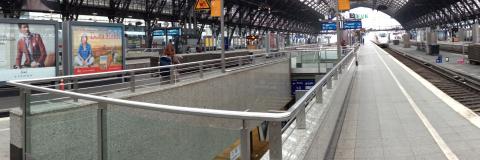
Now, however, due to the spread of the coronavirus, public and economic life in many countries has come to a virtual standstill or is severely restricted. This has already had surprisingly visible consequences: in India, for example, many people experienced their cities with clear air for the first time in a long while and were thus able to see the Himalayan mountains in the distance. In Berlin and other cities, there have been increasing sightings of wild animals. The images of deserted cities all over the world are now familiar to most of us.
The fact that the soundscape of our neighbourhoods, of nature, indeed of the entire planet, also appears to be changing radically is discussed far less frequently. In many places, for example, it has become noticeably quieter. But what does this sudden silence mean for us? And what can we learn from this silence about our impact on the soundscape in normal times? Professor Dr Andreas von Bubnoff, Professor of Science Communication at Rhine-Waal University of Applied Sciences, is convinced that the global shutdown of most human activities during the pandemic presents a unique opportunity to ask such questions and seek answers.
That is why, together with web designer Verónica Semeco, he has launched the Pandemic Silence Project. It invites people all over the world to record sounds that have changed during the pandemic lockdowns compared to before. This does not necessarily always mean greater silence. Some sounds, such as birdsong in the morning, may even be easier to hear, or simply sound different. The end result is intended to be a curated collection of sounds, as well as a series of multimedia publications – including in RiffReporter’s AnthropoScene project and the South East Asia Globe journalism project in Phnom Penh, with which Professor von Bubnoff is collaborating. Collaboration with museums is also being considered.
The Pandemic Silence Project has been running since early April. The submissions are already fascinating, said Professor von Bubnoff in an interview with Deutschlandfunk: for example, there is a recording of a woman from India who believed certain birds had become extinct but has now heard them again; a recording from Brooklyn features a bird’s morning song, accompanied by the sounds of a helicopter and ambulance sirens; and a recording from a student hall of residence, featuring the clatter of crockery and laughter from a neighbouring room, shows a woman washing up whilst in self-isolation, terrified of catching the virus, whilst her fellow students next door are carefree, inviting guests round. “Some have even thanked us for helping them learn to listen again through the project,” explains Professor von Bubnoff. For example, a woman from the US commented on her recording, saying she had never before “simply paused for a moment and listened. ‘I’m impressed by the number of bird and nature sounds, and I hope that listening becomes a habit in future.’
Incidentally, the collection is still ongoing. Submitting a sound is simple: you need at least about half a minute of audio of the ‘soundscape’; a photo of the location where the recording was made; the location, date and time of the recording; and finally, a brief comment on what can be heard and what is unusual about the sounds and the lockdown situation. Detailed instructions and the upload form can be found here. “As far as the sounds to be submitted are concerned, we’re pretty much open to anything,” emphasises Professor von Bubnoff. “The context just needs to be clear, and the sound should have special significance for the participants.”