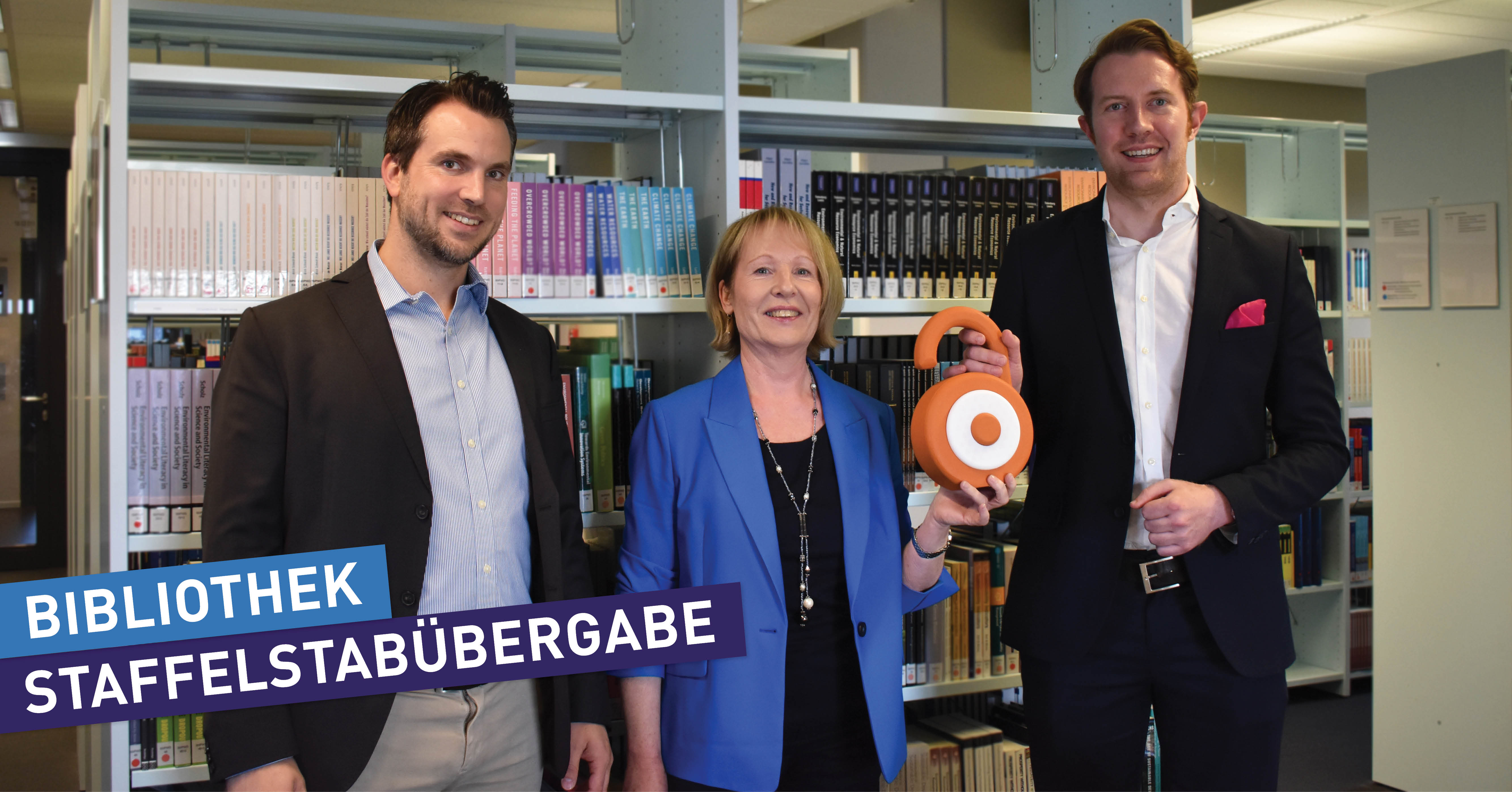
“She doesn’t know what rest is,” notes the current Chancellor, Michael Strotkemper. “Ms Dörner and her team have built up the university library and consistently developed it further with boundless dedication.” Even during her final days at work, she remained involved in the project to introduce a new library management system. During the last two years of her career, it was also a matter of great importance to her to chart the course for the library’s future development. To this end, she ensured that the key future issues of open access and the transformation of the publishing industry were already firmly established.
Elvira Dörner’s mission began at an empty desk, but with a wealth of knowledge about library management. She had brought this with her from her role as head of the library at the German Patent and Trade Mark Office in Berlin. The desk did not remain empty for very long, as speed was of the essence in setting up the university library. Just a few weeks after she started work, the first students had enrolled and – just like the lecturers – needed to be provided with literature. So Elvira Dörner was invited by the first president, Prof. Dr Marie-Louise Klotz, to join her on a shopping trip to a large bookshop in Düsseldorf to purchase the first books. ‘Anything that seemed suitable for the subject’ and ‘as much as would fit in the boot’ was the shopping motto. There are countless anecdotes like this one that bear witness to the pioneering spirit during the university’s early years.
Under Dörner’s leadership, a hybrid university library – one increasingly characterised by digital media and services – was gradually established, with two fully-fledged library sites in Kleve and Kamp-Lintfort. A modern discovery system supports research, self-checkout systems make borrowing convenient, and a publication server is available to all university members for the free, worldwide publication of academic works.
Both sites offer a high-quality visitor experience. Numerous study spaces, with and without computers, provide an ideal environment for learning and working, including in individual and group study rooms.
“A modern library is a transmedia hub of knowledge that supports the information needs of students, lecturers and researchers in the best possible way, regardless of location. At the same time, the library is responsible for teaching information literacy and serves as a learning space for interaction and exchange,” says Library Director Dörner, thereby also describing the high standards she sets for herself and the university library she has shaped. Standards which, according to Chancellor Strotkemper, she has more than lived up to – particularly as this development took place at a time when the library sector was evolving at an incredible pace and the library’s staffing needs could never be adequately met due to a lack of available specialists.
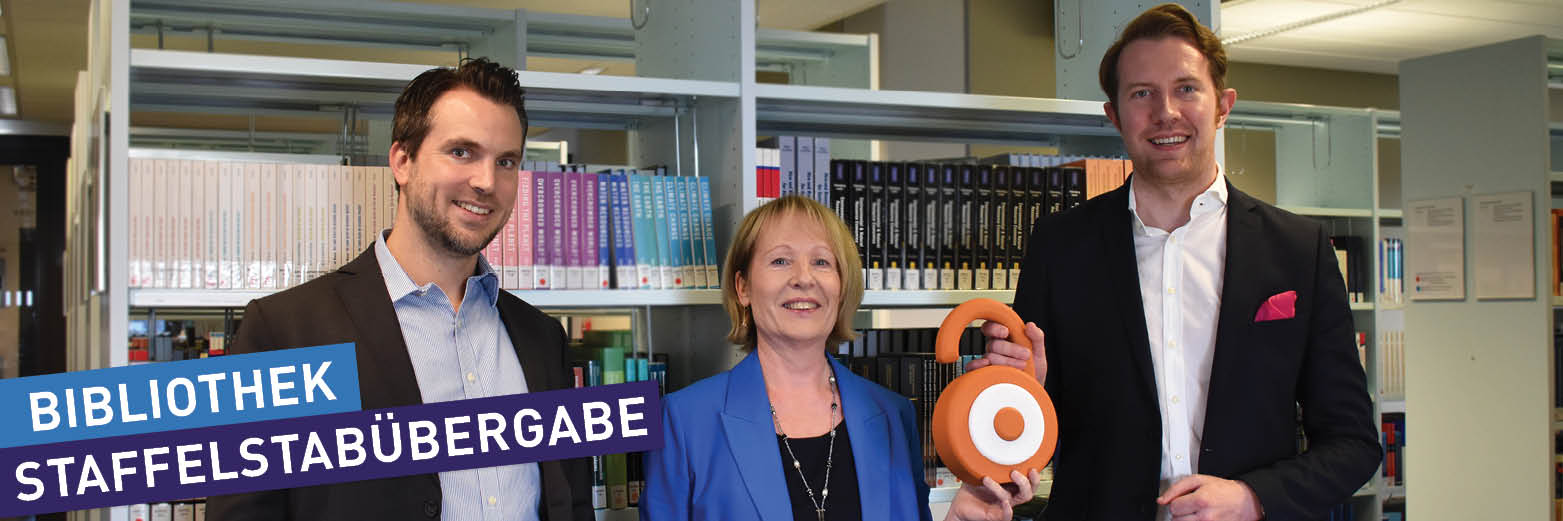
These are circumstances with which her successor, Jonas Lamik, is also very familiar. Having most recently served as library director at the Robert Schumann University of Music in Düsseldorf, he is well versed not only in the university environment. Having lived in Kleve for nine years, he is also very familiar with the region: “Having looked at the library building from the outside day in, day out for years, it really is something special to now be able to work here.” Full of drive and highly motivated, Lamik aims to keep the university library up to date. His first priorities will include completing the migration to the ALMA library management system – a process that has already begun and which will help to make electronic resources more efficiently available and accessible – as well as implementing an open-access strategy. “Driving forward the open-access transformation and making academic publications freely and digitally accessible will be the library’s most important task in the near future,” says Lamik, who, fittingly, is taking over the baton – in the form of the open-access logo – from Elvira Dörner. “I wish him every success in his new role and hope he continues the university library’s success story,” says Chancellor Strotkemper to the new library director ahead of his official start on 1 January 2023.