With its research focus on ‘Sustainable Food Systems’, Rhine-Waal University of Applied Sciences has made it its mission to help develop solutions to these challenges. Not merely in theory from the comfort of an academic chair, but above all in collaboration with regional stakeholders. Numerous collaborations and research projects over the coming years will therefore address topics such as the ‘agroforestry systems’ mentioned above – that is, the integration of traditional arable farming and woody plants in conjunction with livestock farming.
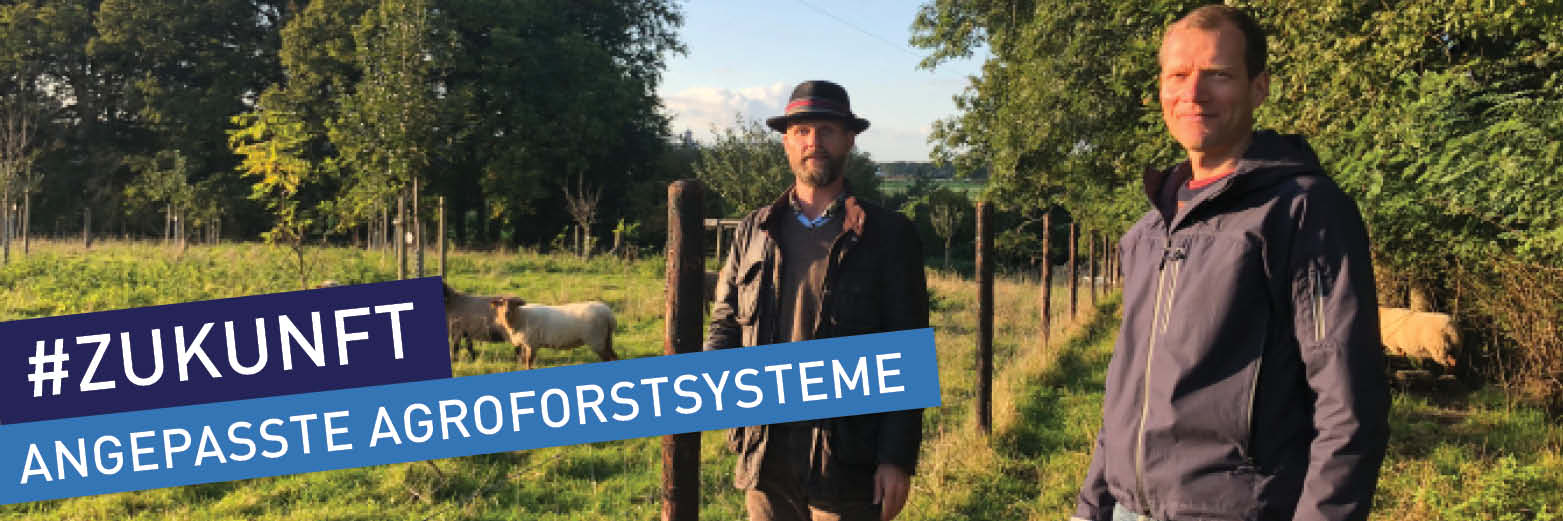
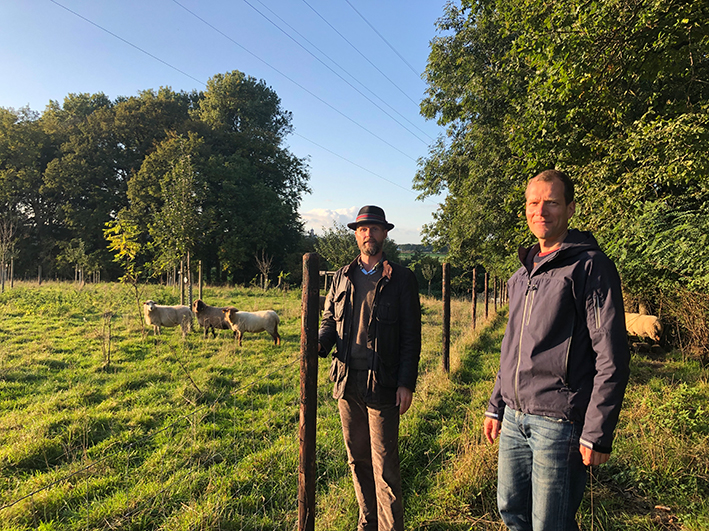
Dr Florian Wichern, Professor of Soil Science and Plant Nutrition, is overseeing the design and associated scientific research for several such projects in the Lower Rhine region. As part of this, a small ‘real-world laboratory’ is being set up in a mixed-fruit orchard where sheep and goats graze, and will be equipped with a weather station. The planned highlight for animal lovers: an owl webcam to demonstrate the ecological importance of agroforestry systems. For Professor Wichern, projects such as these are about, on the one hand, learning from existing systems and, on the other, drawing insights from them in order to develop them further: “Whilst intensive research into agroforestry systems has been carried out in the tropics and subtropics over recent decades, there is a great deal of catching up to do in Europe and Germany. As a university with an excellent international network, we can play an active role in adapting existing technologies to the conditions of temperate latitudes,” says Wichern.
The Berkhöfel organic farm is also benefiting from its collaboration with the university. This autumn, new hedgerows and rows of trees will be planted across ten hectares of land there. Rows of various fruit and nut species, combined with other woody plants, will run through the farmland. This is intended to increase biodiversity, protect arable crops from extreme weather events and diversify farmers’ incomes. The farm’s existing 50 hectares of orchard meadows are also of particular interest to researchers. “It is widely recognised that such systems have a beneficial effect on the soil, help to diversify farms’ income and also provide habitat for a wide variety of plants and animals. Through our experimental plots and by supporting farms during their transition, we aim to determine these effects for specific agroforestry systems under local conditions and thereby help to quantify the positive social and ecological benefits of agriculture,” said Prof. Dr Dietrich Darr, spokesperson for the research cluster.
Contact for businesses and agricultural holdings
Companies interested in collaborating with the university can contact us by email at: FoodSystems@hochschule-rhein-waal.de.
Research Priority (FSP): ‘Sustainable Food Systems’
Working conditions in agriculture, food processing, the utilisation of waste materials, innovative production systems such as ‘edible forests’, food produced by 3D printers, etc. – the scope of the HSRW’s Research Focus (FSP) on “Sustainable Food Systems” is diverse. The FSP brings together ongoing research and the expertise of numerous academics at the university in the fields of sustainable natural resource management, nutrition, health and the bioeconomy, with the aim of strategically developing forward-looking research topics and raising their profile externally. A website with further information on the research focus is currently under construction: Foodsystems Institute