
Why men put off preventive care: Health sciences and health management students highlight the need for action
Preventive medical check-ups play a key role in the early diagnosis of diseases – especially cancer. Nevertheless, men in particular tend to attend these check-ups irregularly or not at all. A look at the region shows that there is a considerable need for action in this area, especially in the districts of Wesel and Kleve.
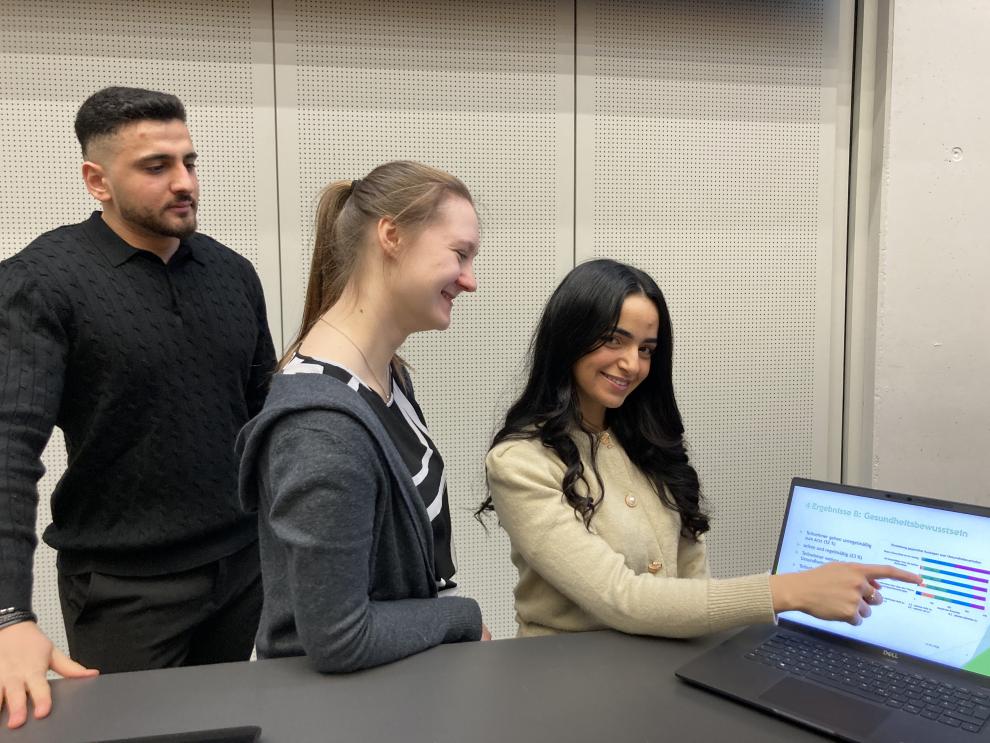
It is well known that men are less likely than women to take advantage of preventive medical check-ups. However, the low uptake in the districts of Wesel and Kleve is particularly striking. This prompted an investigation by students on the Master's programme in Health Sciences and Management. In cooperation with the specialist health service in Wesel, they explored key questions: How well known are preventive medical check-ups really? Why do many men stay away from these services? And what measures could increase participation in the future?
The study was based on a specially developed questionnaire that was specifically aimed at men in the two districts. The results show that the respondents consider preventive medical check-ups to be very important. Most men are also aware of prostate examinations, for example. However, knowledge alone is apparently not enough to prompt them to take action. Despite being entitled to these examinations and their proven medical benefits, men continue to forego them.
The respondents cited organisational hurdles as the main reasons. Inflexible consultation hours or long waiting times have a deterrent effect. Flexible and prompt appointment scheduling could therefore help to motivate more men to take preventive measures. In addition, the importance of social support became clear – encouragement from partners, family or friends can reduce inhibitions and make the decision to participate easier.
The students were accompanied by Prof. Dr. R. Renner, Professor of Health Promotion and Nutrition and Head of the Degree Programme, and research assistant Heike Holtappel from the Faculty of Life Sciences. The findings provide important insights for future prevention strategies in the region.