A clean affair: Merry Christmas from the Faculty of Life Sciences
In the common room of the Faculty of Life Sciences, tradition meets empiricism: Why this year's Christmas tree bears a washing machine and what it tells us about the future of hygiene.
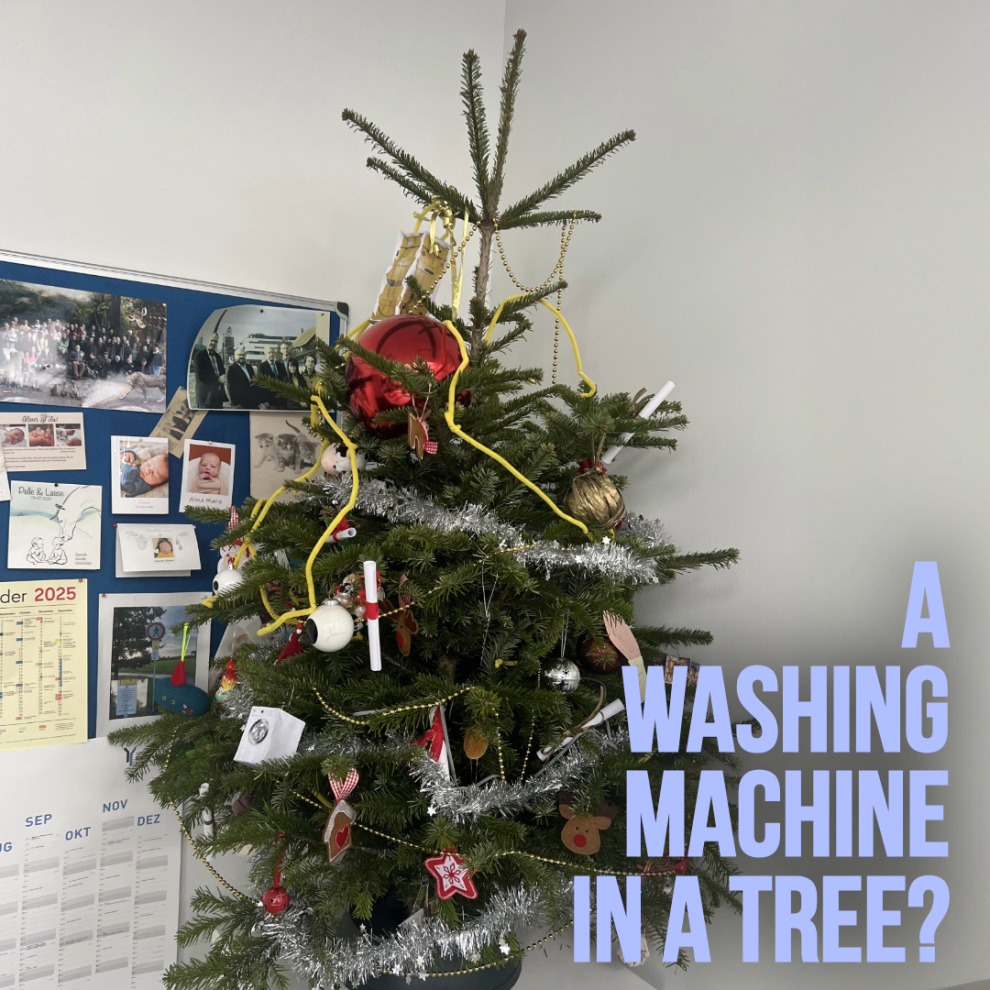
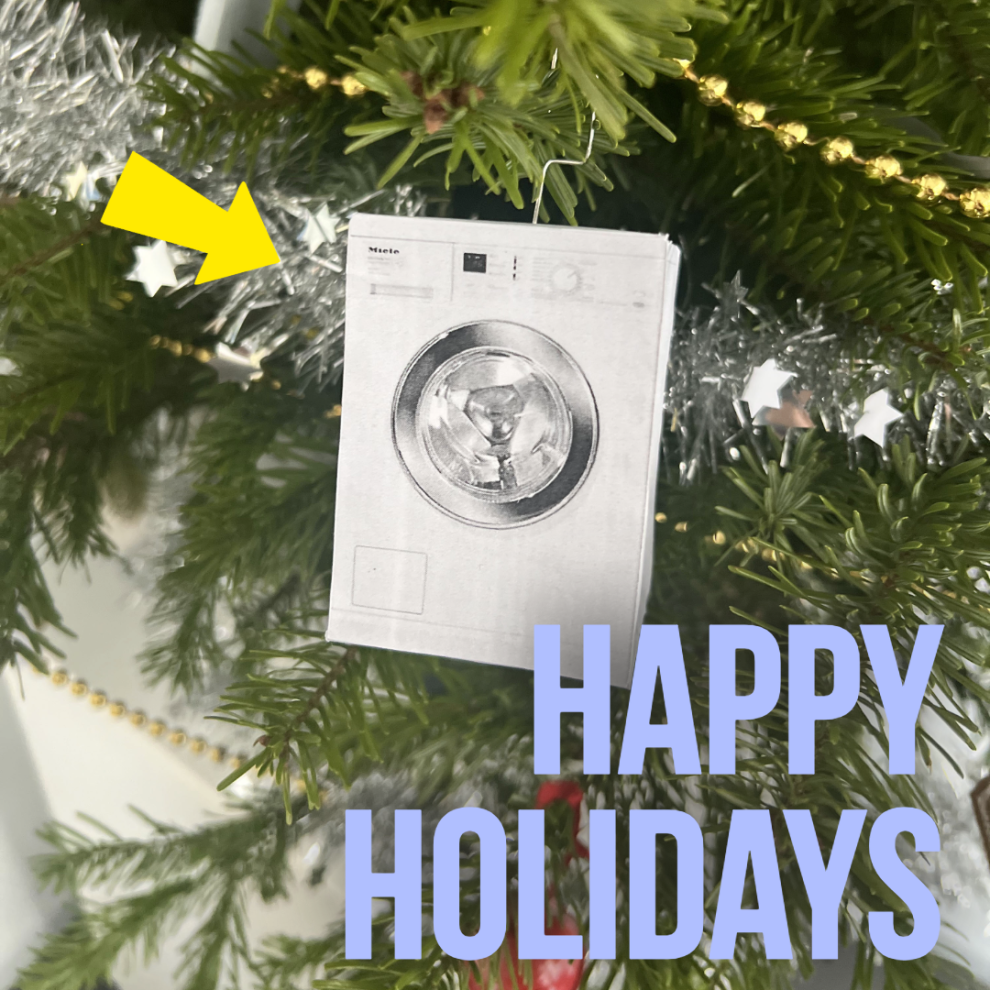
It is a lovely, if somewhat predictable, tradition: As the year draws to a close, evergreen branches conquer the corridors of German universities. Yet, in the common room of the Faculty of Life Sciences at Rhine-Waal University of Applied Sciences, something glinting among the branches this year breaks the usual canon of glass baubles and straw stars. Alongside standard Christmas ornaments hangs a miniature washing machine.
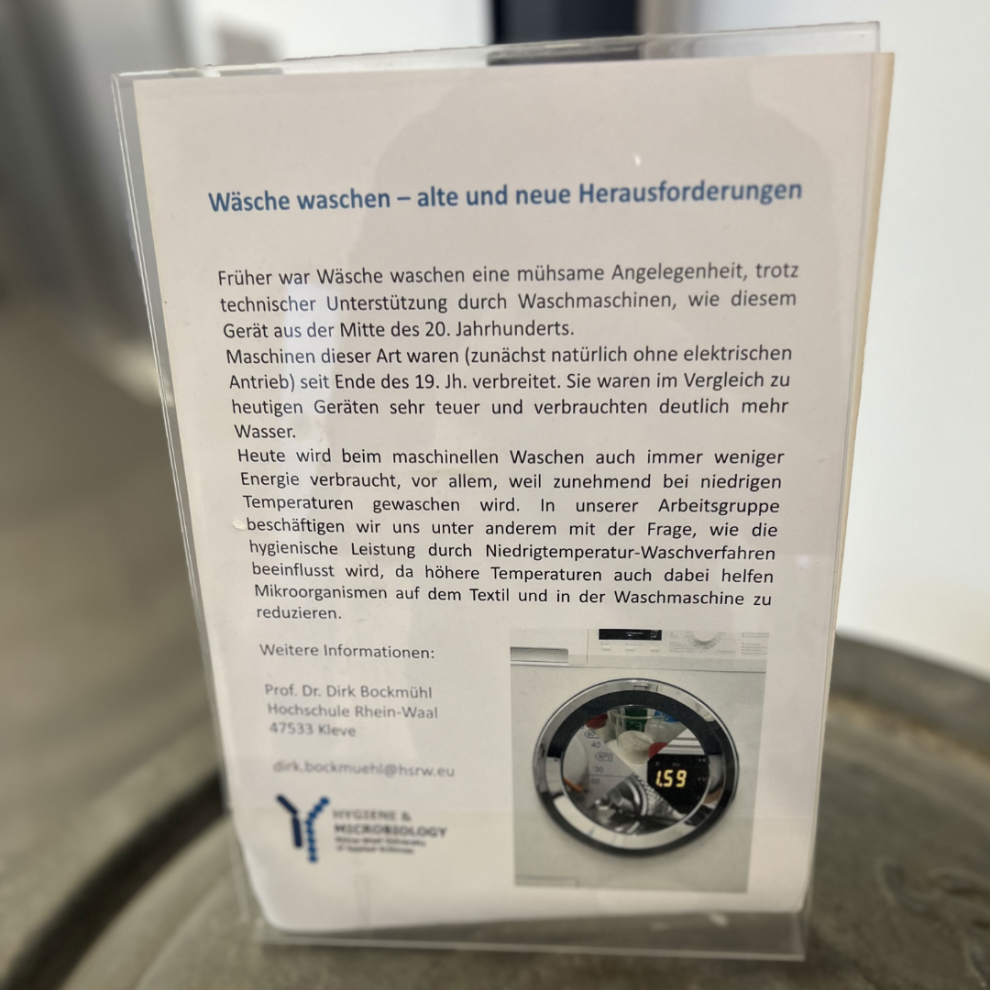
What at first glance appears to be a curious aesthetic rupture is, in truth, a subtle nod to one of the modern household’s most pressing questions. The unusual ornament symbolizes the work of the research group led by Professor Dr. Dirk Bockmühl. In the field of Hygiene and Microbiology, the team dedicates itself to that invisible frontier where energy efficiency wrestles with sterility. Among other things, the researchers are investigating how textiles can be cleaned to microbiologically impeccable standards even in the low-temperature range—the key to energy conservation.
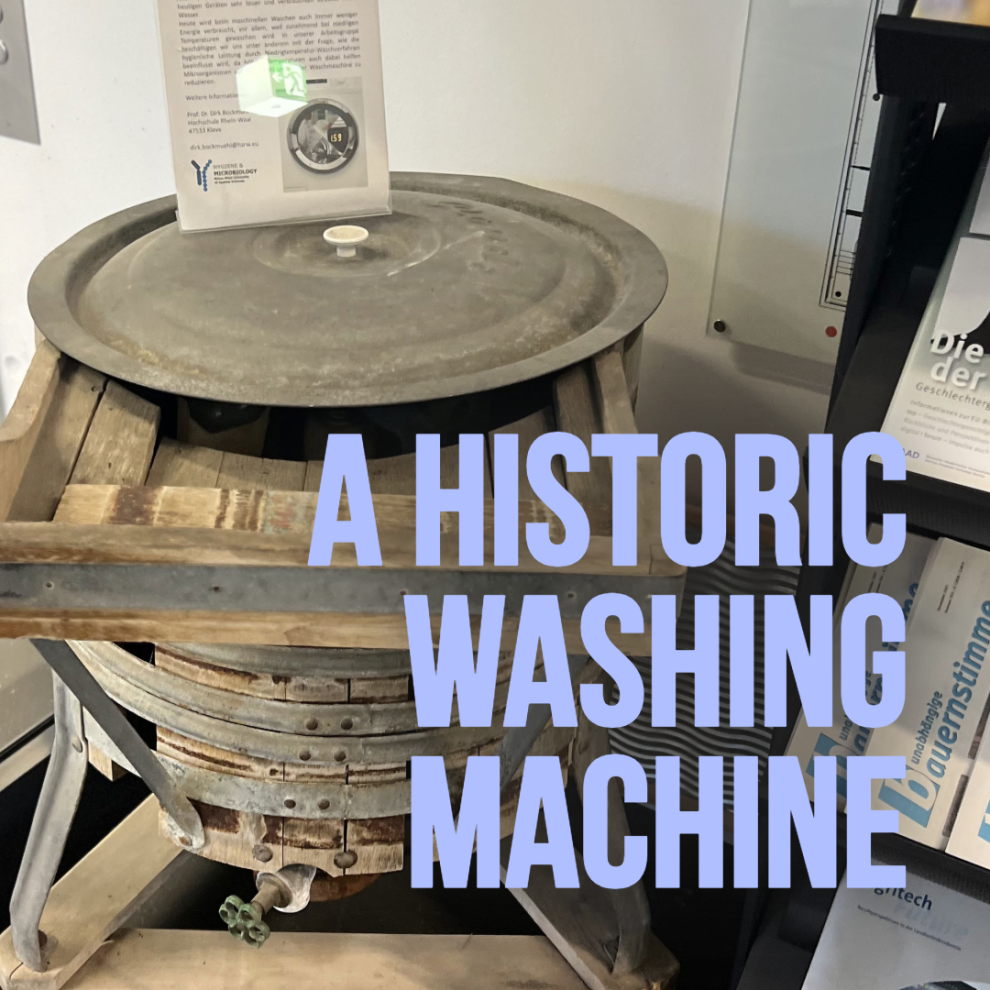
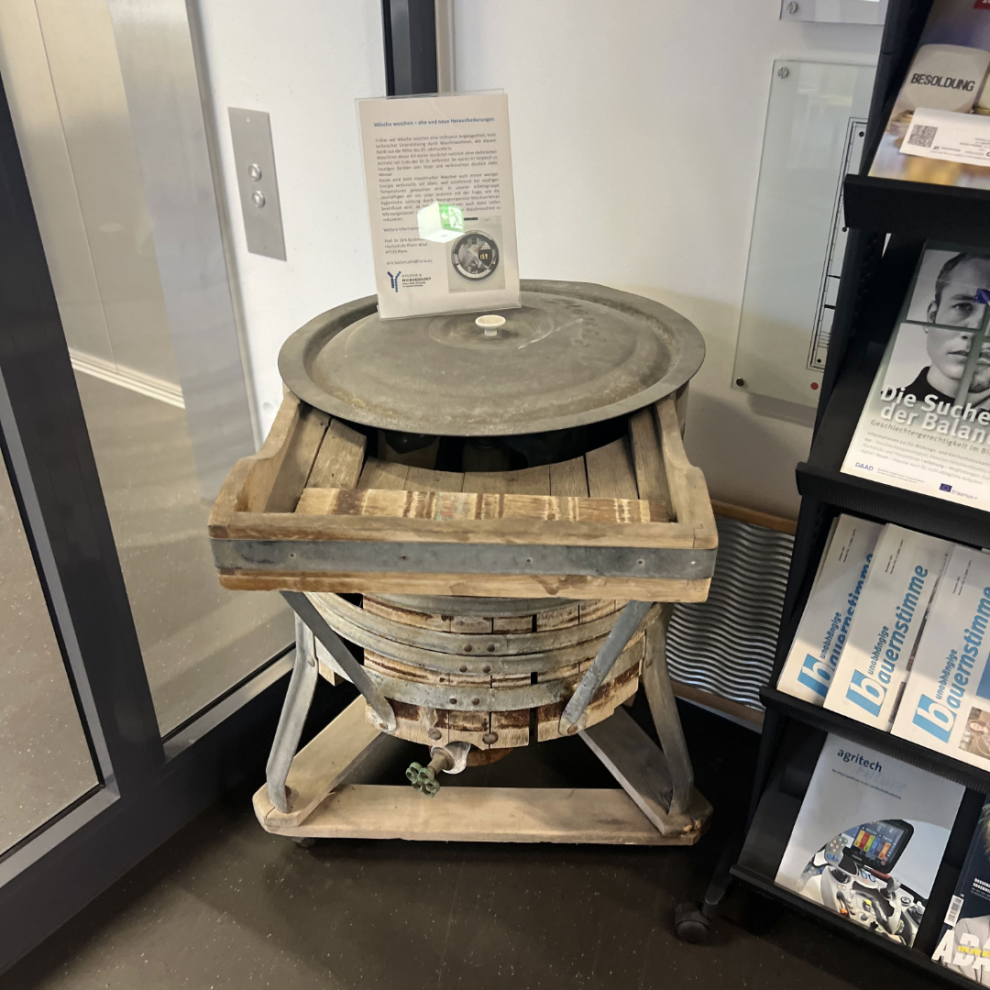
Those wishing to understand the distance technology has travelled need only walk a few steps further. On the second floor of Building 12 stands a wooden witness to a more arduous era: a historic washing machine from the mid-20th century. It serves as a technological memento mori: while water consumption was once immense and operation required back-breaking labor, science today fights for every degree Celsius reduced in the drum.
We would like to end the year on a note of technological change and scientific consistency. We wish all students, staff and partners of the university a good start to 2026.