
Trees, Fields, Animals: A Practical Day in Agroforestry
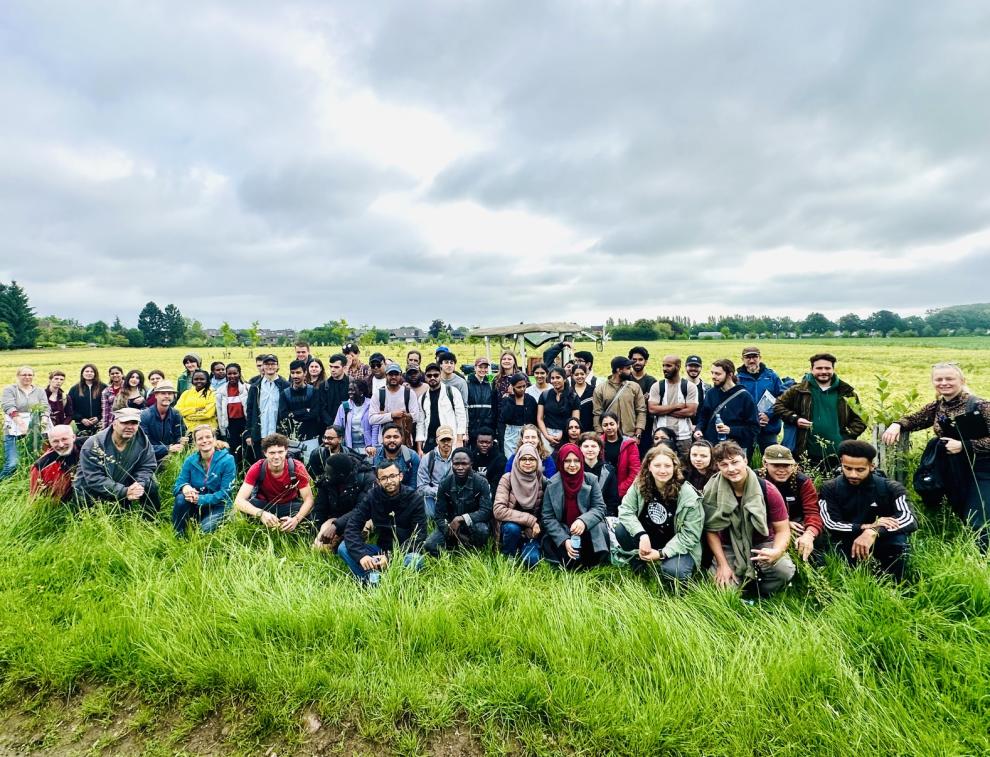
Six stations, six groups, and three hours of time: Students from the Faculty of Life Sciences in Kleve tested out how trees, fields, and animals can fit together on a single plot of land. From a freshly dug soil profile to a tractor in action – what are they taking away for the agriculture of tomorrow?
Agroforestry means that trees and shrubs grow in the middle of the field, among the crops. This provides shade, protects the soil, and creates a habitat for animals. How this works in practice could be experienced step-by-step on this morning.
Six Stations, a Rotation Principle
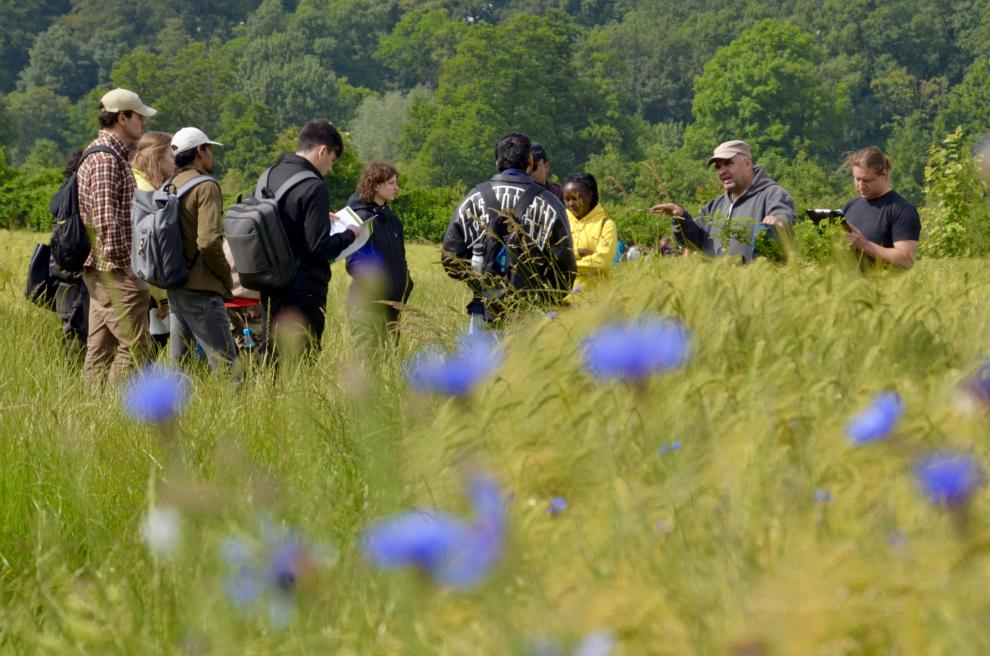
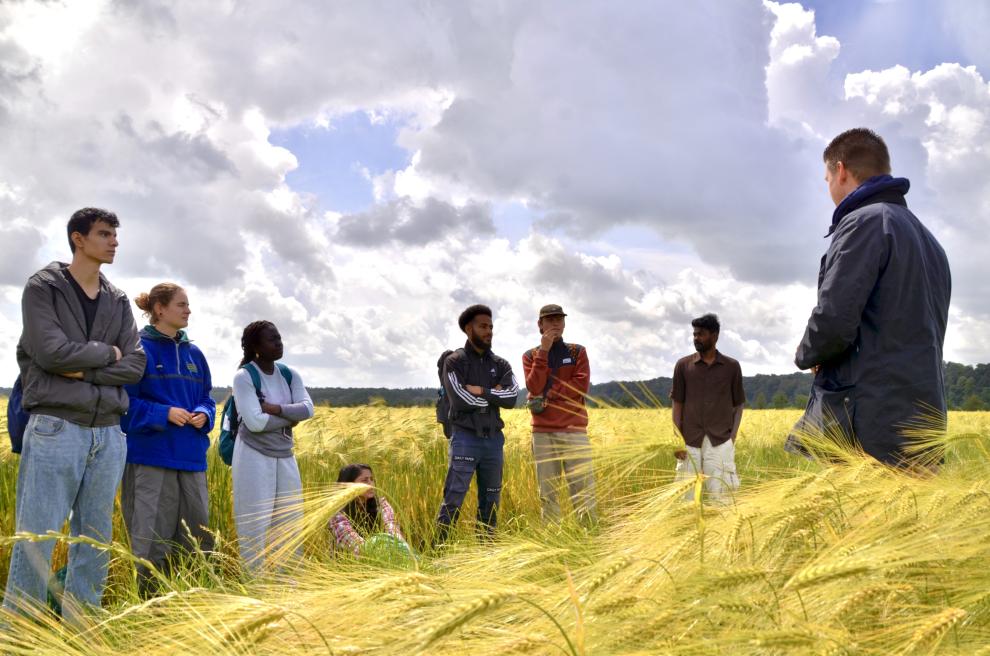
The site was divided into six thematic stations. In six groups, the students rotated from post to post every half hour from 9 a.m. to 12 p.m. Agroforestry strips surrounded the area, with fields of corn, barley, and fava beans in between. At the soil station, things didn't stay theoretical. A soil profile showed what happens beneath the surface. With the trees, expert input was followed by direct manual work—getting hands-on instead of just listening.
The Plant Production and Biodiversity station led across the fields and into a discussion: How much diversity is actually in the system? At the animal husbandry station, a student presented his bachelor's thesis on "Wild Animals in Agroforestry Systems." Afterwards, the groups drew up their own sketches of how farm animals could be meaningfully integrated.
Technology, Economics, and a Snack to Conclude
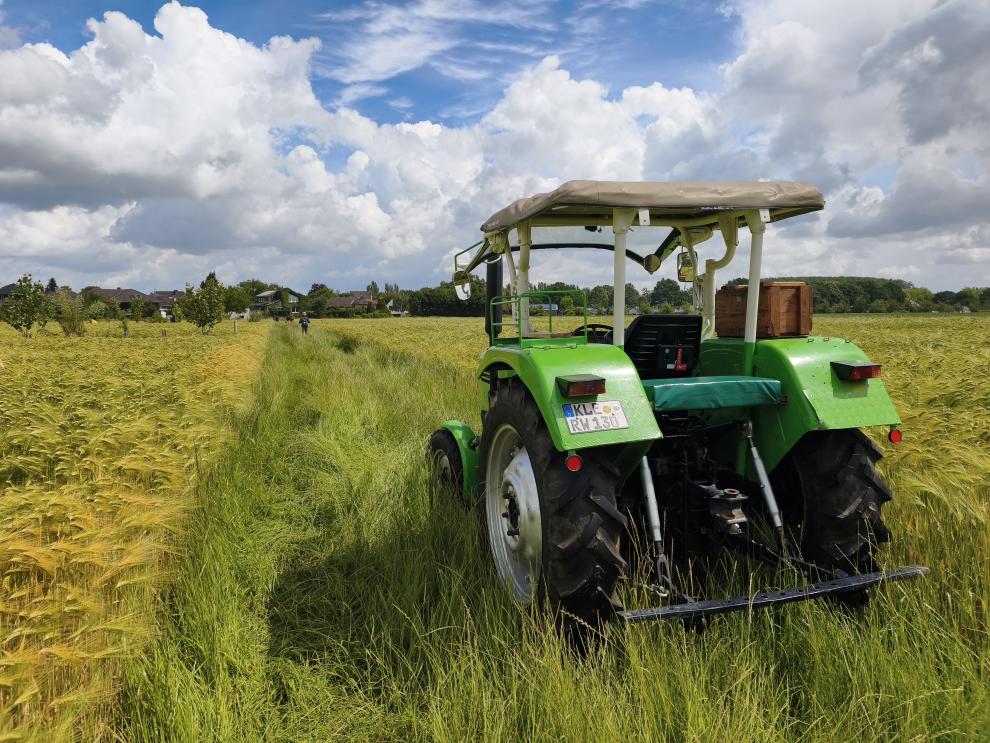
How do you actually harvest between rows of trees? At the Mechanization and Processing station, a tractor live in action provided the answer. Numbers and society were the focus at the station on economic and social aspects: What does such a system cost, and who benefits from it?
At 12 p.m., everyone came back together for a shared snack and a final debriefing. This was made possible by the support associations Förderverein Hochschule Rhein-Waal e. V.. and Förderverein Campus Cleve e.V., which financially supported the catering. Right on time afterwards, the heavens opened up and it started to pour—the group had been lucky. What began as a field exercise ended with many new ideas for the agriculture of tomorrow.