
In the 2026/27 winter term, the HSRW will welcome three new fellows.
HSRW – State
In the 2026/27 winter term, the HSRW will welcome three new fellows.
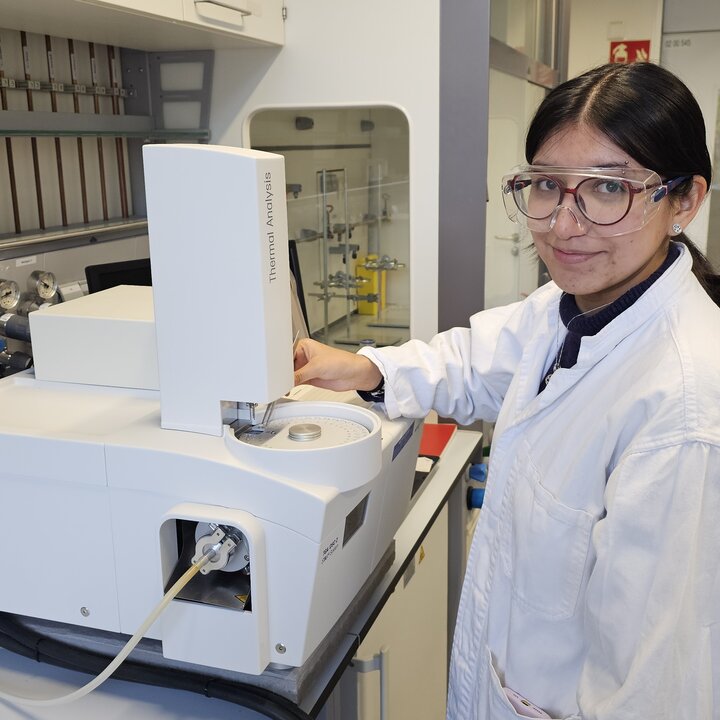
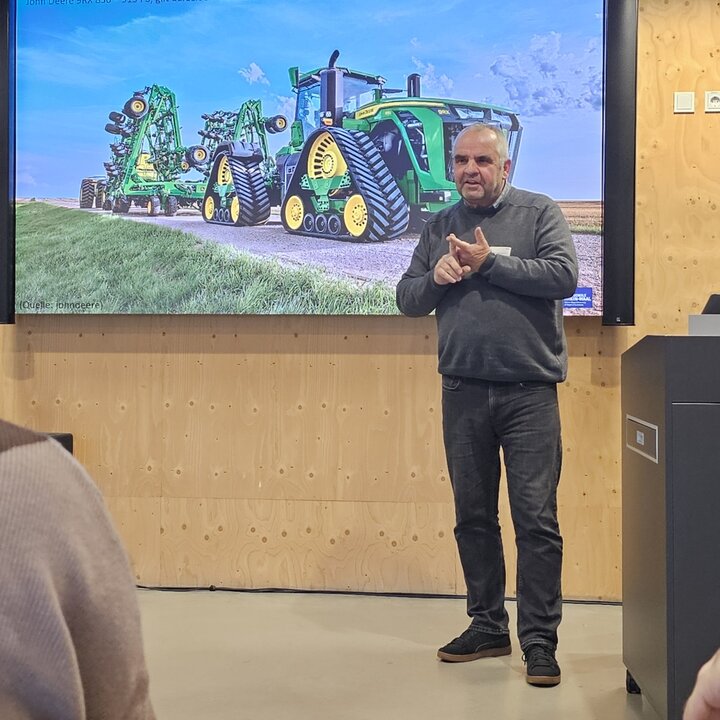
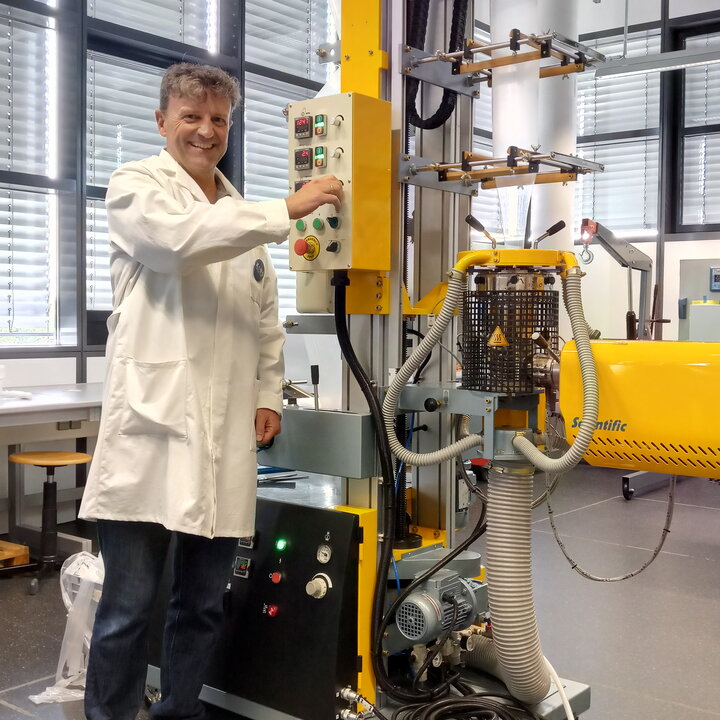
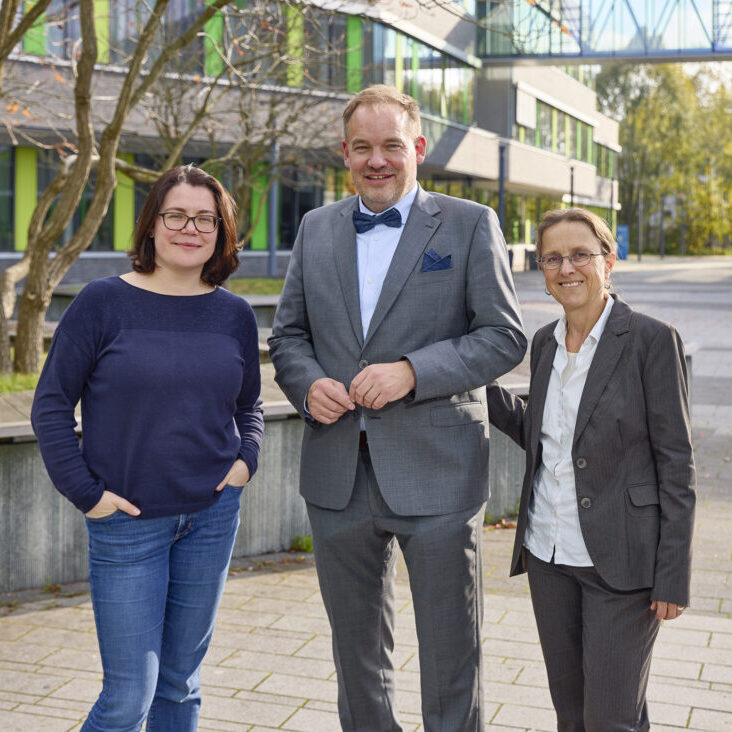
On the basis of a guideline adopted by the Executive Board, fellowships – that is, grants lasting several months for visiting researchers – are awarded as part of our project. In the 2026/27 winter semester, the HSRW will welcome three new fellows. Dr. rer. nat. Uliana Grytsiuk, Dr. ir. Klaas Kresse and Prof. Dr. Brigitte Spieß are working on various projects aimed at addressing research and knowledge transfer questions relating to regional transformation and/or sustainable change in the economy and society.
Today’s abundance of data does not automatically lead to a better-informed society. Uliana Grytsiuk intends to use her fellowship to bridge the gap between raw data and transformative capacity for action, using regional energy data as an example.

After all, the better we as a society understand the added value of renewable energy, the more effectively we can engage with the various stakeholders in society. Uliana Grytsiuk will therefore analyse publicly available data using scientific methods and organise it into clear, accessible information clusters. The findings will be shared with school pupils, university students and other stakeholders, such as local politicians, through workshops, publications and other formats.
She also intends to develop further teaching materials during her fellowship. Prof. Dr Irmgard Buder and Thomas Klimeck are supporting Uliana Grytsiuk’s work as part of the TransRegINT programme.

Klaas Kresse is working on a planning model designed to facilitate socially just and environmentally sustainable urban development by involving various stakeholder groups.
It is being trialled in a specific area of Kleve: the area between HSRW and Minoritenplatz. To this end, he has developed a sensor-based model in which small modules with integrated sensors represent buildings, roads, parks and schools. These modules immediately illustrate the social, environmental and economic impacts of each proposed scenario. The aim is to empower all those involved in the planning process – including local residents – to develop their own local solutions.
Brigitte Spieß focuses on what is known as ‘People Sustainability’ – the respectful treatment of human resources within companies.
A shortage of skilled workers and young talent, high drop-out rates from vocational training programmes and the exodus of young people pose major challenges for the skilled trades and small and medium-sized enterprises in Brandenburg, as well as in the Lower Rhine region. Which attitudes and behavioural patterns facilitate or hinder processes of change within the skilled trades? Through an empirical study, Brigitte Spieß analyses how the skilled trades sector in Brandenburg is coping with change.

At the planned ‘Transferwerkstatt Handwerk’ at the HSRW and across the Lower Rhine region, innovative solutions to pressing problems will be developed and discussed with a range of stakeholders, from apprentices to senior managers, from both regions. The people driving the transformation will be supported through a skills and training programme.
The aim of the fellowships is to build on the themes from our project, to provide fresh impetus for the HSRW and to promote interdisciplinary exchange.