
The Irrland theme park is drawing on the expertise and fresh perspectives of students at HSRW. The collaboration was facilitated by the Business Innovation Management department.
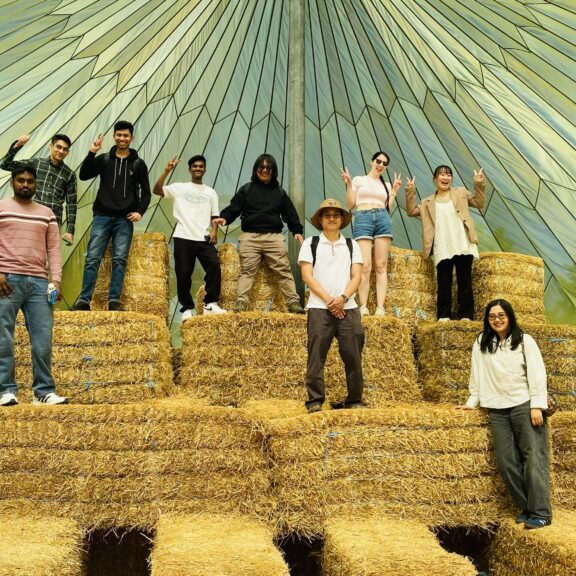
The Irrland theme park is drawing on the expertise and fresh perspectives of students at HSRW. The collaboration was facilitated by the Business Innovation Management department.
Irrland in Kevelaer–Twisteden is a firm favourite amongst families with children. It is a 40-hectare leisure park without traditional fairground rides, but with plenty of attractions that encourage children to build, relax, explore, jump, climb, slide, play and be creative. Since this year, the expertise and perspectives of students from HSRW have also been drawn upon in the design of new play areas.
The collaboration between HSRW and Irrland was initiated by Julia Roelofsen, Innovation Manager for Business in our project. “When I first heard about it, combining early years education and tourism in a student project seemed like an unusual combination to me. But the thought immediately struck me: ‘This is just the thing for Irrland.’ Two student projects are in the starting blocks this winter term. The contact and exchange with the Tebartz van Elst family, who run the adventure park, is already bearing fruit even before the initial idea has been put into practice.
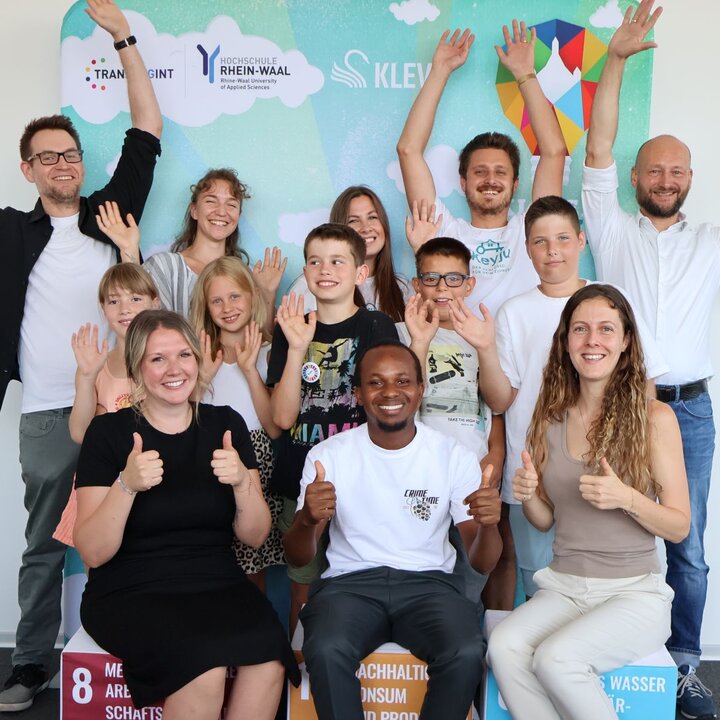
“The Sustainable Tourism B.A. programme is renowned for combining up-to-date specialist knowledge with practical projects,” says Julia Roelofsen. “Prof. Dr Dirk Reiser not only has many years’ experience of collaborating with businesses, but also takes a keen interest in forging new contacts for student projects.” For Dirk Reiser, Irrland proved to be a welcome new sparring partner for his second-semester students. The 26 students worked on the following topics for the Sustainable Destination Management module: environmental education for children, sustainability communication and marketing, a wayfinding system for Irrland, and inclusive tourism. Following an excursion to Irrland and a look behind the scenes, the students gained a better understanding of the unique concept and set to work.
“Some of the students’ results were surprisingly simple and actually helpful.”
Benedikt Tebartz van Elst: “We implemented some of them straight away, such as communicating our sustainability efforts on our website.” The website now features information on Irrland’s water management concept, for example. Since 2022, the water for the attractions has been treated, purified and reused in a closed-loop system, thereby reducing the extraction of groundwater. In future, this is also to be presented to visitors in a playful way as an attraction – another suggestion from the students.
In late summer, Julia Roelofsen received another enquiry from Irrland. “This time it’s about a new attraction in the Lower Rhine farm area,” she explains, based on initial discussions. “Specifically, they asked for technical support from the HSRW. And who, if not the Faculty of Technology and Bionics, is best suited for this?” At T&B, too, research and teaching are practice-oriented. This includes the Group Project, in which students from various degree programmes and different disciplines work together on a single task. The students of Prof. Dr.-Ing. Dirk Untiedt and Christian Berendonk will be carrying out a feasibility study during the current winter semester. Furthermore, an overview of the possible technologies for implementation is to be provided. Irrland will be responsible for the construction, which is planned for the end of 2027. And for Dirk Reiser and his students, too, the Irrland project is not yet over: an assessment tool for sustainable development is being developed as part of an interdisciplinary project.
Julia Roelofsen is delighted that the collaboration is continuing: “One project paves the way for another. That’s ideal.” And there is another advantage: the practical field trips not only provide valuable insights but also give students a better understanding of the benefits of the Lower Rhine region. In this way, they encourage students to stay in the region after completing their studies.