
Four events brought together start-up ideas, experience and students.
Four events brought together start-up ideas, experience and students.
From the initial idea of setting up a business, through delivering a compelling pitch, to crafting your own start-up story: Start-up Week 2026 at Rhein-Waal University of Applied Sciences, held from 17 to 19 November, focused on a range of perspectives on entrepreneurship. Four events brought together students, alumni, external experts and those interested in starting a business.
Rhein-Waal University of Applied Sciences has been participating in Start-up Week with its own events for more than a decade. In 2026, Start-up Week was once again part of Start-up Week Germany and Start-up Week Lower Rhine. The programme was organised and supported by StartGlocal, the university’s central start-up and entrepreneurship advisory service at the Centre for Research, Innovation and Transfer (ZFIT).
At the first workshop, ‘Build Smarter, Not Harder: What Every First-Time Founder Should Know’, led by Lena Klingelberger from Deutsche Telekom, the students explored questions that are particularly relevant at the very start of setting up a business: How can an idea be tested with potential customers at an early stage? How do you attract your first customers? What role do networks and personal branding play? And which mistakes can be avoided if you’re aware of them early enough? Klingelberger drew on numerous examples from her day-to-day professional life. The students took an active part in the discussion and, in some cases, even found themselves in spontaneous pitch situations.

On the same day, the workshop ‘How to Pitch Your Impact Start-up Idea’ took place, led by Adriana Plechinger from StartGlocal. Alongside other interested participants, students from the interdisciplinary project ‘Green and Social Entrepreneurship: Business Ideas for a Better World’, led by Prof. Ute Merbecks, took part. The aim of the workshop was to alleviate uncertainties surrounding the topic of pitching and to provide participants with a clear structure for presenting green and social business ideas in a way that is both understandable and convincing.

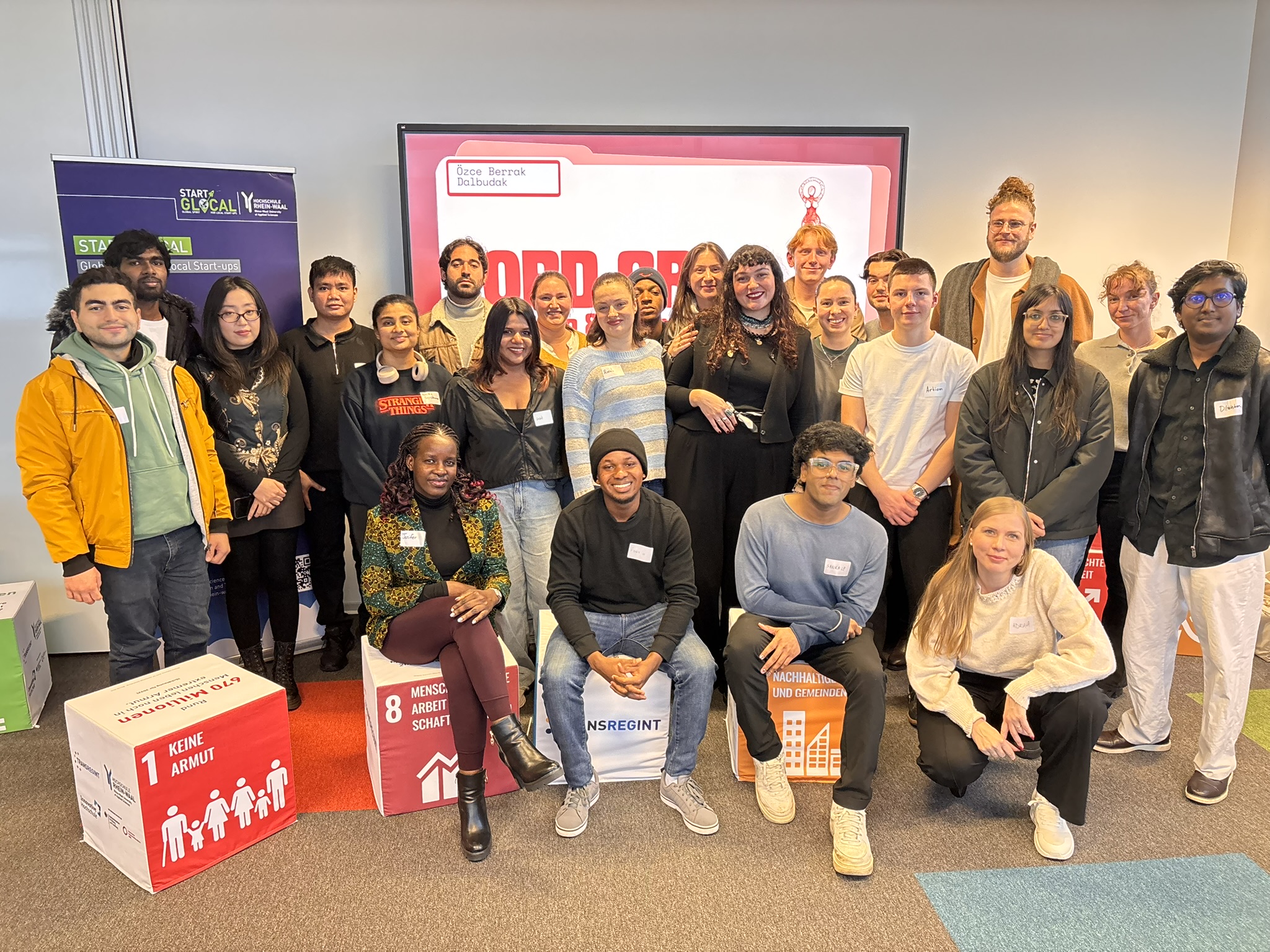
The Start-up Community Meetup, featuring HSRW alumna Berrak Dalbudak, offered a further perspective. Dalbudak studied International Taxation and Law at Rhein-Waal University of Applied Sciences and later founded OBD Art Studio & Community Space. In her talk, she spoke candidly about her motivation, her first steps towards self-employment, the challenges she faced and her experiences in building up her creative business. Afterwards, numerous students took the opportunity to ask questions and engage in personal conversations. The discussion continued long after the official end of the event, demonstrating just how great the interest is in personal start-up journeys and direct contact with alumni.
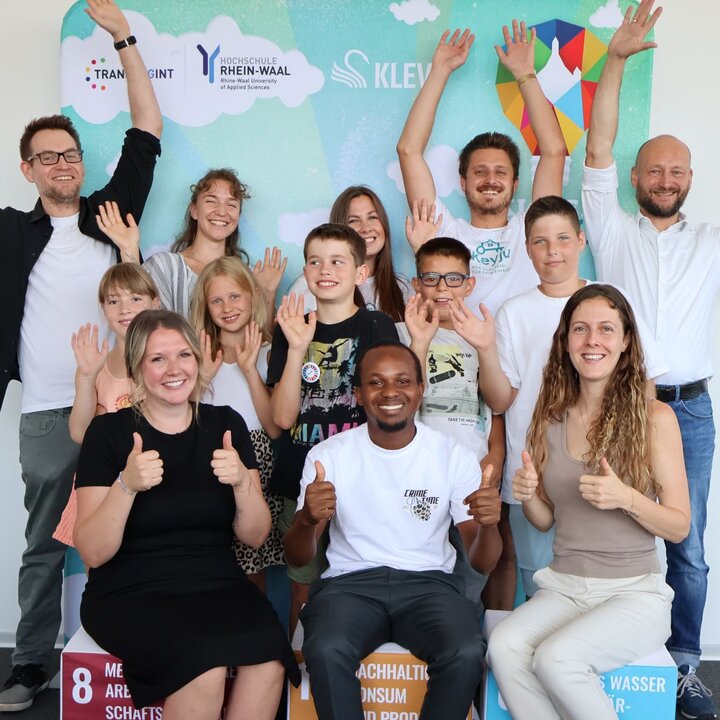
The event concluded with the now well-established Business Idea Pitch & Poster Session, featuring students from the International Business Administration degree programme. Organised by Dr Jessica Palka and Andrea da Silva, the teams presented business ideas they had developed within a few weeks as part of their degree programme. First, they presented their concepts to a panel of judges in short pitches. The ideas were then explored in greater depth during a poster session, where they could be discussed directly with the teams.
Team Wings was particularly successful this year. The students developed a social enterprise idea centred on menstrual health education and access to relevant information and support services for young girls. The concept received the most votes from the guests present.

The four events showcased very different aspects of entrepreneurship: the first steps in setting up a business, communicating an idea clearly, one alumna’s personal journey to self-employment, and students’ business ideas presented to a live audience for the first time. The aim was not solely to encourage students to start their own businesses. Skills such as the structured development of ideas, presenting, giving feedback, networking and engaging with people from different professional backgrounds also played a central role.
StartGlocal supports students, alumni and staff at Rhein-Waal University of Applied Sciences – even outside Start-up Week – in developing and validating their own business ideas, and offers personalised start-up advice.
Further information on StartGlocal and the university’s support services:
www.startglocal.de